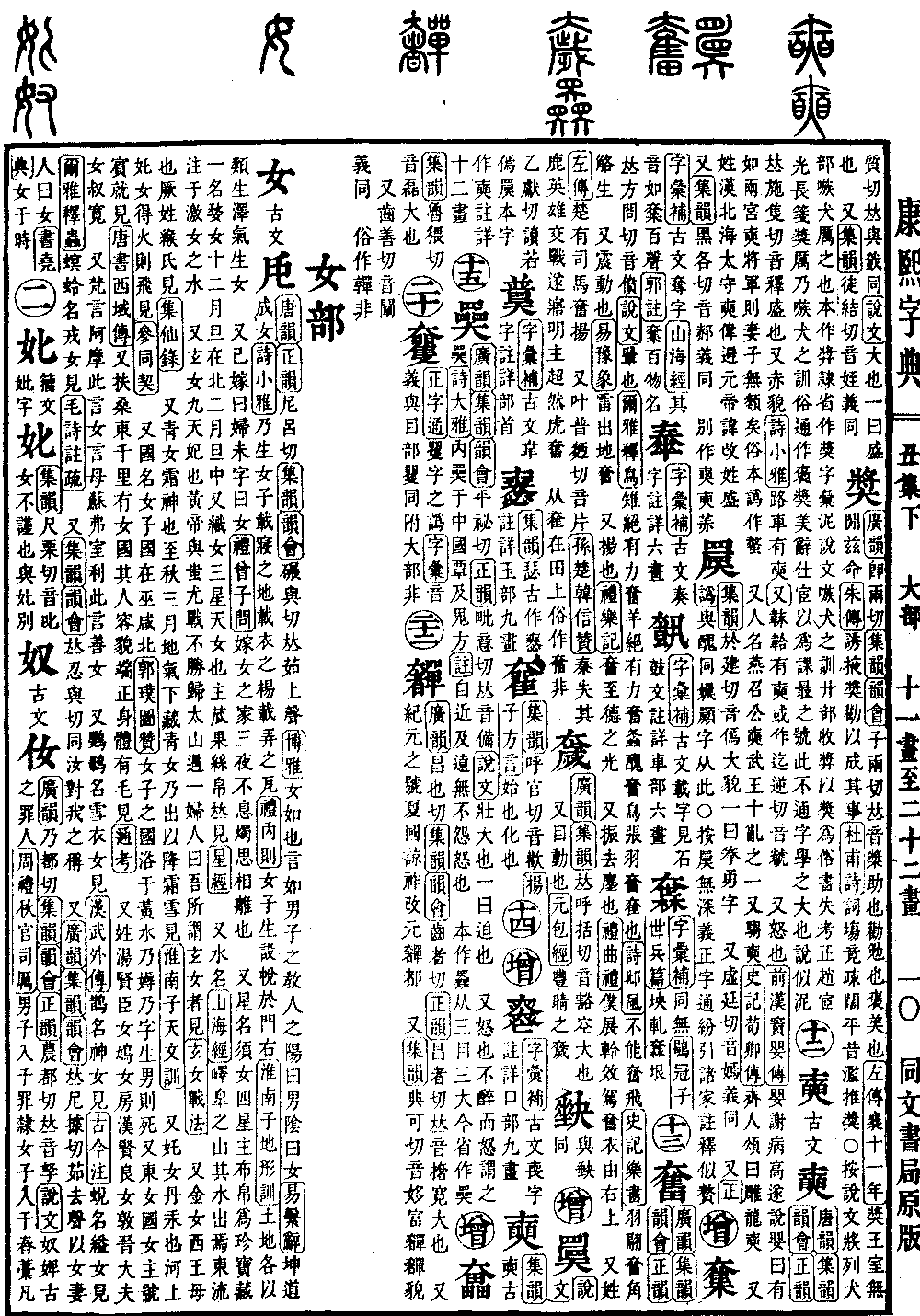
Chou Collection, Lower Volume
Radical: Big (dà)
Kangxi strokes: 15
Page 254, Entry 02
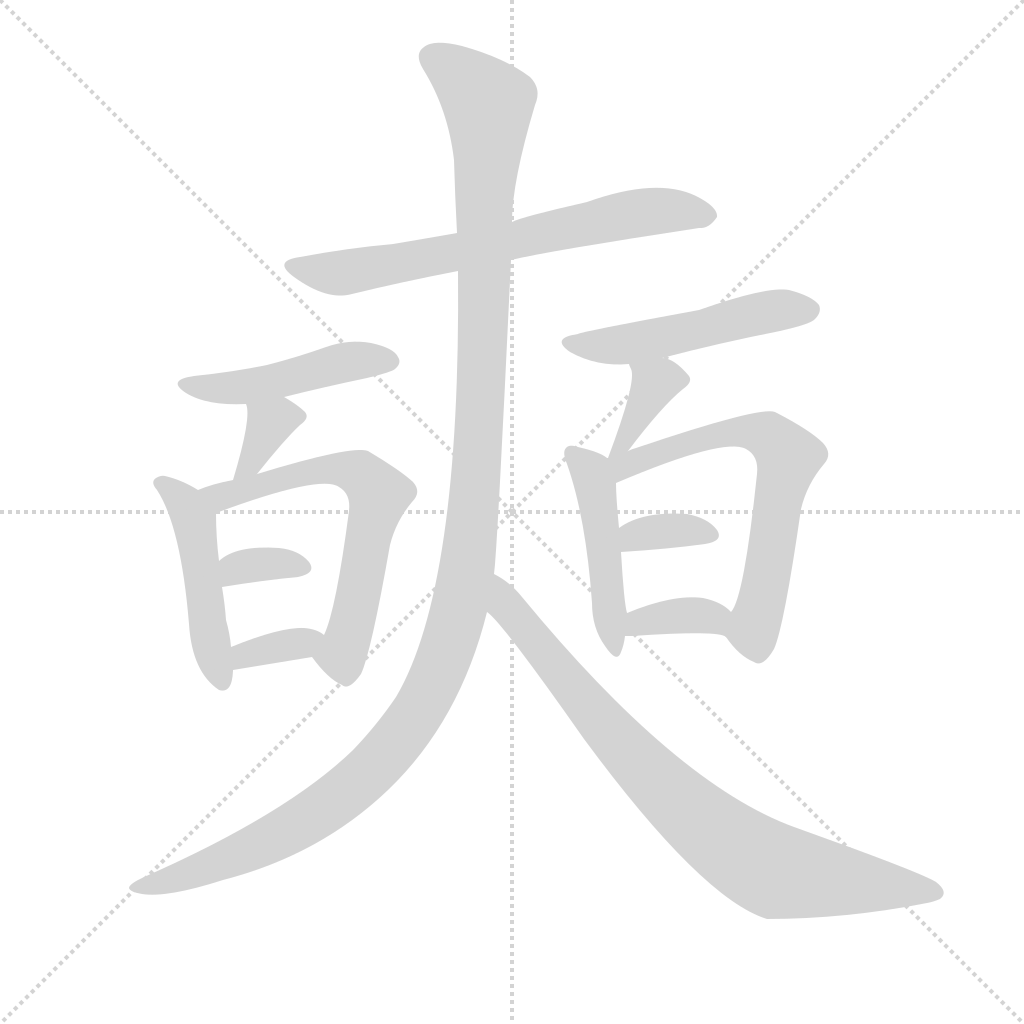
Ancient form.
Tang Rhyme (Tangyun), Collected Rhymes (Jiyun), Rhyme Meetings (Yunhui), Correct Rhymes (Zhengyun). Pronounced shi (falling tone). Meaning flourish or abundance. Also describes the color red. Book of Odes (Shijing), Lesser Odes: The carriage is bright red. Also, the leather knee pads are bright red. Or written as pronounced he (falling tone). Also means anger. History of the Former Han (Qianhan Shu), Biography of Dou Ying: Ying excused himself due to illness, and Gao Sui persuaded Ying saying: If the two palaces were to be angry with the General, then your wife and children would have no one left. Common editions mistakenly write it as shi (entering tone).
Also a name. Duke Shao of Yan, named Shi, was one of the ten capable ministers of King Wu. Also Zou Shi. Records of the Grand Historian (Shiji), Biography of Xun Qing: The people of Qi praised him, saying: The dragon-carving Shi.
Also a surname. Shi Wei, Governor of Beihai during the Han dynasty, changed his surname to Sheng to avoid the naming taboo of Emperor Yuan.
Also in Collected Rhymes (Jiyun), pronounced hao (entering tone). Same meaning. Alternatively written as. The character is composed of big, day, and day.