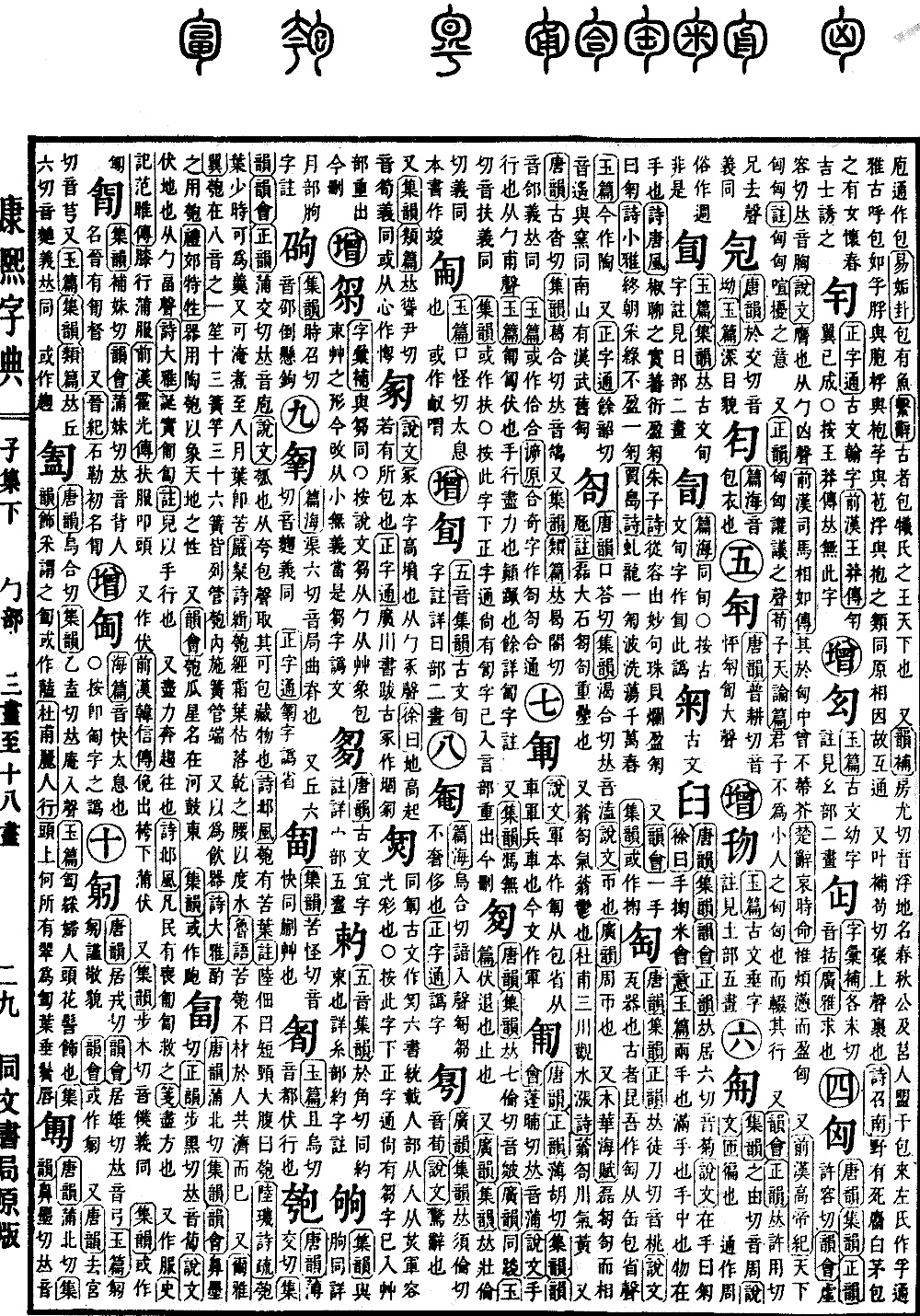
Zi Collection, Page Position: Lower, Radical: Wrap (bāo)
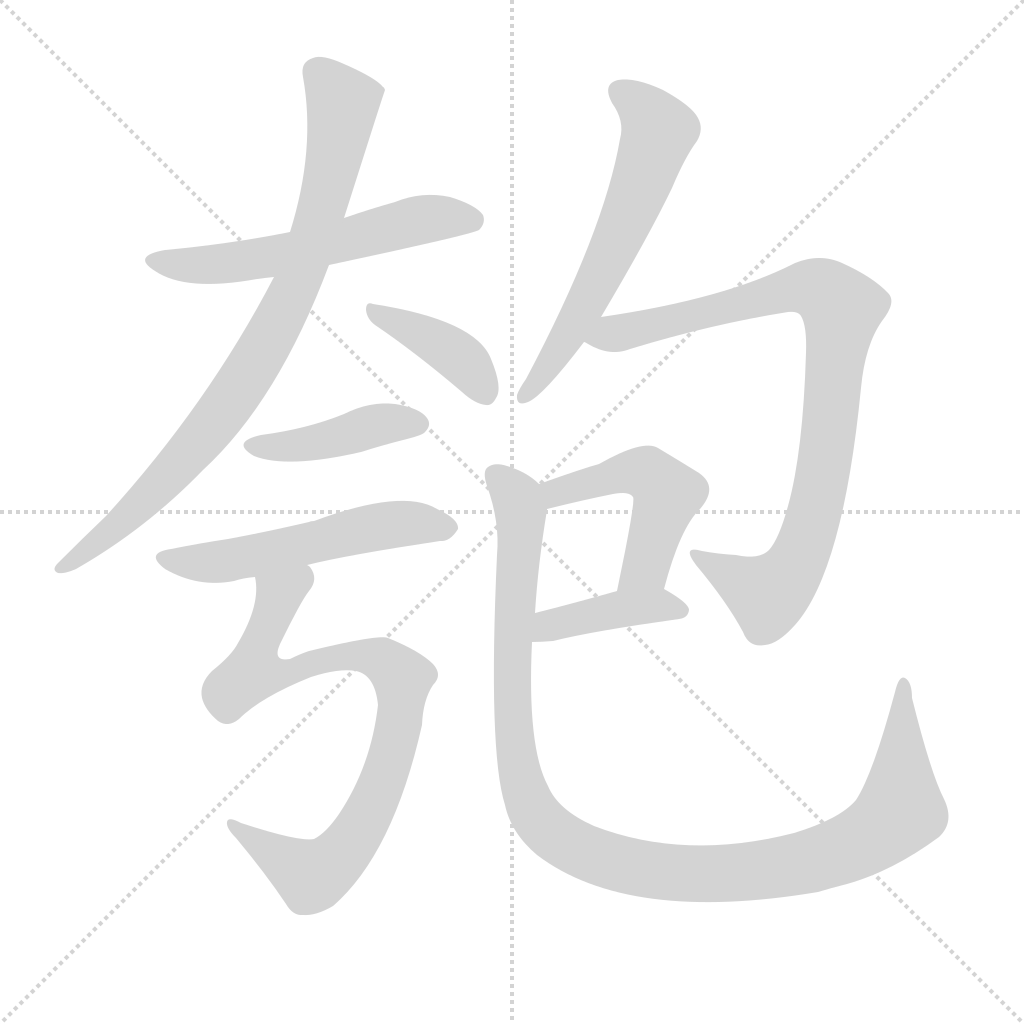
匏; Kangxi Stroke Count: 11; Page: Page 151, Entry 33
Pronounced bo giao (entering tone) in Tang Yun; pronounced pu giao (entering tone) in Ji Yun, Yun Hui, and Zheng Yun, same pronunciation as "pao".
Explains "hu gourd". The character's form uses "kua" as a phonetic component and "bao" as a semantic component. Its meaning is derived from its ability to contain things.
In the "Book of Odes (Shijing)", there is a line "hu has bitter leaves".
Note: Lu Dian says that a hu with a short neck and a large belly is called a "pao".
Lu Ji's Commentary on the Odes says: When the hu leaves are tender, they can be cooked into soup. They can also be pickled or boiled and eaten. By August, the leaves become bitter.
Yan Can's Commentary on the Odes says: After the hu is frosted, its leaves wither and fall. Its dried fruit can be tied to the waist for crossing water.
In the "Discourses of the States (Guoyu)", it is said: The bitter hu has no other use for people; it can only help people cross rivers.
Also, the "Erya Yi" records: The hu is one of the eight musical notes. The sheng has thirteen pipes, and the yu has thirty-six pipes. Both arrange the pipes inside a hu, and attach reeds to the ends of the pipes.
Also used as a drinking vessel.
The "Book of Odes (Shijing)", Greater Odes section, says: Using hu to ladle wine.
The "Book of Rites (Liji)", Jiao Te Sheng chapter, says: Ritual vessels are made of pottery and hu, symbolizing the nature of heaven and earth.
Also, Yun Hui records: Hu gourd is the name of a star constellation, located east of the He Gu star.
Ji Yun records: Sometimes written as "pou".