Chen Collection, Middle Volume
Radical: Wood (mù)
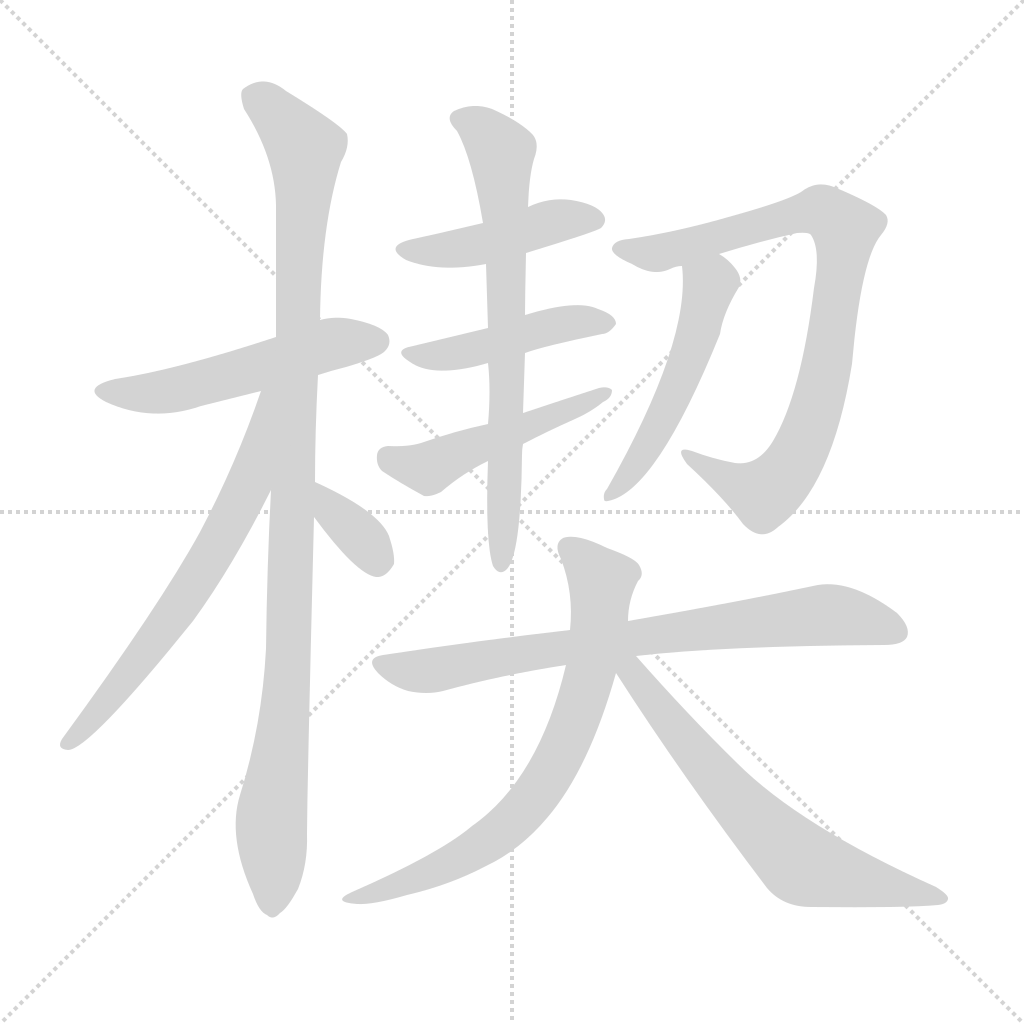
楔
Kangxi stroke count: 13
Page 539, Entry 13
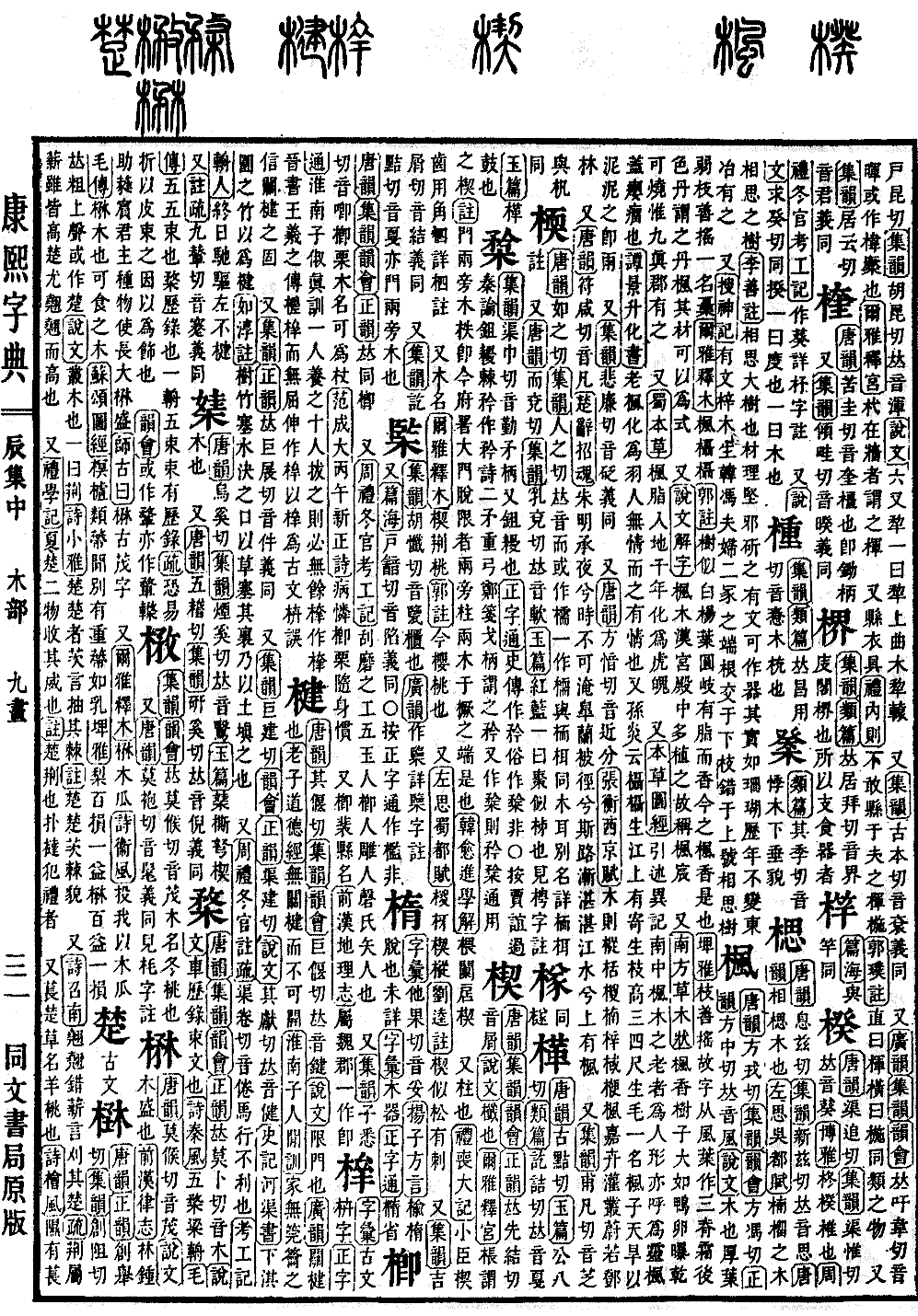
Pronounced xie. According to the Shuowen Jiezi (Shuowen), it refers to a tenon. According to the Erya: Explanations of Palaces (Erya), the upright wooden posts on both sides of a gate are called xie. The commentary notes that this refers to the two wooden pillars erected at the top of wooden pegs on either side of a government office threshold, similar to the pillars found at the sides of court gate thresholds today. In the Advancing Learning (Jinxuejie) by Han Yu, it refers to door pivots, door bolts, door bolt holes, and the wooden posts beside the gate. It also refers to supporting pillars. According to the Book of Rites (Liji): Great Record of Mourning (Sangdaji), a minor official uses a horn spoon to prop open the teeth of the deceased. See the entry for si for further details. It is also the name of a type of tree. According to the Erya: Explanations of Trees (Erya), the xie is the cherry tree. The commentary by Guo notes that this is the cherry tree known today. Zuo Si, in his Rhapsody on the Capital of Shu (Shu Du Fu), mentions palm trees, ya trees, xie trees, and fir trees. The commentary by Liu Kui states that the xie tree resembles a pine tree and has thorns. According to the Jiyun, it is pronounced jie. The meaning remains the same. According to the Jiyun, it is also pronounced jia. It also refers to the wooden pillars on both sides of a gate.