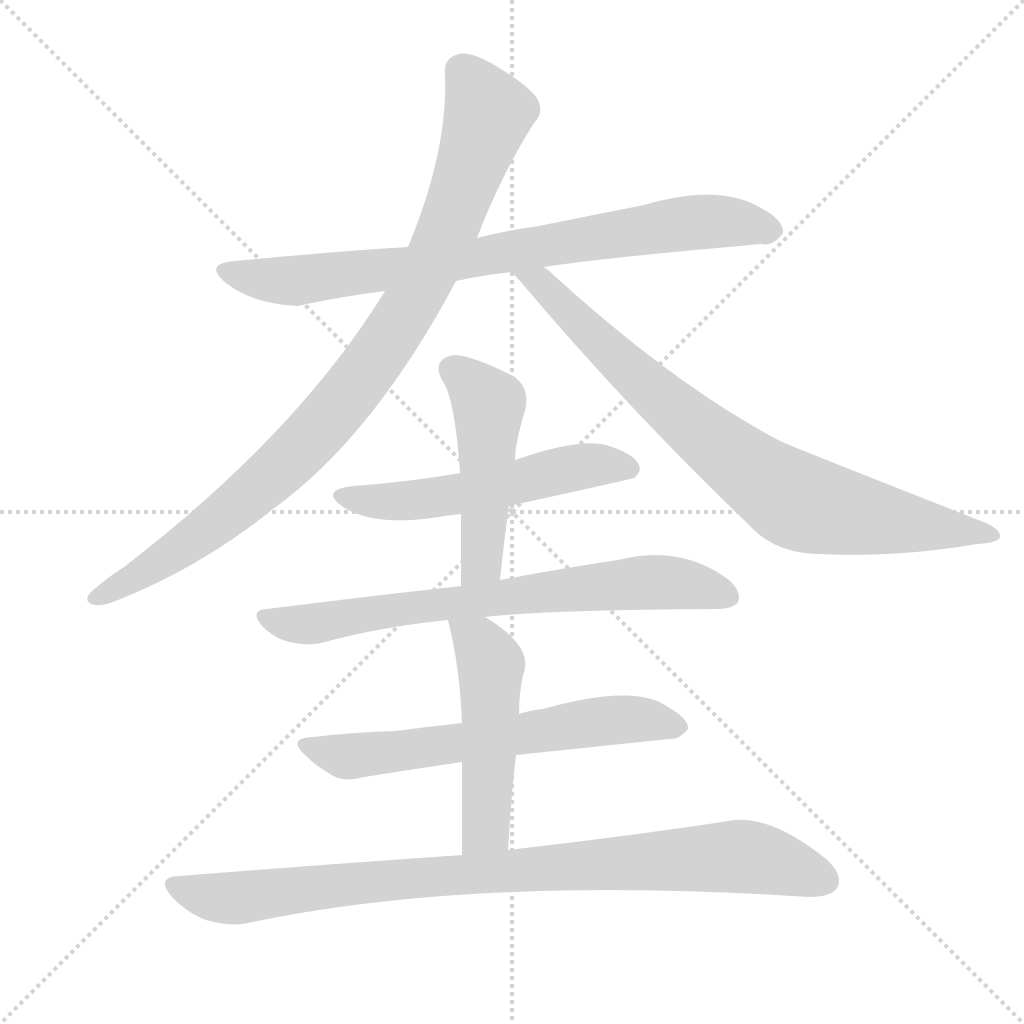
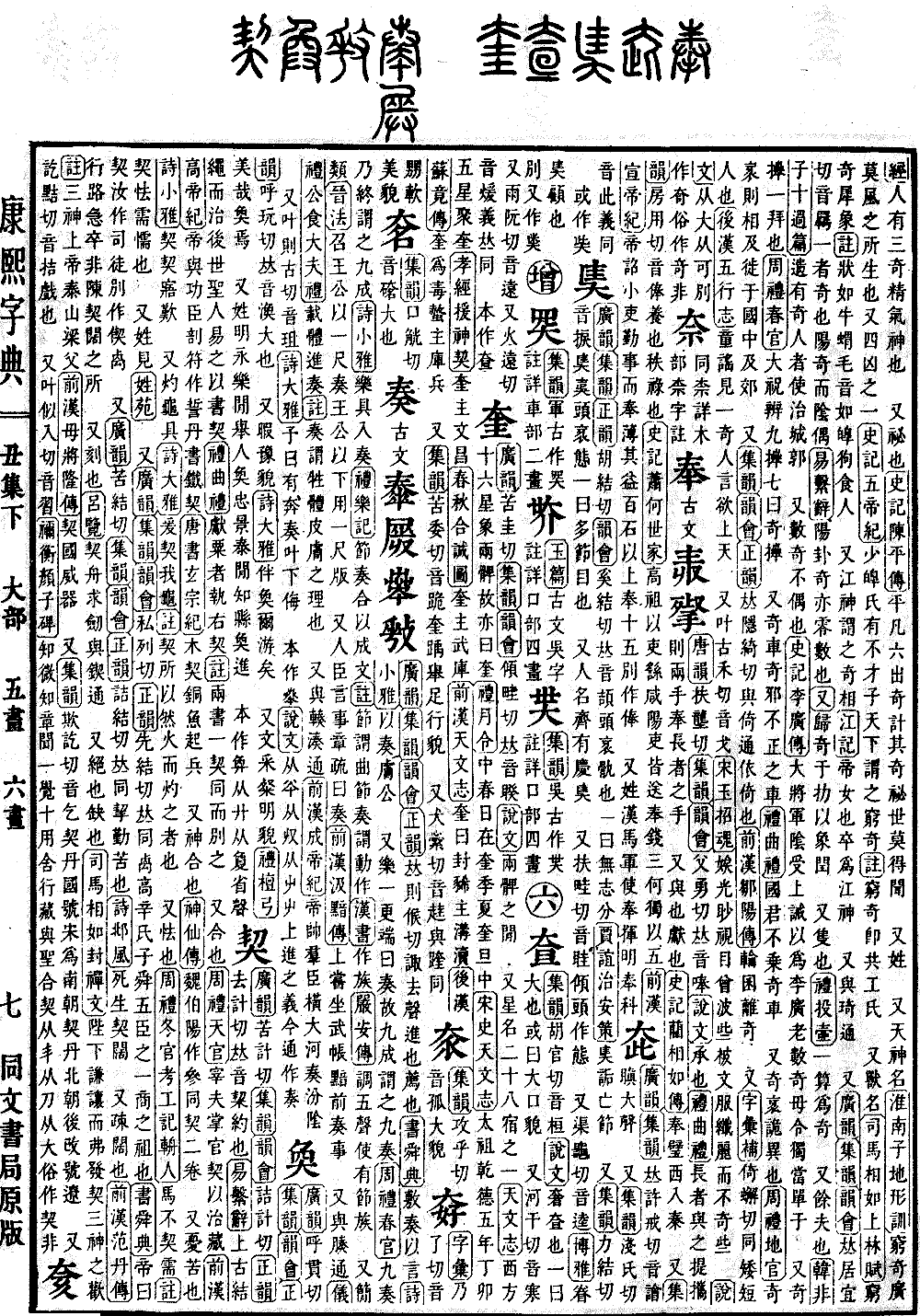
Chou Collection, Lower Volume
Radical: Big (dà)
Page 251, Entry 11
Pronounced kui.
According to the Explaining Graphs and Analyzing Characters (Shuowen jiezi), it refers to the space between the two thighs. Also, it is the name of a star, one of the twenty-eight mansions. The Treatise on Astronomy (Tianwen zhi) states: The western sixteen stars resemble two thighs, therefore it is also called Kui. According to the Book of Rites (Liji), in the middle of spring the sun is in Kui, and in the late summer, at dawn, Kui is in the center. According to the History of the Song (Song shi), in the fifth year of the Qiande reign, a ding-mao year, the five planets gathered in Kui. The Xiao Jing Yuan Shen Qi states: Kui governs literary brilliance. The Spring and Autumn Annals He Cheng Tu states: Kui governs the armory. According to the Book of the Former Han (Qian Han shu), astronomical treatise, Kui is called the sealed boar and governs ditches and channels. In the Biography of Su Jing from the Book of the Later Han (Hou Han shu), it is stated that Kui is the poisonous sting and governs the storehouse of weapons.
Also pronounced gui. Kui-ju describes the appearance of lifting one's feet to walk.
Also pronounced hui. Identical to the character meaning to walk in a stumbling manner.
Textual research: In the Book of Rites (Liji), the late summer entry should read at dawn Kui is in the center, as per the original text.