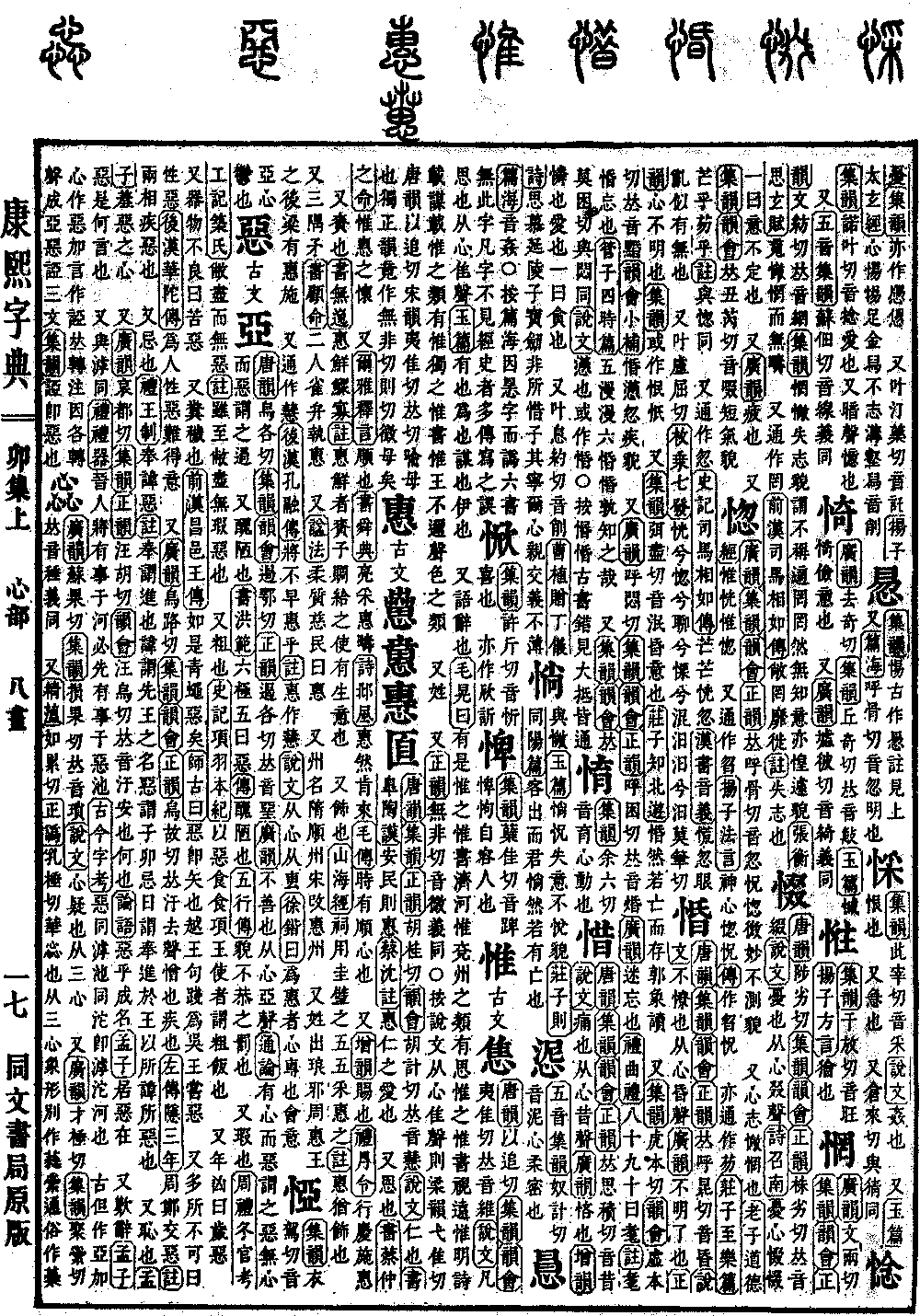
Mao Collection, Upper Volume
Radical: Heart (xīn)
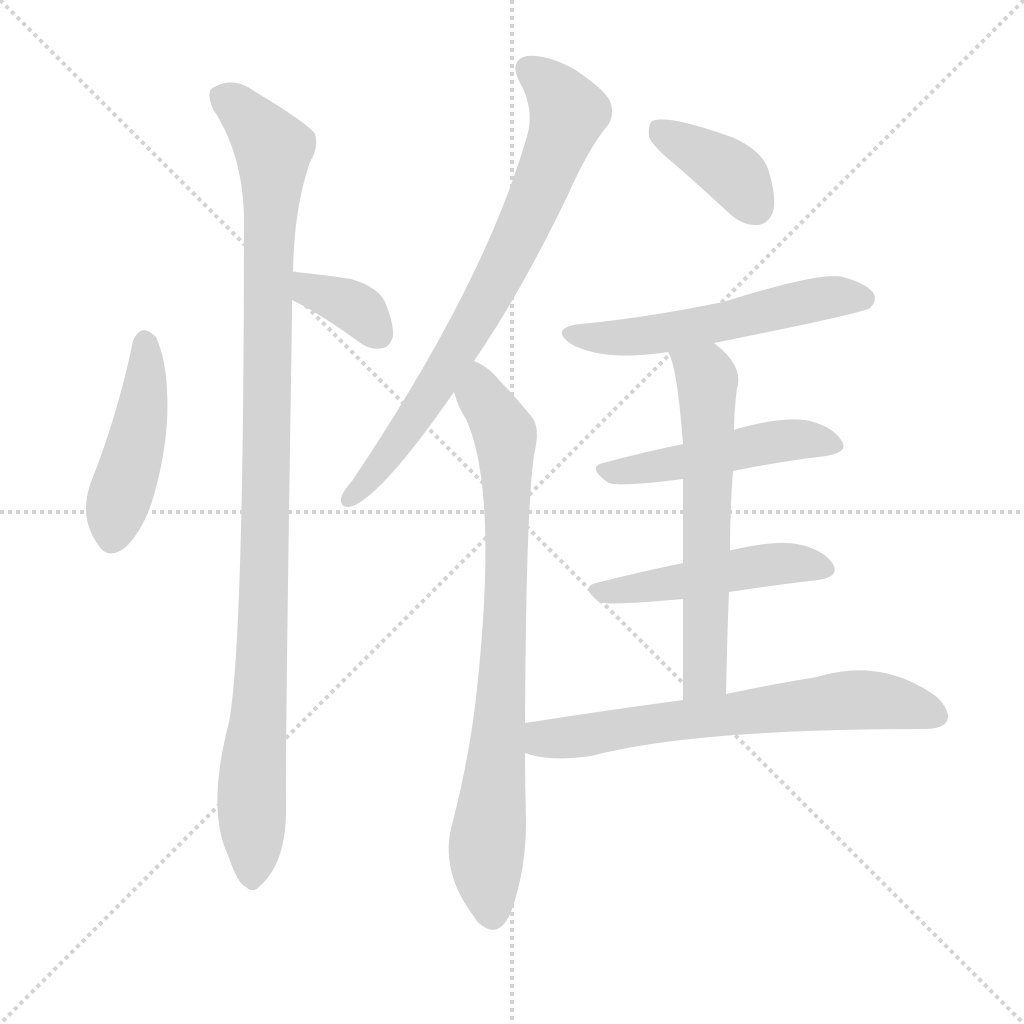
Character: wéi
Kangxi Stroke Count: 12
Page 391, Entry 17
Ancient character form.
Pronounced wéi.
Pronounced wéi.
Pronounced wéi.
According to the Analytical Dictionary of Characters (Shuowen Jiezi), it refers to all types of thought. Composed of the radical for heart and the phonetic element wéi.
According to the Jade Chapters (Yupian), it means to have, to act, to plan, and is also a pronoun for he or she.
It also serves as a particle.
Mao Huang states: There is the usage of wéi as a demonstrative, such as in the Book of Documents (Shangshu) phrase regarding the Jizhou region. There is the usage of wéi as thought, such as in the Book of Documents phrase regarding seeing far and clearly, and the Book of Odes (Shijing) usage regarding planning and reflecting. There is the usage of wéi as meaning only, such as in the Book of Documents phrase regarding the king not being close to music and colors.
Also used as a surname.
Pronounced wēi.
The meaning is the same.
Note: The Analytical Dictionary of Characters (Shuowen Jiezi) indicates it is composed of the heart radical with the phonetic element wéi, which corresponds to the initial consonant sound of the ying-category. The Correct Rhymes (Zhengyun) incorrectly categorizes it under the initial consonant sound of the wei-category.