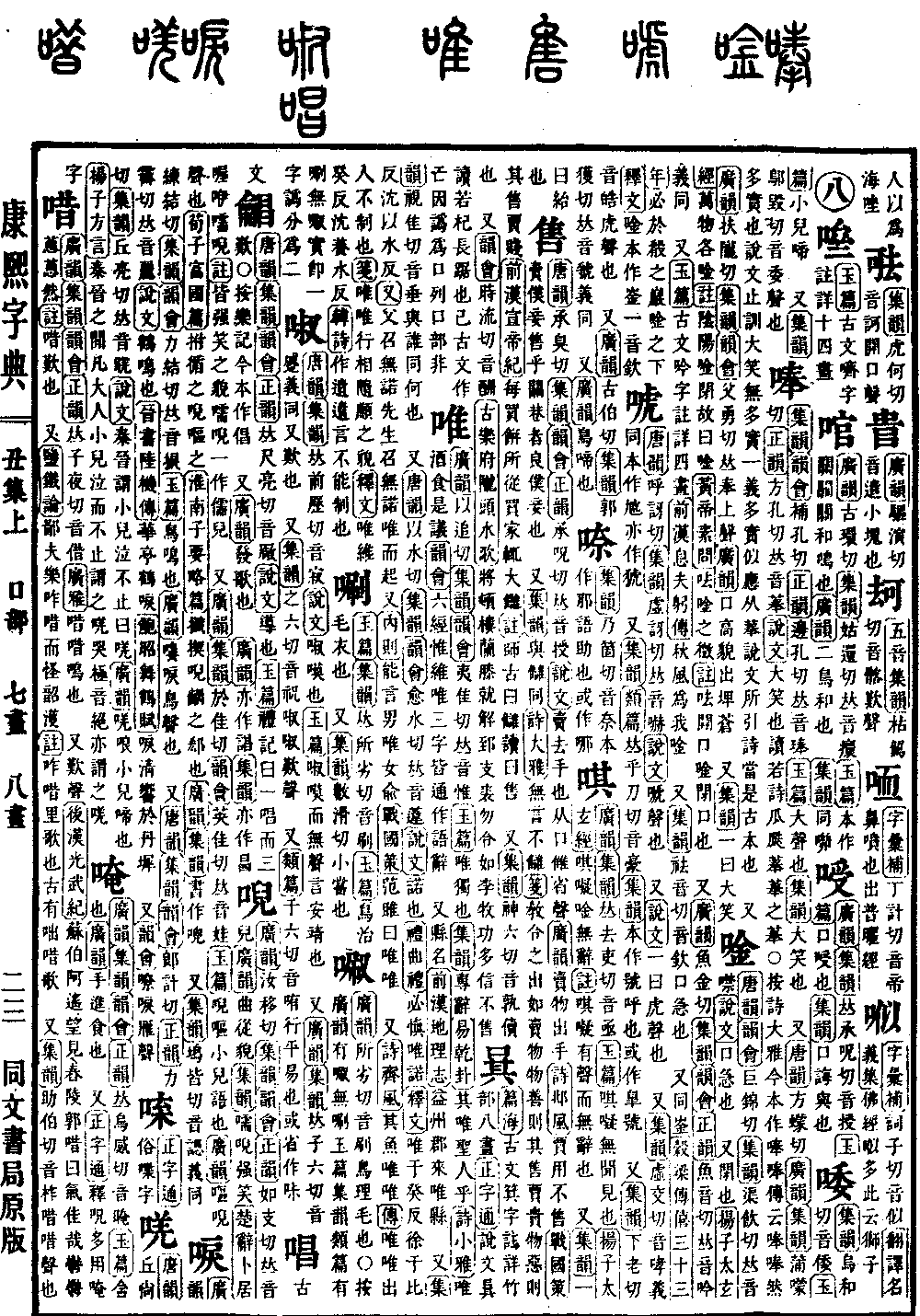
Chou Collection, Upper Volume
Radical: Mouth (kǒu)
Kangxi strokes: 11
Page 193, Entry 15
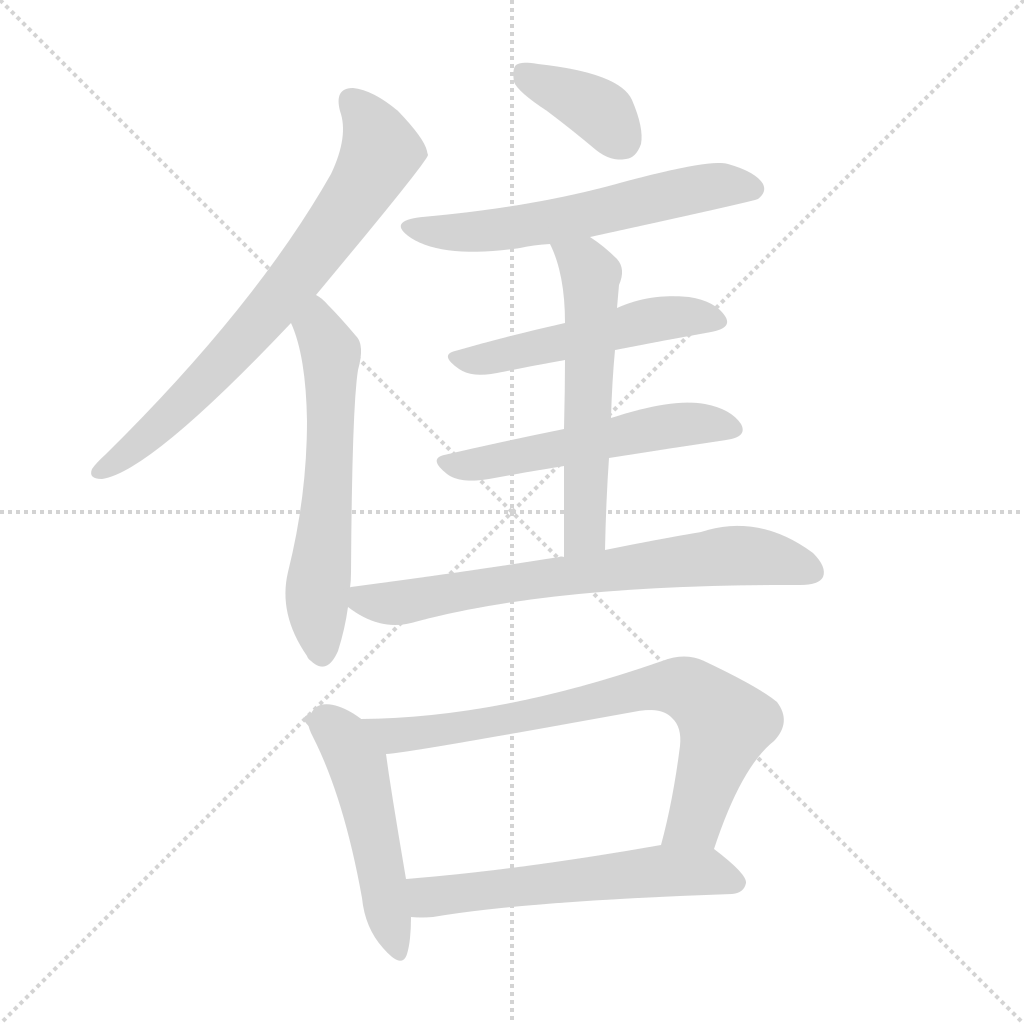
Pronounced shòu.
According to the Explaining Graphs and Analyzing Characters (Shuowen Jiezi), it refers to the selling of goods by hand. It is composed of the radical for mouth, with the abbreviated phonetic component chóu. According to the Extensive Rhymes (Guangyun), it means to sell goods. In the Book of Odes (Shijing), it is written: The price offered is not accepted. In the Strategies of the Warring States (Zhanguo Ce), it is written: Those who sell servants in the alleys, if the servants are good, they sell well.
Also, according to the Collected Rhymes (Jiyun), it is synonymous with the character meaning to answer or respond (chóu). In the Book of Odes (Shijing), it is written: There is no word that does not receive a response. The commentary notes: The issuance of instructions is like selling goods; if the goods are of good quality, the selling price is high, and if the goods are of poor quality, the selling price is low. In the History of the Former Han (Qian Han Shu), Biography of Emperor Xuan, it is written: Whenever he bought cakes, the shop from which he purchased them would always see a great increase in sales. The commentary by Yan Shigu states: The character for response (chóu) is read as sell (shòu).
According to the Collected Rhymes (Jiyun), it is also pronounced shú, meaning to sell.
According to the Rhyme Compendium (Yunhui), it is pronounced chóu. In the Ancient Music Bureau (Gu Yuefu) poems, specifically the Longtou Shui Song, it is written: I will kneel before Loulan, and loosen the furs of Zhizhi. Do not let it be like Li Mu, who, despite his many achievements, was truly not accepted.
Textual research: In the Strategies of the Warring States (Zhanguo Ce), the text says selling servants in the alleys; corrected to alleys based on the original text.