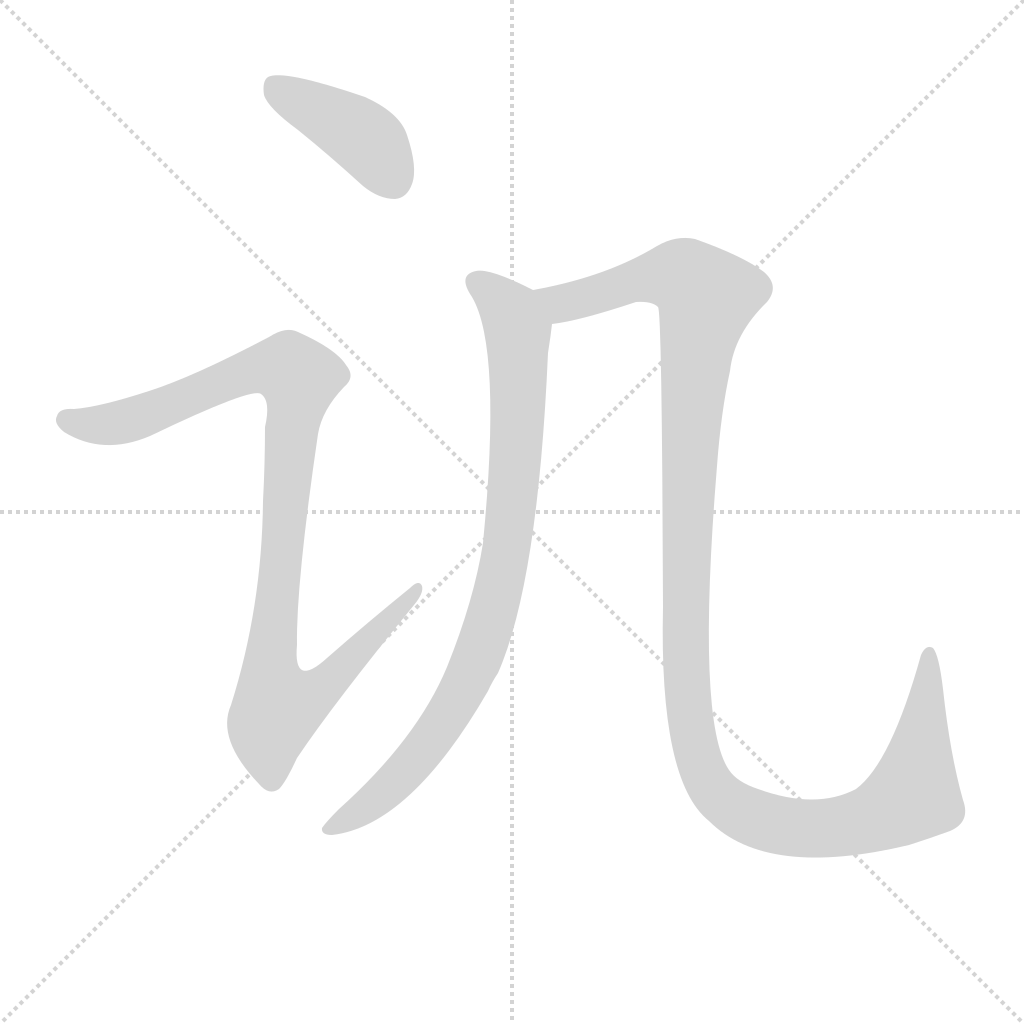
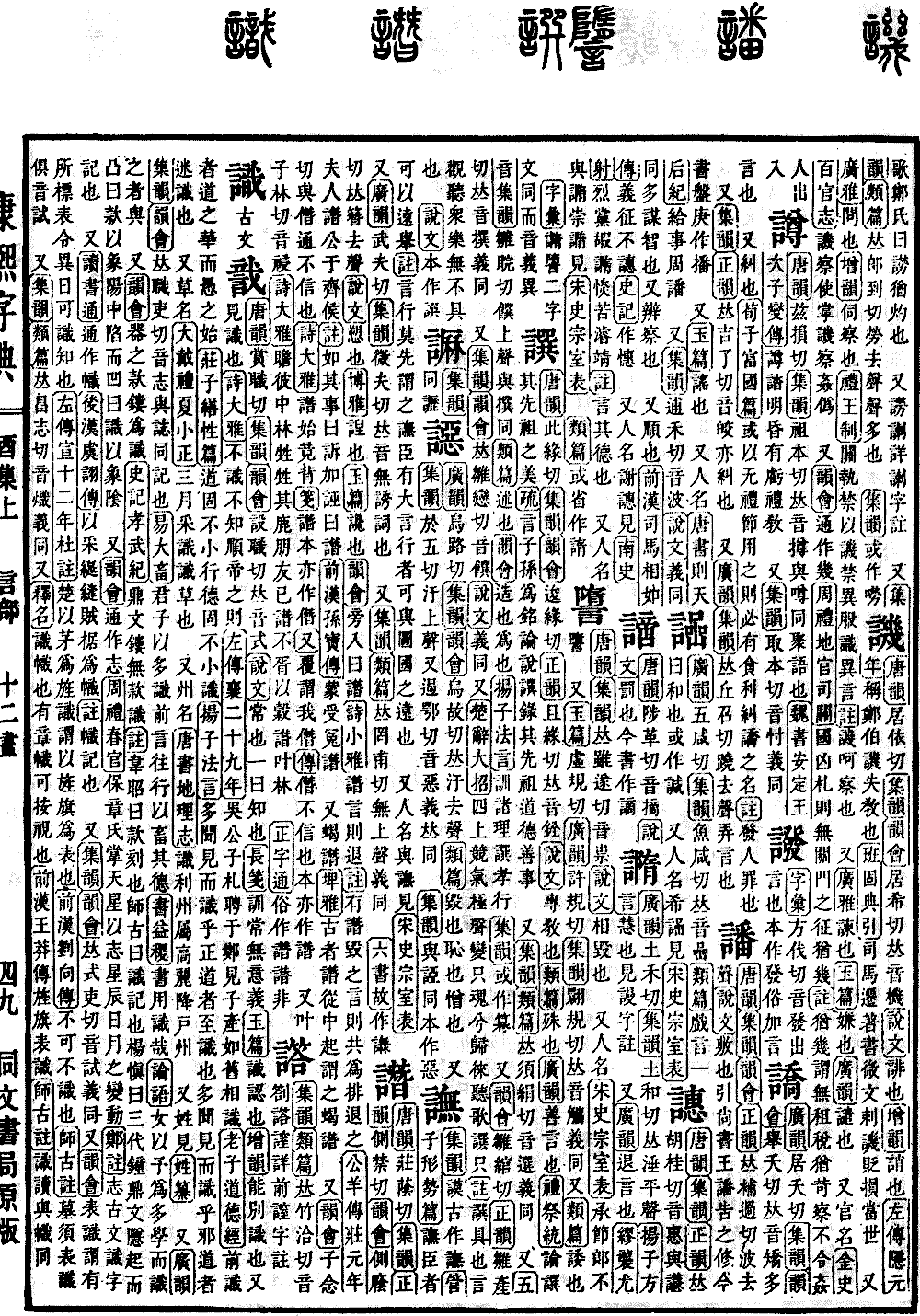
You Collection, Upper Volume
Radical: Speech (yán)
Kangxi Strokes: 19
Page 1181, Entry 14
Pronounced jī.
Shuowen Jiezi (Shuowen): To slander.
Zengyun (Augmented Rhymes): To mock or ridicule.
Zuo Zhuan (Zuo Commentary): The record refers to the Earl of Zheng mocking the lack of instruction.
Ban Gu, Dian Yin (Introductory Essays): Sima Qian wrote his books using subtle prose to ridicule and criticize, disparaging the contemporary age.
Also, Guangya (Expanded Glossaries): To ask.
Zengyun (Augmented Rhymes): To spy or inspect.
Book of Rites (Liji), Royal Regulations: At mountain passes, officers exercise prohibitions to inspect, forbid non-standard clothing, and recognize non-standard speech.
Annotation: To inspect and examine.
Also, Guangya (Expanded Glossaries): To remonstrate.
Yupian (Jade Chapters): To dislike or suspect.
Guangyun (Expanded Rhymes): To reproach or blame.
Also an official title.
History of Jin (Jinshi), Treatise on Officials: The Inspectorate for Subversion was in charge of monitoring and investigating treason and deceit.
Also, Yunhui (Collection of Rhymes): Interchanged with the character pronounced jī.
Rites of Zhou (Zhouli), Earth Officials, Officer of the Passes: When there is famine or plague in the state, do not collect taxes at the gates, yet still maintain oversight.
Annotation: Maintaining oversight means there are no taxes, yet still strictly examining to prevent villains from entering or exiting.