Hai Collection, Middle Volume
Radical: Bird (niǎo)
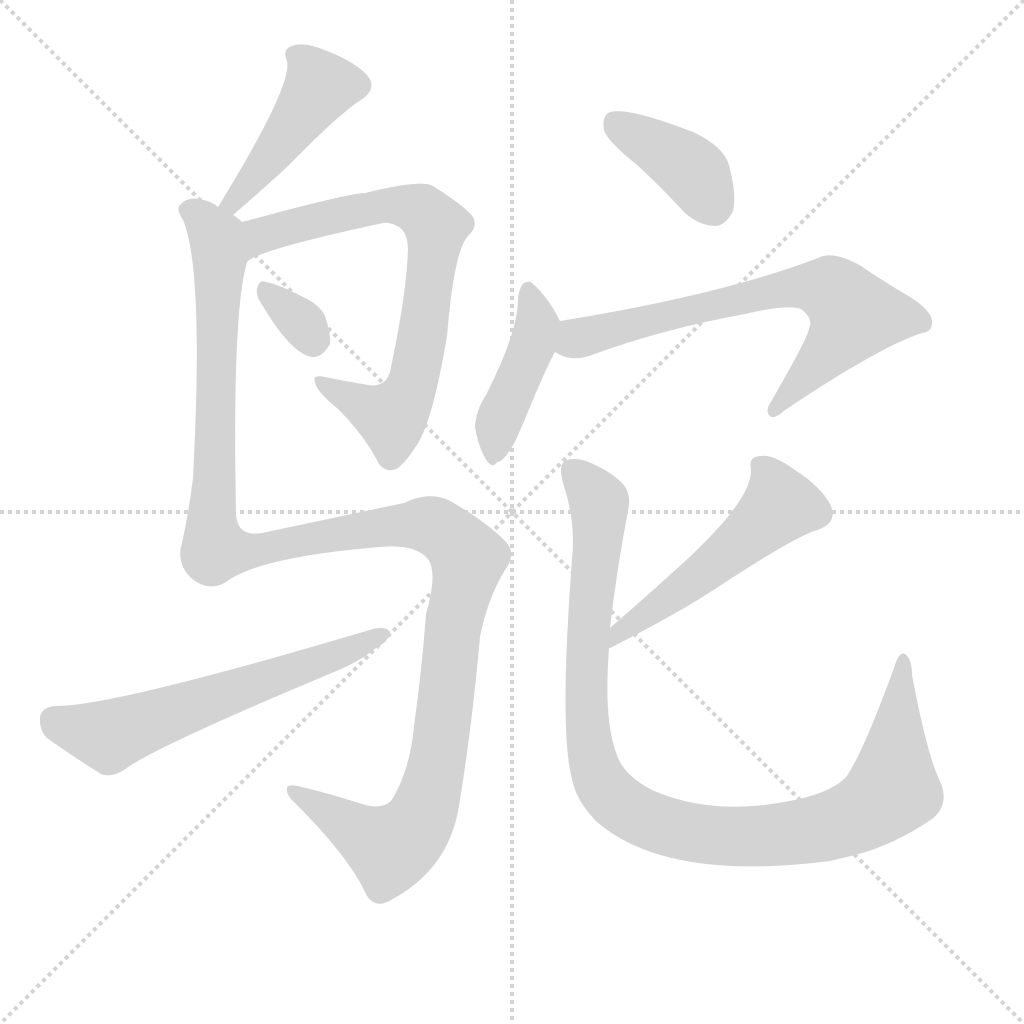
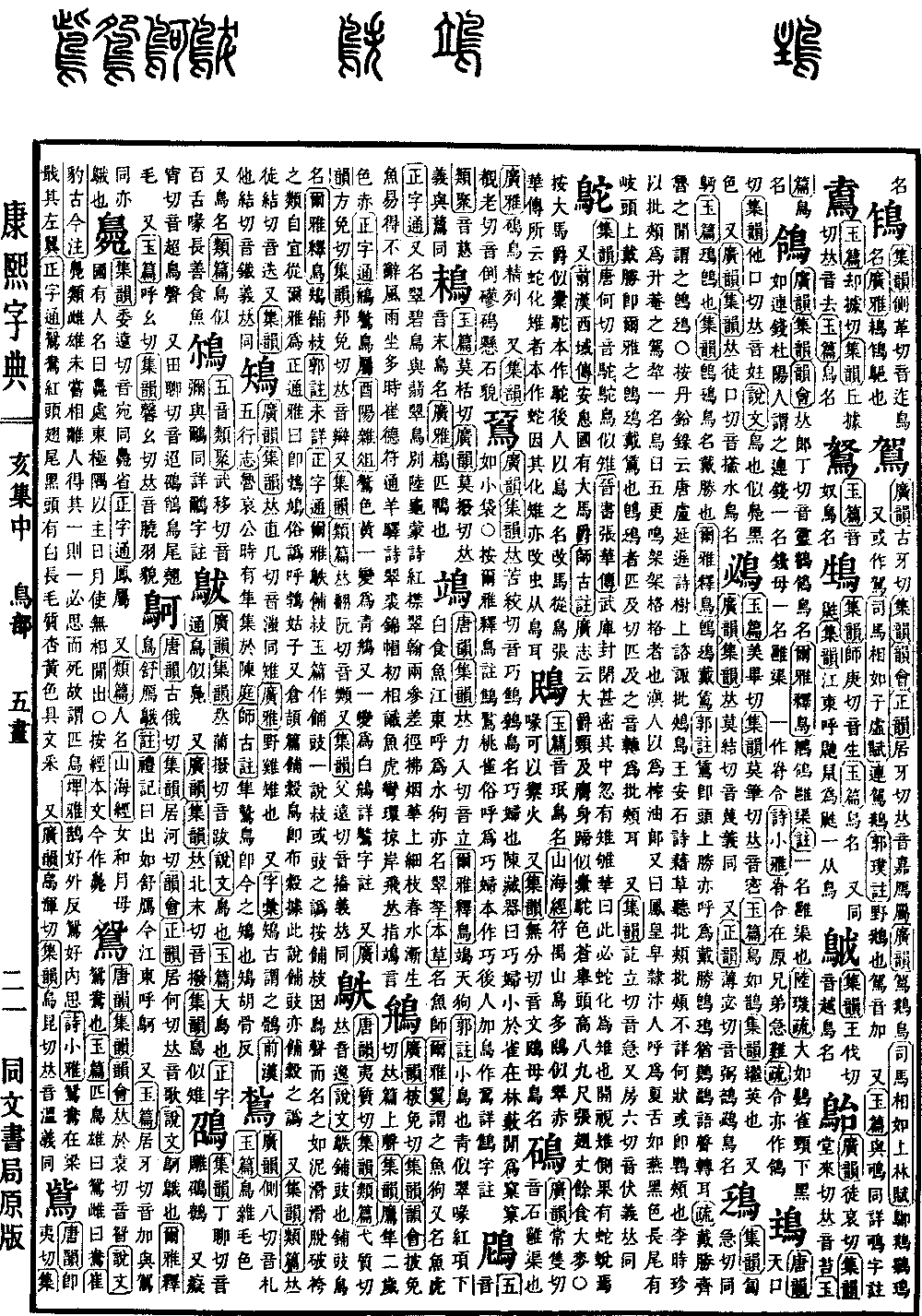
Tuó; Kangxi strokes: 16; Page 1485, Entry 01
Collected Rhymes (Jiyun): Pronounced tuó. The ostrich is like a pheasant. Book of Jin (Jinshu), Biography of Zhang Hua: The weapons arsenal was sealed very tightly, and yet a pheasant suddenly crowed inside. Zhang Hua said, "This must be a snake that has transformed into a pheasant." Upon opening it to examine the area beside the pheasant, there was indeed a shed snake skin.
Also, History of the Former Han (Qianhanshu), Account of the Western Regions: In the Anxi Kingdom, there is a species of large horse-sparrow. Note by Shigu: The Wide Gazetteer (Guangzhi) says, "The large sparrow has a neck and chest leading to the body, and hooves like a camel. Its color is dark blue-black. When it lifts its head, it is eight or nine feet high, and when it spreads its wings, they span over ten feet. It eats barley."
Note: The large horse-sparrow resembles a camel. Originally it was written with the camel character, but later, because it is a type of bird, the radical was changed from horse to bird. The pheasant mentioned in the Biography of Zhang Hua was originally written with the snake character, but because it had transformed into a pheasant, the radical was changed from insect to bird.