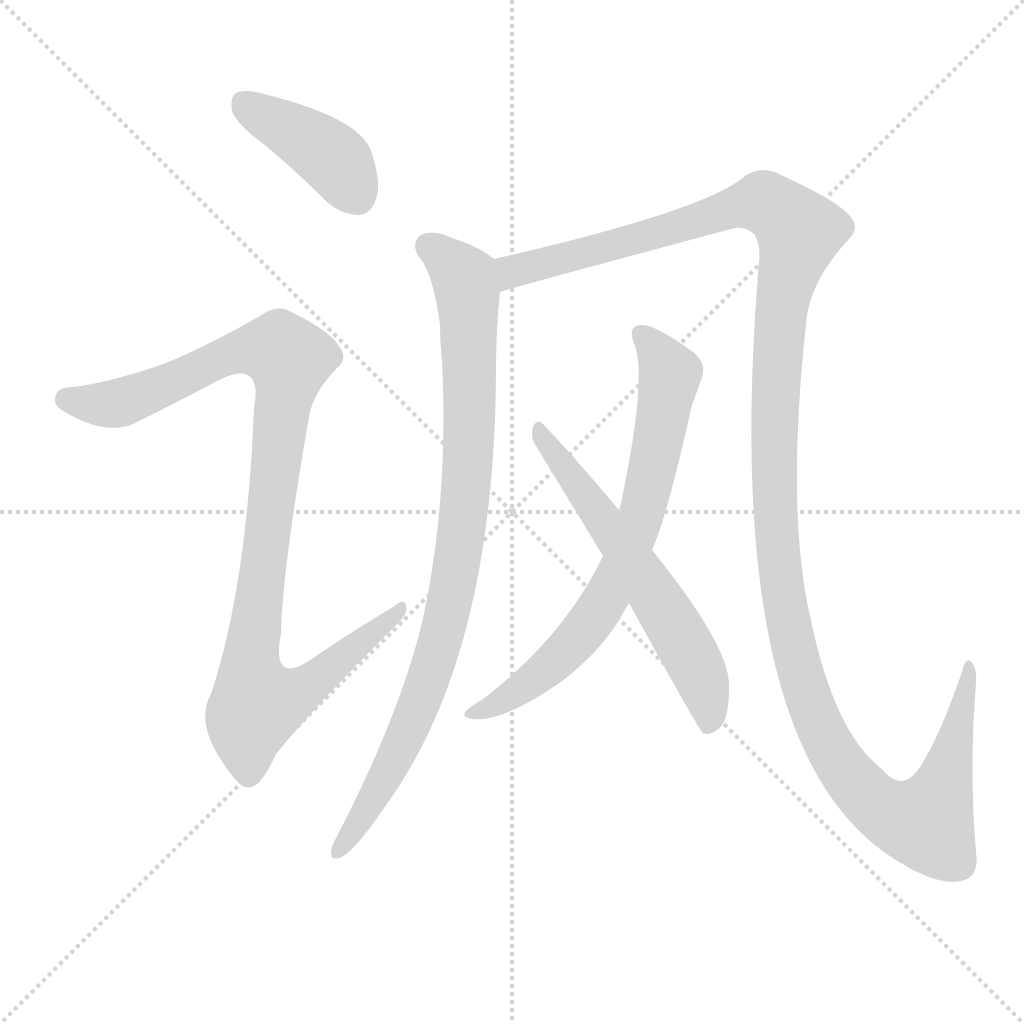
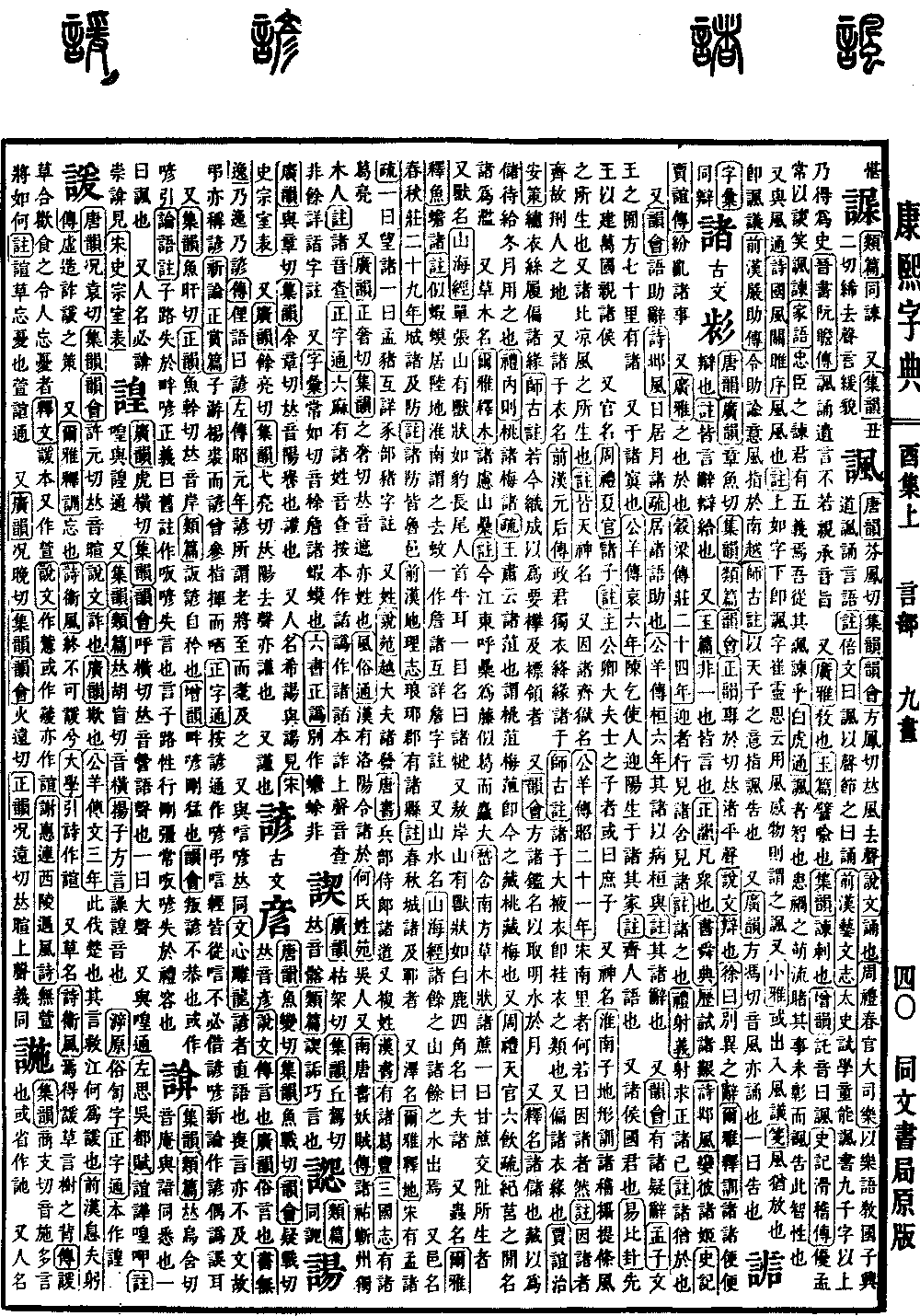
You Collection, Upper Volume
Radical: Speech (yán)
Kangxi Strokes: 16
Page 1172, Entry 01
Pronounced feng (falling tone).
According to the Shuowen Jiezi (Shuowen), it means to recite.
In the Rites of Zhou (Zhouli), Spring Offices section, it states: Use music and language to teach the youths of the state, inspiring them to recite and speak. The commentary notes: To recite text from memory is called feng, while reading aloud with rhythmic cadence is called song.
In the Book of Han (Hanshu), Treatise on Literature, it states: The Grand Historian would examine scholars; only those who could recite from memory nine thousand characters or more were eligible to serve as history officials.
In the Book of Jin (Jinshu), Biography of Ruan Zhan, it states: Reciting the words left behind by predecessors is not as good as hearing their teachings in person.
Also means to teach, according to the Guangya.
According to the Yupian, it means to use metaphor.
According to the Jiyun, it means to remonstrate or criticize.
According to the Zengyun, to express meaning through tone and inflection is called feng.
In the Records of the Grand Historian (Shiji), Biographies of the Jester, it states: You Meng would often use humorous banter to offer gentle remonstrance.
In the Family Sayings (Jiaoyu), it states: There are five ways for a loyal minister to remonstrate with a ruler; I advocate for the method of gentle, allegorical admonition.
In the Comprehensive Discussions in the White Tiger Hall (Baihu Tong), it states: Feng is a manifestation of wisdom. To perceive misfortune when it is still in its infancy and to inform others indirectly before the situation becomes apparent is the essence of wisdom.
It is also used interchangeably with the character for wind (feng).
In the Book of Odes (Shijing), Preface to the Guanju, it states: Wind (feng) is equivalent to feng (to remonstrate/recite). The commentary notes: The first character is read with its original sound, while the second character is the word feng. Cui Ling'en states: To use the wind to influence things is called feng.
In the Lesser Odes (Xiaoya), it states: Some engage in wind-like (feng) discussion and criticism. The commentary states: Wind here is like the word for release, referring to indirect discussion and criticism.
In the Book of Han (Hanshu), Biography of Yan Zhu, it states: Ordered Yan Zhu to convey the imperial will and indirectly inform Nanyue of the Emperor's intentions. The commentary by Yan Shigu states: This means to indirectly convey the Emperor's will.
Also, according to the Guangyun, pronounced feng. It also means to recite. One theory suggests it means to inform.