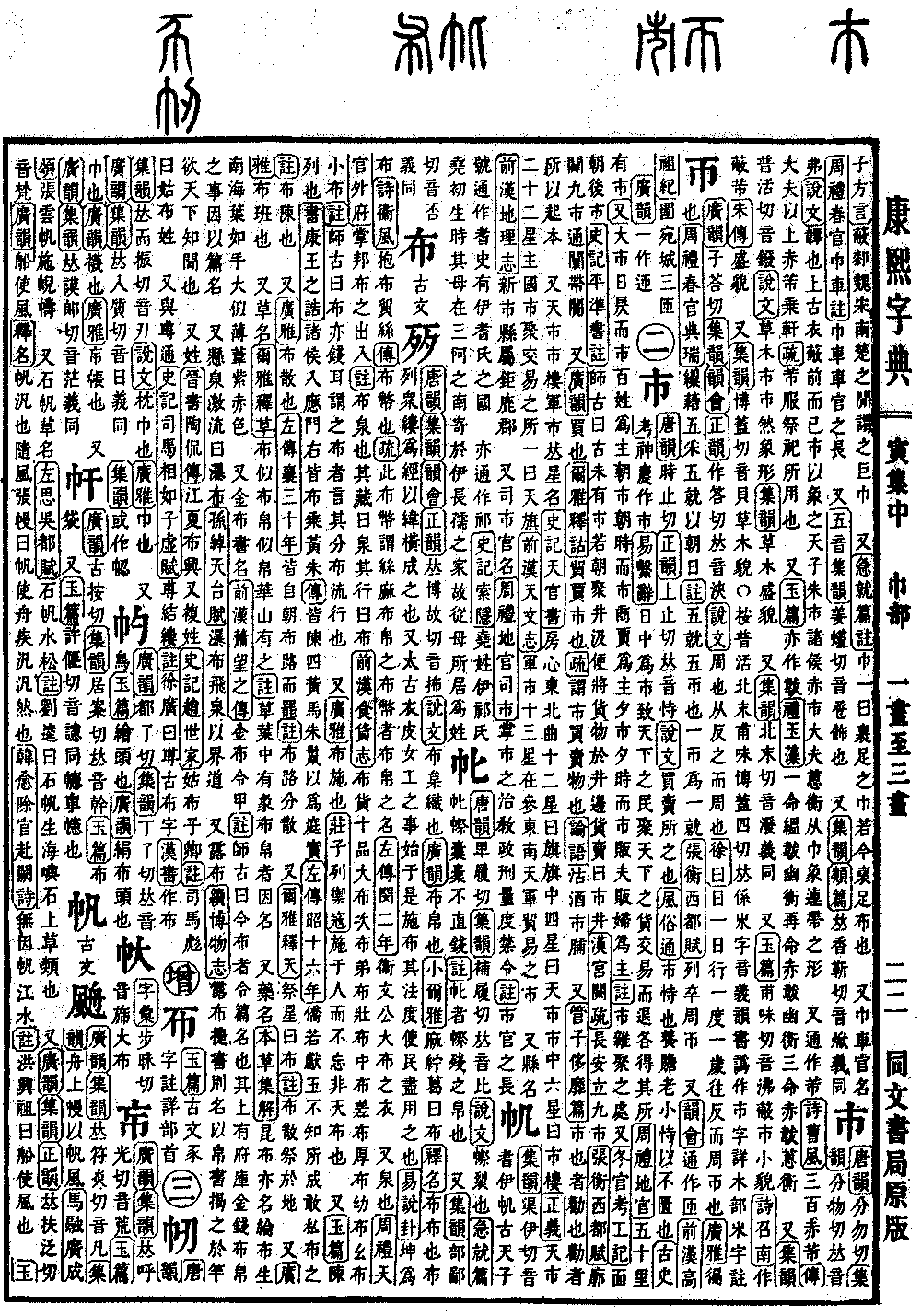
Yin Collection, Middle Volume
Radical: Kerchief (jīn)
Page 328, Entry 01
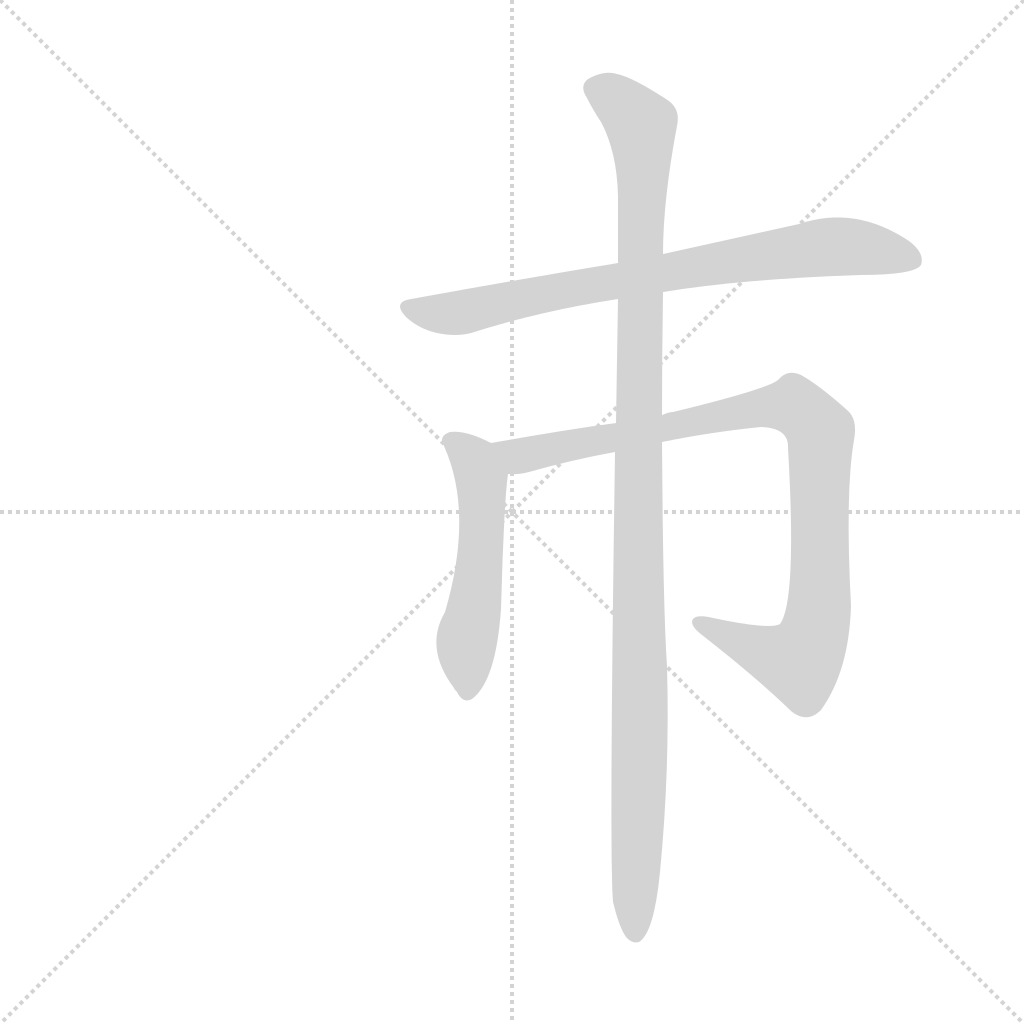
Pronounced fu.
According to the Explaining Graphs and Analyzing Characters (Shuowen Jiezi), it refers to a knee-pad or apron. In ancient times, clothing served merely to cover the front, and this character represents that form. The Emperor wore vermilion knee-pads, feudal lords wore red knee-pads, and high officials wore green knee-pads. It is composed of the radical for kerchief, imitating the shape of the attached belt. It is also written in a variant form (fei).
In the Book of Odes (Shijing): Three hundred red knee-pads. The commentary states: High officials and above wear red knee-pads when riding in carriages. The sub-commentary states: Knee-pads are garments used during sacrificial rites.
It is also written in a variant form (fu). In the Book of Rites (Liji): Those with one appointment wear hempen knee-pads with dark green belts; those with two appointments wear red knee-pads with dark green belts; those with three appointments wear red knee-pads with green belts.
Also pronounced po. According to the Explaining Graphs and Analyzing Characters (Shuowen Jiezi), it describes the appearance of grass and trees. It signifies the flourishing state of vegetation.
Also pronounced po. The meaning is the same as above.
Also pronounced fei. The term bi-fu describes something small in appearance. In the Book of Odes (Shijing), it is written as bi-fei. The commentary by Zhu Xi describes it as a flourishing appearance.
Also pronounced bei. It describes the appearance of grass and trees. Note: The four pronunciations—pu-huo, bei-mo, fu-wei, and bo-gai—pertain to the sound and meaning of another character, which the rhyme dictionaries have mistakenly attributed to this character; see the note under the Wood radical.