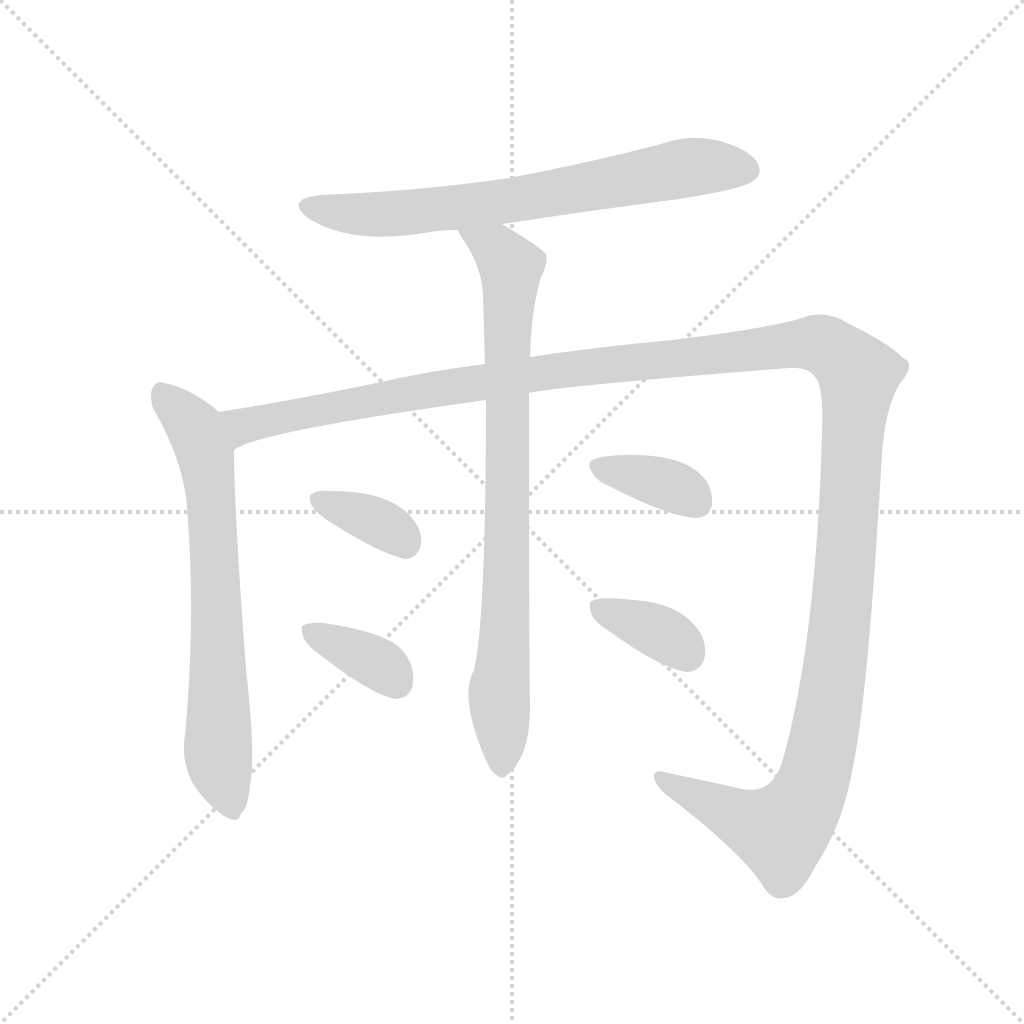
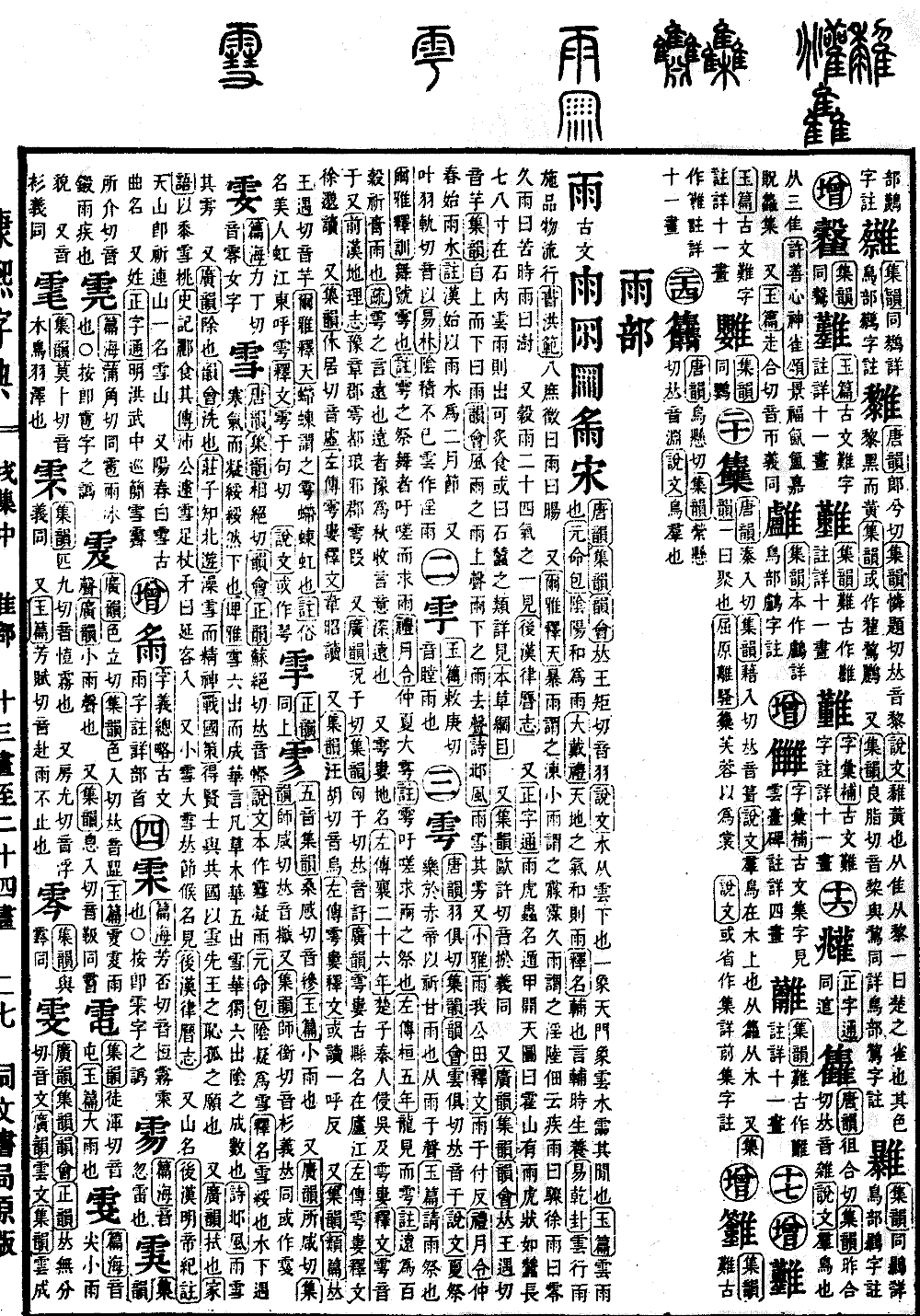
Xu Collection, Middle Volume. Radical: Rain (yǔ). Kangxi stroke count: 8. Page 1371, Entry 18. Ancient character form. Pronounced yǔ (rising tone) according to Tang Rhymes (Tangyun), Collected Rhymes (Jiyun), and Rhyme Compendium (Yunhui). According to Explaining Graphs and Analyzing Characters (Shuowen), it is water falling from the clouds. The horizontal line represents heaven, the enclosure represents clouds, and the water is falling in between. Jade Chapters (Yupian) says it is cloud-rain. According to Source of Destiny (Yuanmingbao), when yin and yang harmonize, it becomes rain. According to Book of Rites by Dai (Dadaili), when the vapors of heaven and earth are in harmony, there is rain. According to Explanations of Names (Shiming), it means to assist, as it assists in the growth and nourishment of the seasons. Book of Changes (Yijing), Qian hexagram: Clouds move and rain is distributed, and all things flourish and circulate. Book of Documents (Shujing), Great Plan (Hongfan): The eight manifestations, one is called rain, one is called sunshine. Also, in Progressive Encyclopedia (Erya), section on Heaven: Sudden rain is called dong, light rain is called maimu, prolonged rain is called yin. Lu Dian says: rapid rain is called zhou, slow rain is called ling, prolonged rain is called ku, and timely rain is called shu. Also, Grain Rain is one of the twenty-four solar terms. See History of Treatises on Harmonics and Calendars in the Book of the Later Han (Houhan Shu). Also, in Correction of Characters (Zhengzitong): Rain-tiger, name of an insect. Hidden Method: Diagram of Opening Heaven states: Mount Huo has the rain-tiger, shaped like a silkworm, seven or eight inches long, living inside stones; it emerges when it is cloudy or rainy and can be roasted and eaten. Some say it is a type of stone-silkworm. See Compendium of Materia Medica (Bencao Gangmu) for details. Also, according to Collected Rhymes (Jiyun), pronounced yǔ (rising tone). The meaning is the same. Also, according to Extensive Rhymes (Guangyun), Collected Rhymes (Jiyun), and Rhyme Compendium (Yunhui), pronounced yù (falling tone). Collected Rhymes (Jiyun) states: that which falls from above is called rain. Rhyme Compendium (Yunhui) notes: the word rain in wind and rain has a rising tone, and the word rain in falling rain has a falling tone. Book of Odes (Shijing), Beifeng: Rain and snow falling thick. Also, Xiaoya: Rain upon our public fields. Pronunciation notes indicate: rain, pronounced yù. Book of Rites (Liji), Monthly Ordinances (Yueling): In the second month of spring, the rain-water term begins. Commentary: The Han dynasty began to designate rain-water as the term for the second month. Also, rhyming with yǔ (rising tone) and guǐ (falling tone), pronounced yǐ (rising tone). Forest of Changes (Yilin): Yin vapors accumulate incessantly, clouds form prolonged rain. Textual research: In Explaining Graphs and Analyzing Characters (Shuowen), it says water falls from the clouds. The horizontal line represents heaven, the enclosure represents clouds, and the water is falling in between. According to the original text, the character gate has been corrected to the enclosure radical.