Wei Collection, Lower Volume
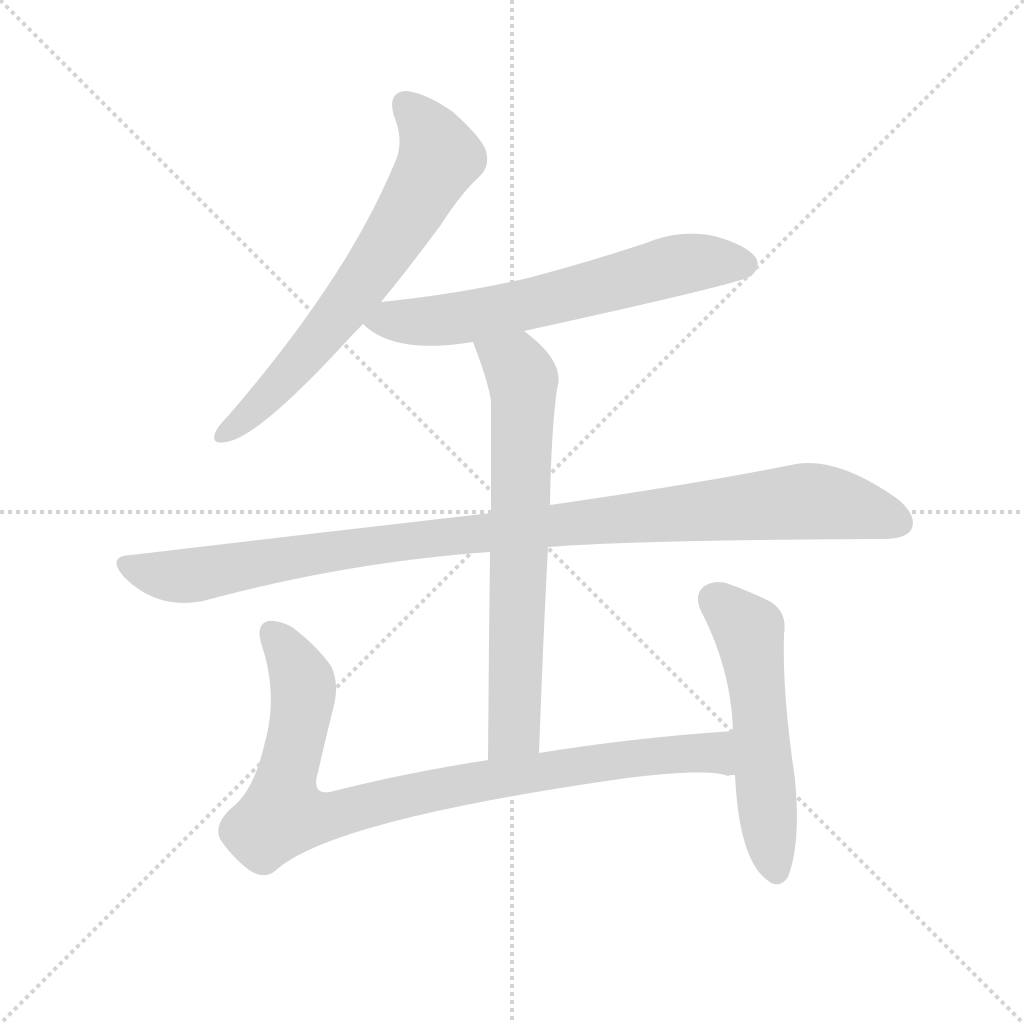
Radical: Earthenware Jar (fǒu)
Kangxi Strokes: 6
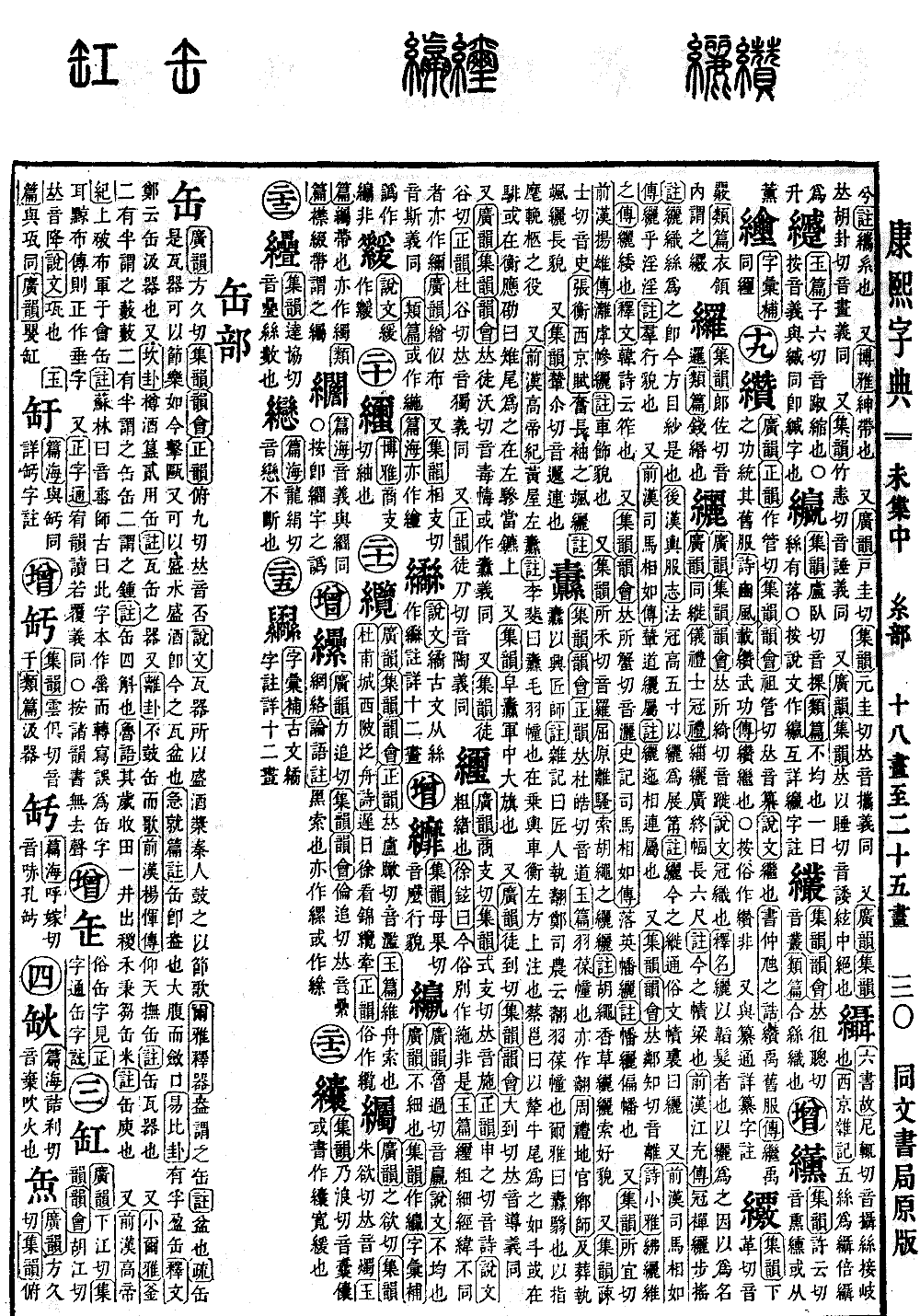
Page 944, Entry 26
Pronounced fǒu
According to the Shuo Wen Jiezi (Shuowen Jiezi), it is an earthenware vessel used for containing wine or broth; the people of Qin used it as a percussion instrument to keep rhythm for singing.
According to the Erya (Erya), the commentary explains that an ang vessel is called a fou.
The commentary explains that it is a basin.
The sub-commentary states that the fou is an earthenware vessel used to keep musical rhythm, similar to modern bowls, and can also be used to hold water or wine; it is what is known today as an earthenware basin.
According to the commentary on the Jijiupian (Jijiupian), the fou is the same as the ang, possessing a large belly and a constricted mouth.
According to the Book of Changes (Yijing), in the Bi hexagram: With sincerity, fill the fou.
The explanatory text notes that Zheng Xuan says the fou is a vessel used for drawing water.
Also, in the Kan hexagram: A jar of wine and two bowls of grain, using a fou.
The commentary notes it is an earthenware vessel.
Also, in the Li hexagram: Not beating the fou and singing.
According to the Book of Han (Hanshu), biography of Yang Yun: Looking up at heaven and patting the fou.
The commentary notes that the fou is an earthenware vessel.
Also, according to the Xiao Erya (Xiao Erya): Two and a half units are called a sou, two and a half sou are called a fou, and two fou are called a zhong.
The commentary notes that a fou contains four hu.
According to the Discourses of the States (Guoyu): In that year the harvest from one jing of land yielded a zong of grain, a bing of fodder, and a fou of rice.
The commentary notes that a fou is a yu.
Also, according to the Book of Han (Hanshu), Annals of Emperor Gao: The Emperor defeated the army of Bu at Huifou.
The commentary by Su Lin says the pronunciation is [pi]. Yan Shigu says this character was originally written as a different character, and was mistakenly transcribed as the character fou. In the biography of Qing Bu, it is written correctly as the character chui.
According to the Zhengzitong (Zhengzitong), in the you rhyme category, it is read like fu, with the same meaning. Note that various rhyme dictionaries do not include an entering tone.