Zi Collection, Middle Volume
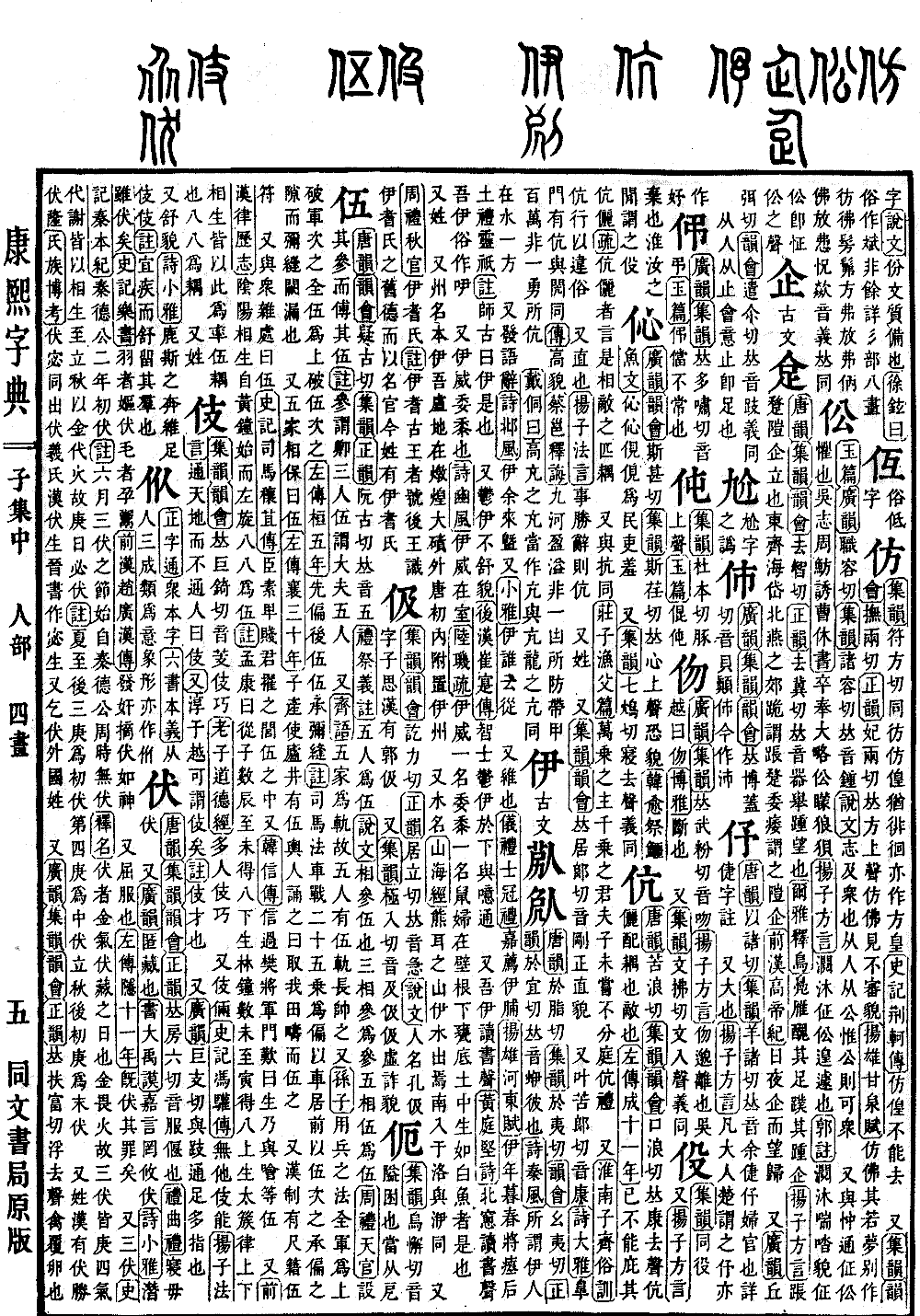
Radical: Person (rén)
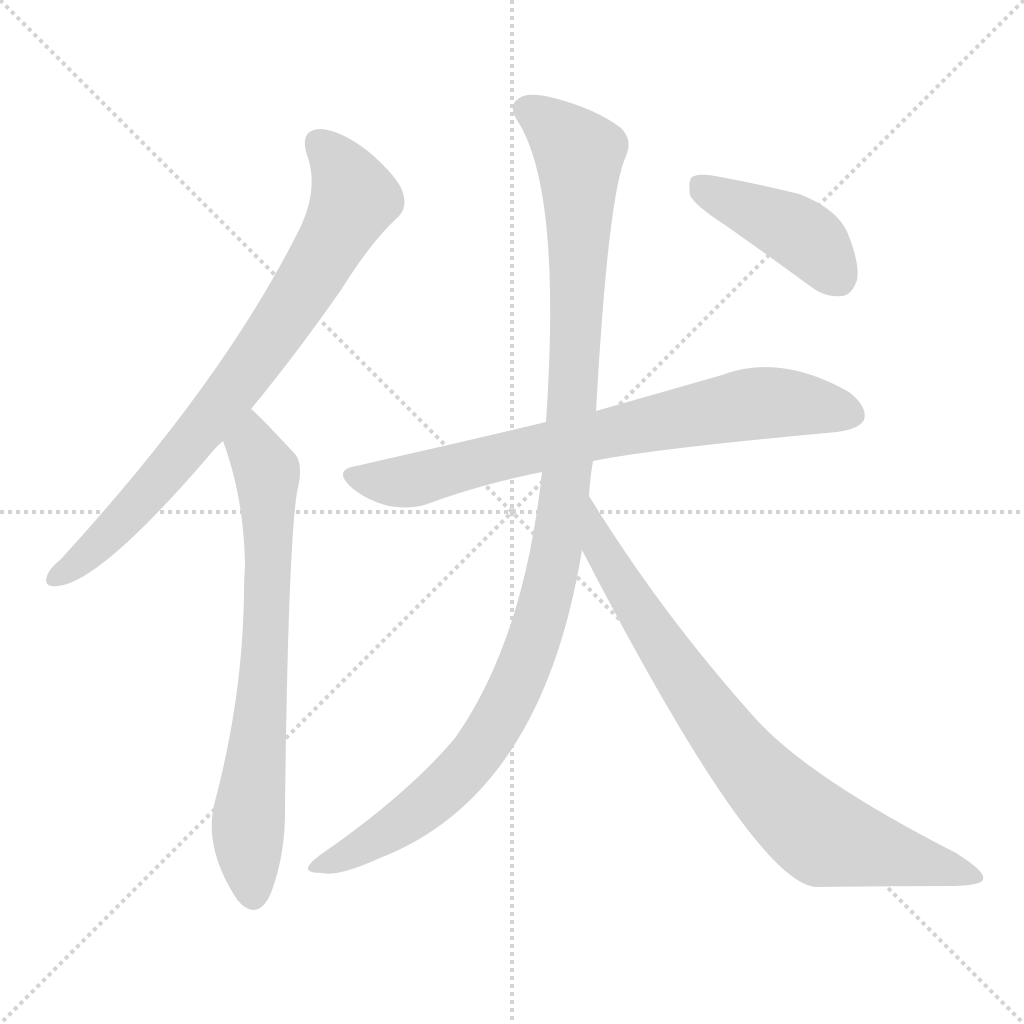
Character: fú
Kangxi Stroke Count: 6
Page 95, Position 23
Phonetics according to the Tangyun, Jiyun, Yunhui, and Zhengyun dictionaries: Pronounced fú.
To lie prostrate. When sleeping, do not lie face down. — Book of Rites (Liji)
Also, according to the Guangyun dictionary: To hide or conceal. Good counsel is not hidden away. — Book of Documents (Shangshu)
Although hidden and concealed. — Classic of Poetry (Shijing)
Birds hatch eggs; beasts brood their young. — Records of the Grand Historian (Shiji)
Exposing wickedness and uncovering secrets like a divine spirit. — History of the Former Han (Qian Hanshu)
Also, to submit. The State of Xu has already submitted to its crimes. — Commentary of Zuo (Zuo Zhuan)
Also, the Three Periods of Dog Days known as Sanfu. In the second year of Duke De of Qin, the Fu days were first established. — Records of the Grand Historian
Commentary: This refers to the seasonal heat of the three Fu periods in the sixth month. This practice began with Duke De of Qin. During the Zhou Dynasty, there were no Fu days.
Explaining Names (Shiming): Fu refers to the days when the element Metal (jīn) remains hidden. Metal fears Fire (huǒ), so the three Fu periods all occur on gēng days (a day in the sexagenary cycle). The cycles of the four seasonal energies follow the order of mutual generation. When the season of Autumn begins, the energy of Metal succeeds that of Fire; therefore, the gēng day must be the Fu day.
Commentary: The third gēng day after the Summer Solstice is the Initial Fu; the fourth gēng day is the Middle Fu; the first gēng day after the start of Autumn is the Final Fu.
Also, a surname. In the Han Dynasty, there were individuals named Fu Sheng and Fu Long.
Comprehensive Study of Clans (Shizu Bokao): The surnames Fu and Mi both originate from the lineage of the mythical ruler Fuxi. The Han Dynasty scholar Master Fu is written as Master Mi in the Book of Jin (Jinshu).
Also, Qifu is a surname of a non-Han ethnic group.
According to the Guangyun, Jiyun, Yunhui, and Zhengyun dictionaries: Pronounced in the departing tone as fù. This refers to birds brooding on eggs.
Notes on Things Past and Present (Gujin Zhu): Swallows brood on wùjǐ days (specific days in the sexagenary cycle).
History of the Former Han: A rooster in the household of a Chancellor's clerk hatched chicks.
According to the Jiyun dictionary: Sometimes also written in a variant form pronounced bú. To crawl on the ground using one's knees. — Records of the Grand Historian
Also, a rhyming pronunciation like bì. Misfortune is what fortune relies upon; fortune is where misfortune hides. Sorrow and joy gather at the same gate; auspiciousness and inauspiciousness share the same territory. — Rhapsody on the Owl (Fu Fu)
Textual Research: Regarding the passage in the Commentary of Zuo, Eleventh Year of Duke Yin, which states "already submitted to the crime," according to the original text, the name of the State of Xu should be added before the word "already."