Wei Collection, Middle Volume
Radical: Silk (mì)
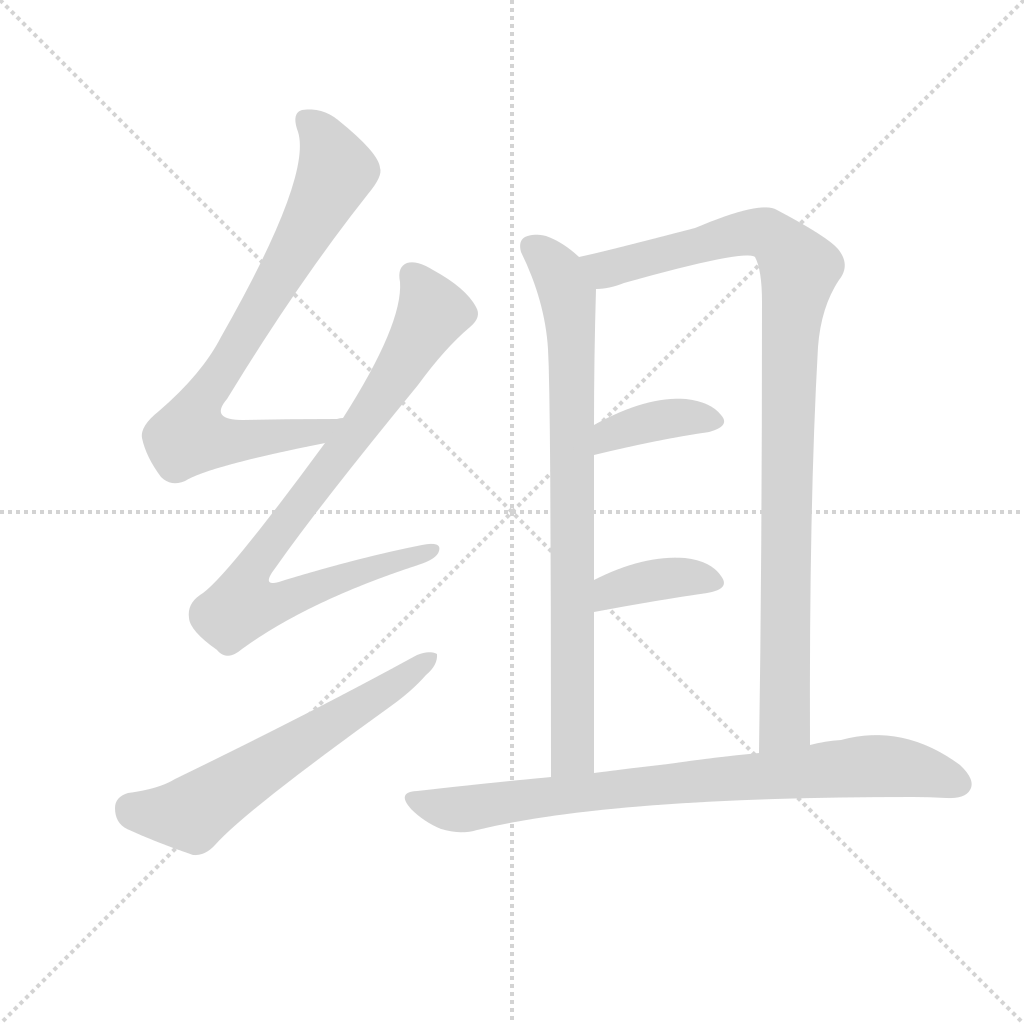
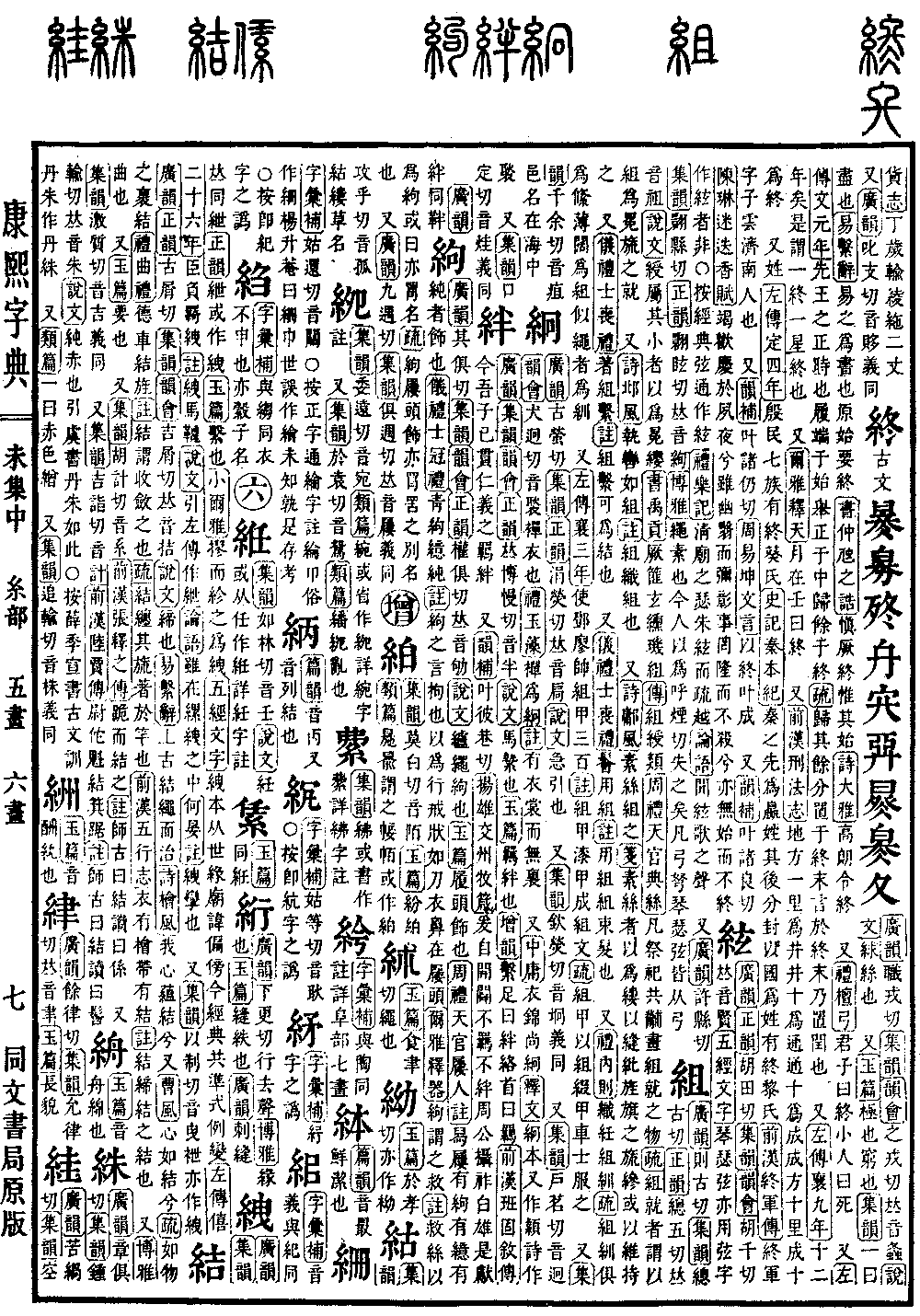
组
Kangxi strokes: 11
Page 921, Entry 03
Guangyun (Guangyun): Pronounced zu. Jiyun (Jiyun): Pronounced zu. Zhengyun (Zhengyun): Pronounced zu.
Shuowen Jiezi (Shuowen): A type of silk ribbon. The smaller ones are used as tassels for ceremonial caps.
Book of Documents (Shujing): In their baskets were vermilion-dyed silk ribbons and pearls. Commentary: Silk ribbons are a type of cord.
Rites of Zhou (Zhouli): For all sacrificial rites, provide articles adorned with patterned silk ribbons. Commentary: These are the ribbons used for the tassels on caps.
Book of Odes (Shijing): Holding the reins as if they were silk ribbons. Commentary: These are woven silk ribbons.
Book of Odes (Shijing): Bound with white silk ribbons. Commentary: These are white threads used as silk, employed to sew the streamers of banners or to secure them.
Book of Etiquette and Ceremonial (Yili): Wearing silk ribbon ties. Commentary: These are silk ribbons that can be used for knots.
Book of Etiquette and Ceremonial (Yili): Use silk ribbons to bind the hair. Commentary: Using silk ribbons to tie up the hair.
Book of Rites (Liji): Weaving silk ribbons and cords. Commentary: Ribbons and cords are both types of braids. Thin and wide pieces are called ribbons, while those resembling ropes are called cords.
Zuo Tradition (Zuozhuan): He ordered Deng Liao to lead three hundred men in armored groups. Commentary: Armored groups refer to armor lacquered with ribbon patterns. Commentary: These were armors joined with silk ribbons, worn by chariot warriors.
Jiyun (Jiyun): Pronounced ju. Name of a district located in the sea.