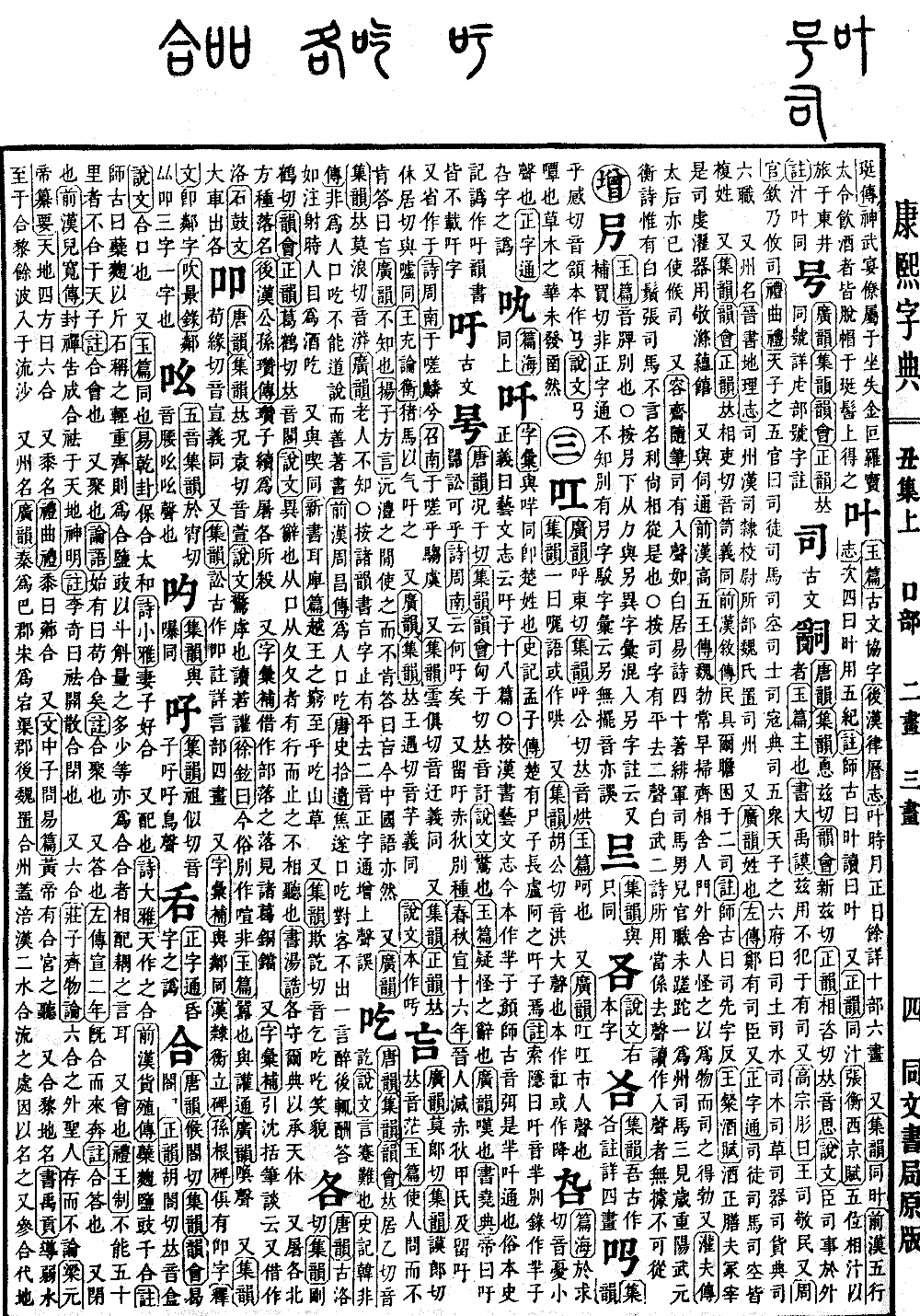
Chou Collection, Upper Volume
Radical: Mouth (kǒu)
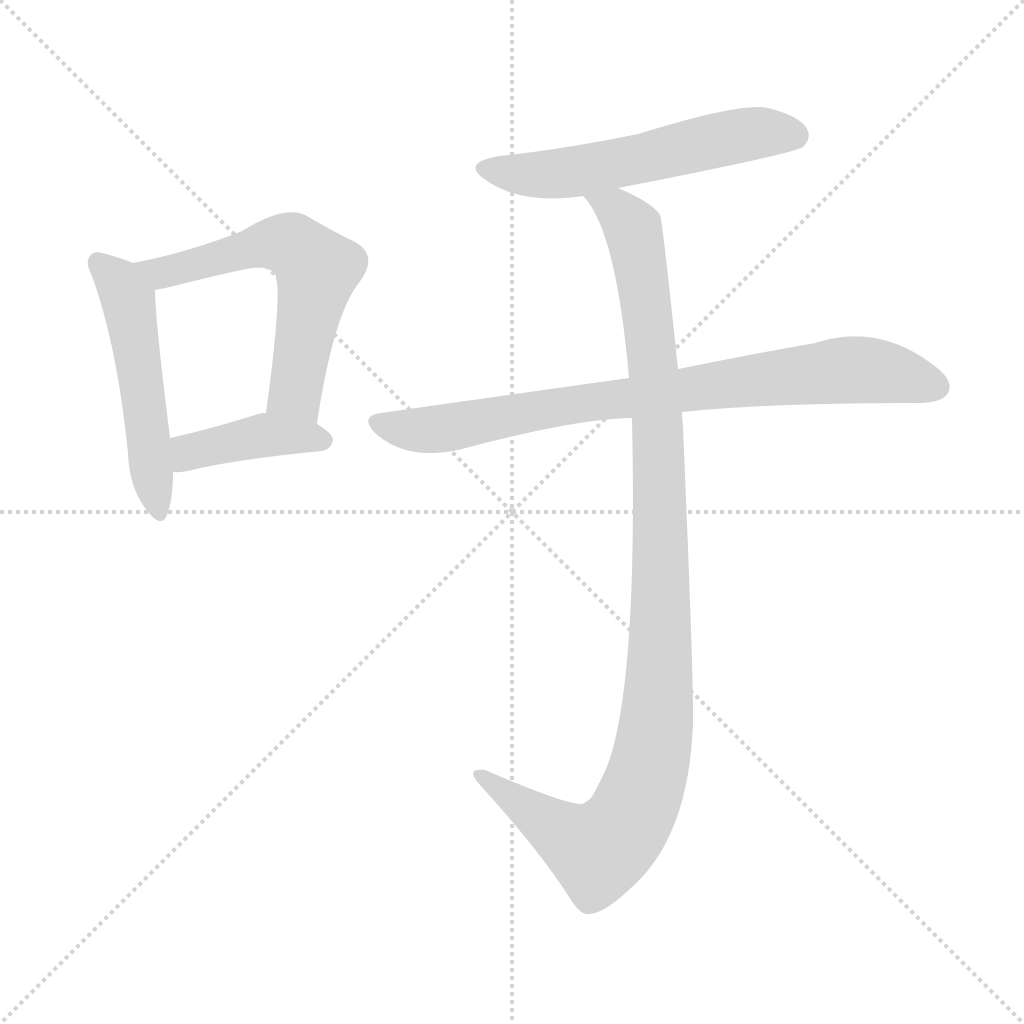
吁
Kangxi stroke count: 6
Page 174, Entry 14
Ancient literary records:
Pronounced xu.
Pronounced xu.
Pronounced xu.
Pronounced xu.
Pronounced xu, with the same sound as xu.
Shuowen Jiezi (Explaining Graphs and Analyzing Characters) explains it as: a sound of astonishment.
Yupian (Jade Chapters) explains it as: a modal particle expressing doubt or strangeness.
Guangyun (Broad Rhymes) explains it as: to sigh.
Book of Documents (Shangshu), Canon of Yao: Emperor Yao said: Oh, how can one employ a deceitful and litigious person?
Book of Odes (Shijing), Zhou Nan: How sorrowful.
Also refers to Liuxu, a branch of the Red Di tribe.
Spring and Autumn Annals (Chunqiu), Duke Xuan, 16th Year: The Jin state destroyed the Jia and Liuxu branches of the Red Di.
Also written in the simplified form yu.
Book of Odes (Shijing), Zhou Nan: Oh, this qilin.
Zhao Nan: Oh, this zouyu.
Also pronounced yu, with the same sound as yu. The meaning is the same.
Also pronounced xu, the same as the character xu.
Wang Chong, Balanced Discourses (Lunheng): To blow breath upon pigs and horses.
Also pronounced yu, with the same sound as yu. The meaning is the same.
Shuowen Jiezi (Explaining Graphs and Analyzing Characters) was originally written as 吁. The form of the character consists of mouth and yu.