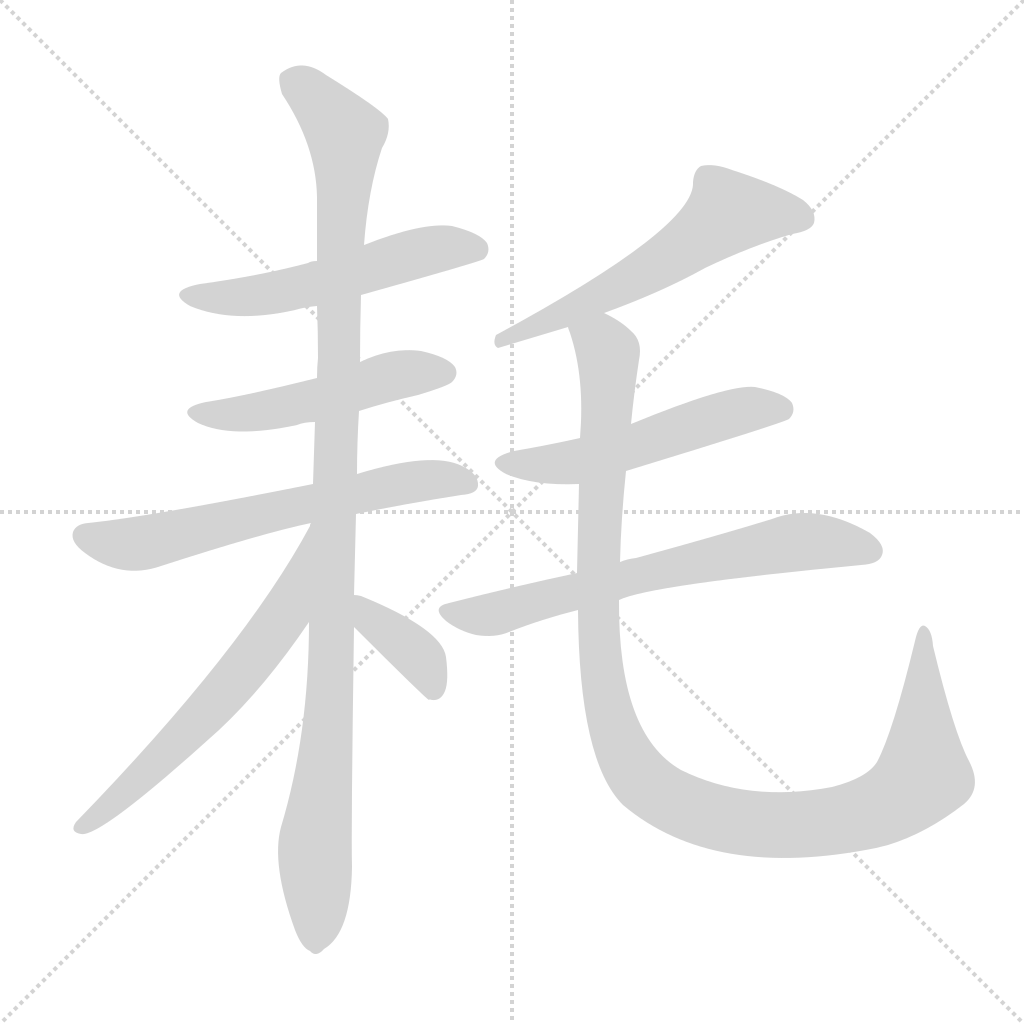
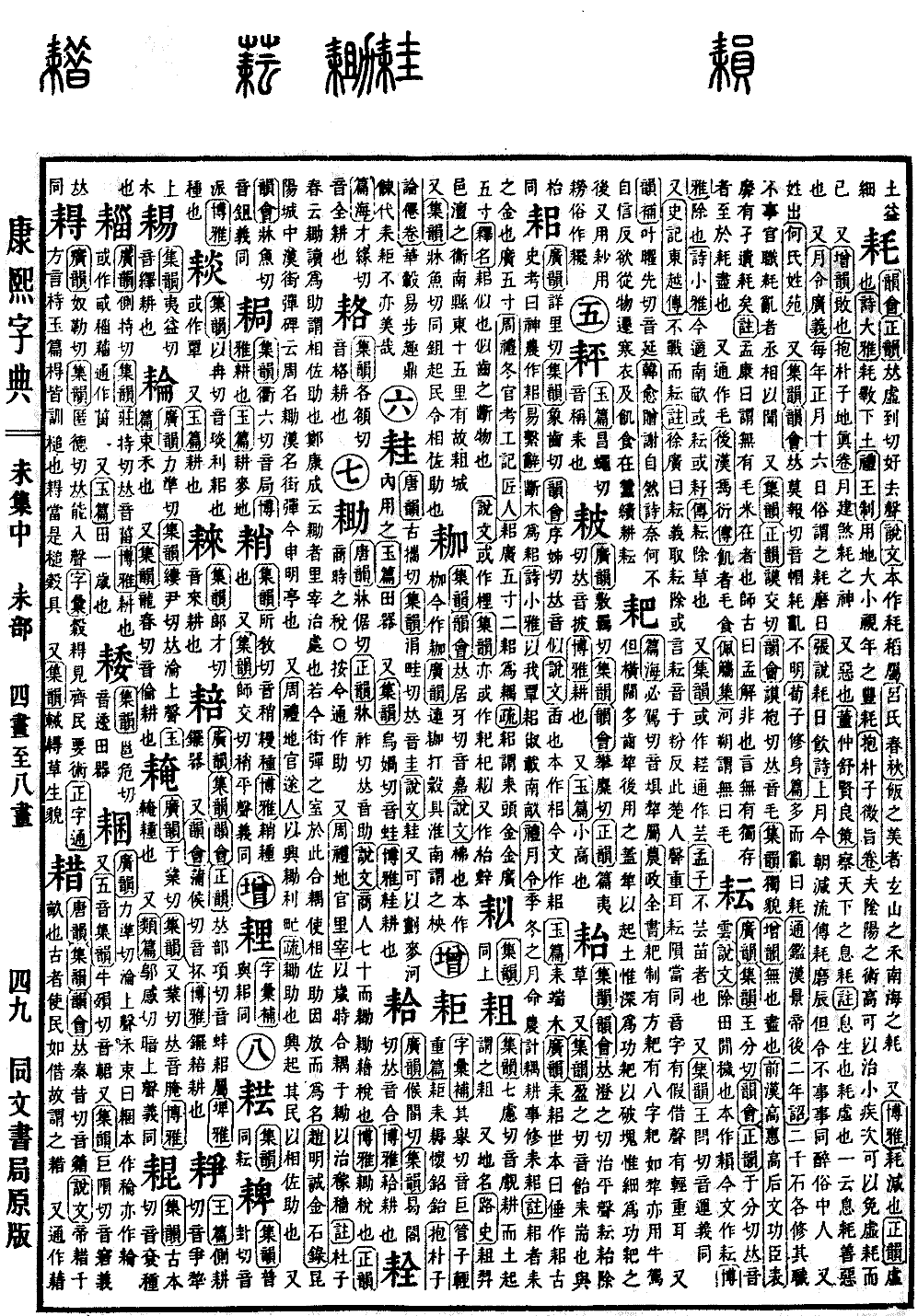
Wei Collection, Middle Volume
Radical: Plow (lěi)
Kangxi stroke count: 10
Page 963, Entry 01
Pronounced hao (falling tone).
According to the Explanation of Characters (Shuowen), originally written as the character for rice-like grain (hao). A type of rice. According to the Master Lu's Spring and Autumn Annals (Lüshi Chunqiu), the finest rice is the grain of the mountains and the hao grain of the South Sea.
Also means to decrease.
Means empty. According to the Book of Odes (Shijing), it depletes the lands below. According to the Record of Rites (Liji), the usage of land size should be determined by the abundance or depletion of the year's harvest. According to the Baopuzi, the arts of yin and yang can at best treat minor illnesses, and otherwise only avoid depletion and waste.
Also means to ruin. According to the Baopuzi, the lunar calendar month-establishing spirit of evil and depletion.
Also means evil. According to Dong Zhongshu's Advice on Worthy and Good Candidates, to observe the growth and depletion of the world. The commentary states that growth means life, and depletion means emptiness. Another theory states that growth and depletion refer to good and evil.
Also, according to the Monthly Ordinances Broad Meaning (Yueling Guangyi), the sixteenth day of the first month is popularly known as the day of depletion and friction. Zhang Yue's poem on the Day of Depletion Drinking says, the first month's morning is reduced, passing down the day of depletion and friction, if one only keeps from doing chores, one may get drunk with the commoners.
Also a surname, appearing in the He Family Surname Garden (He Shi Xingyuan).
Pronounced mao (falling tone).
Disorderly and unclear. According to the Xunzi, much and chaotic is called hao. According to the Comprehensive Mirror (Tongjian), regarding the imperial edict of the second year of Emperor Jing of Han, two thousand shi officials who do not attend to their duties and cause chaotic depletion shall be reported by the prime minister.
Pronounced mao (level tone).
Alone or appearance.
Means nothing, or to exhaust. According to the History of the Former Han, there were none left behind and it was exhausted. The commentary by Meng Kang says it means there was not a single grain of rice left. Yan Shigu says Meng's interpretation is incorrect; it means there was no one left alone, and it was entirely exhausted.
Also used interchangeably with the character for hair (mao). According to the History of the Later Han, the starving ate hair. According to the Peixi Ji, in the northern regions, the word for none is pronounced mao.