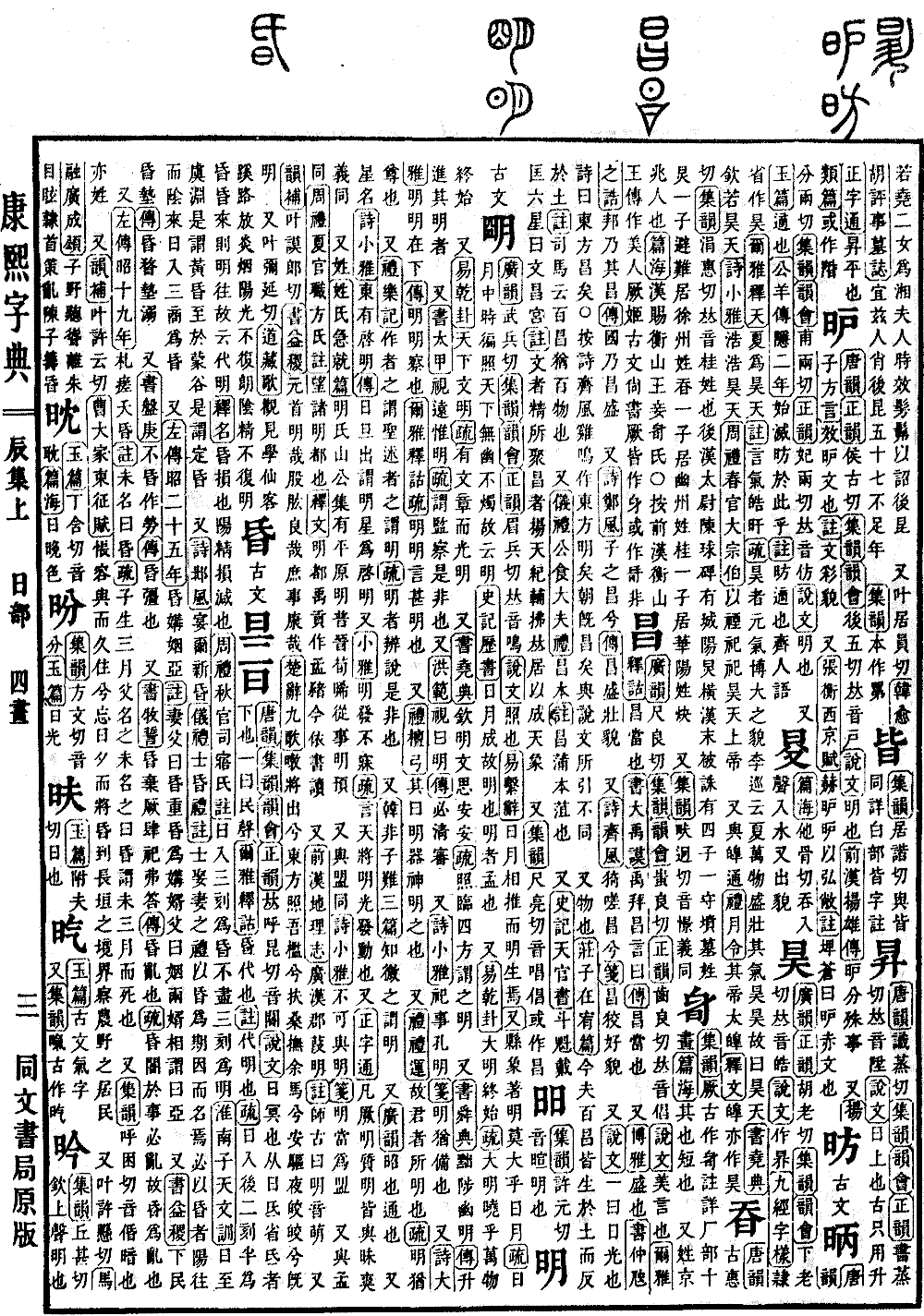
Chen Collection, Upper Volume
Radical: Sun (rì)
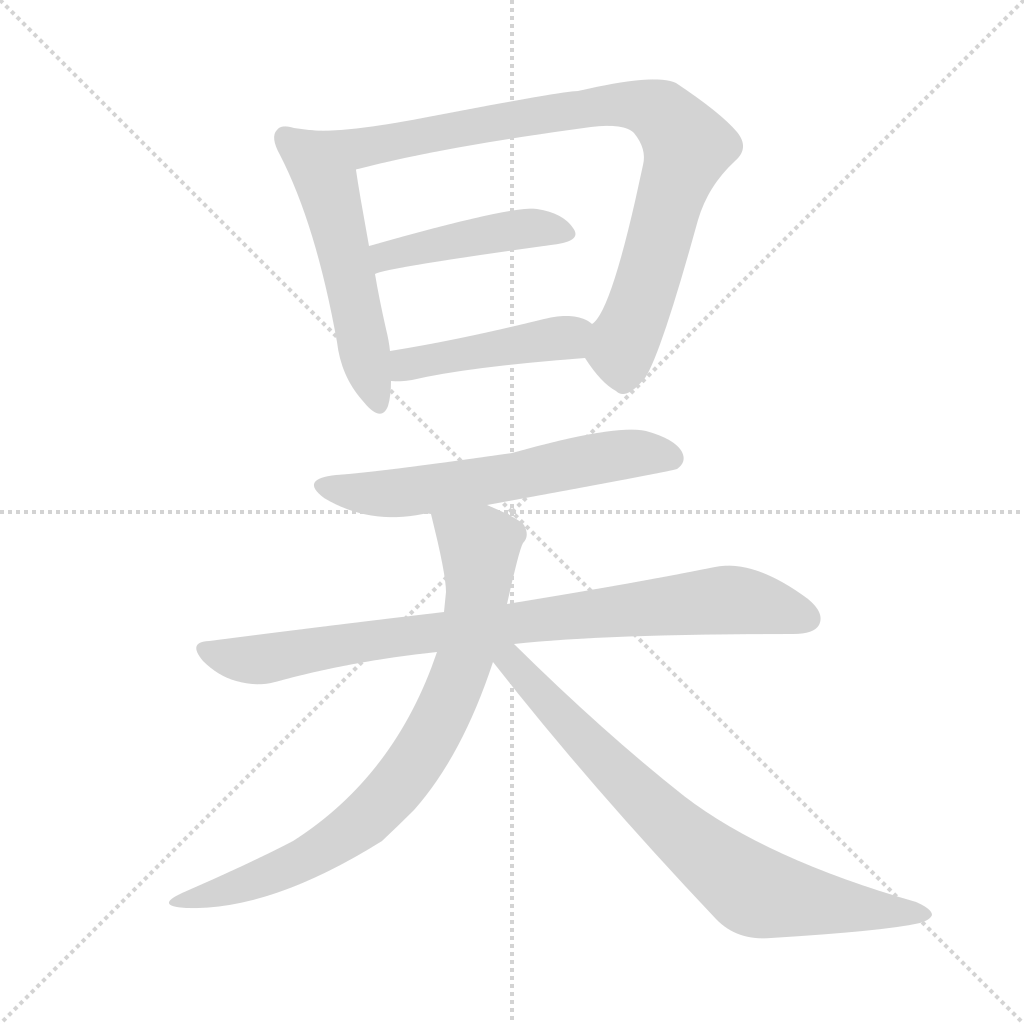
昊
Kangxi Strokes: 8
Page 491, Entry 07
Guangyun (Guangyun) and Zhengyun (Zhengyun) pronounce it hao (falling tone). Jiyun (Jiyun) and Yunhui (Yunhui) pronounce it hao (falling tone). It is pronounced hao.
According to the Shuowen Jiezi (Shuowen), it is written as 昦. According to the Jiujing Ziyang (Jiujing Ziyang), the clerical script form is simplified as 昊.
According to the Erya (Erya), in the context of the interpretation of heaven: summer is called the vast heaven (hao tian). The commentary states: it refers to the vast and radiant energy. The sub-commentary states: Hao refers to the appearance of primordial energy that is vast and great. Li Xun states: in summer, the myriad things are flourishing and vigorous, their energy is vast, therefore it is called the vast heaven.
In the Book of Documents (Shangshu), Chapter on the Canon of Yao (Yao Dian): reverently complying with the vast heaven.
In the Book of Odes (Shijing), Lesser Odes (Xiao Ya): vast and expansive is the immense heaven.
In the Rites of Zhou (Zhouli), Spring Officials, Great Minister of Rites: use pure offerings to sacrifice to the Vast Heaven Sovereign God.
It is also used interchangeably with hao. In the Book of Rites (Liji), Monthly Ordinances (Yueling): its sovereign is Taihao. According to the Explanatory Text (Shiwen): hao is also written as hao.