Wei Collection, Middle Volume
Radical: Old (lǎo)
Kangxi stroke count: 10
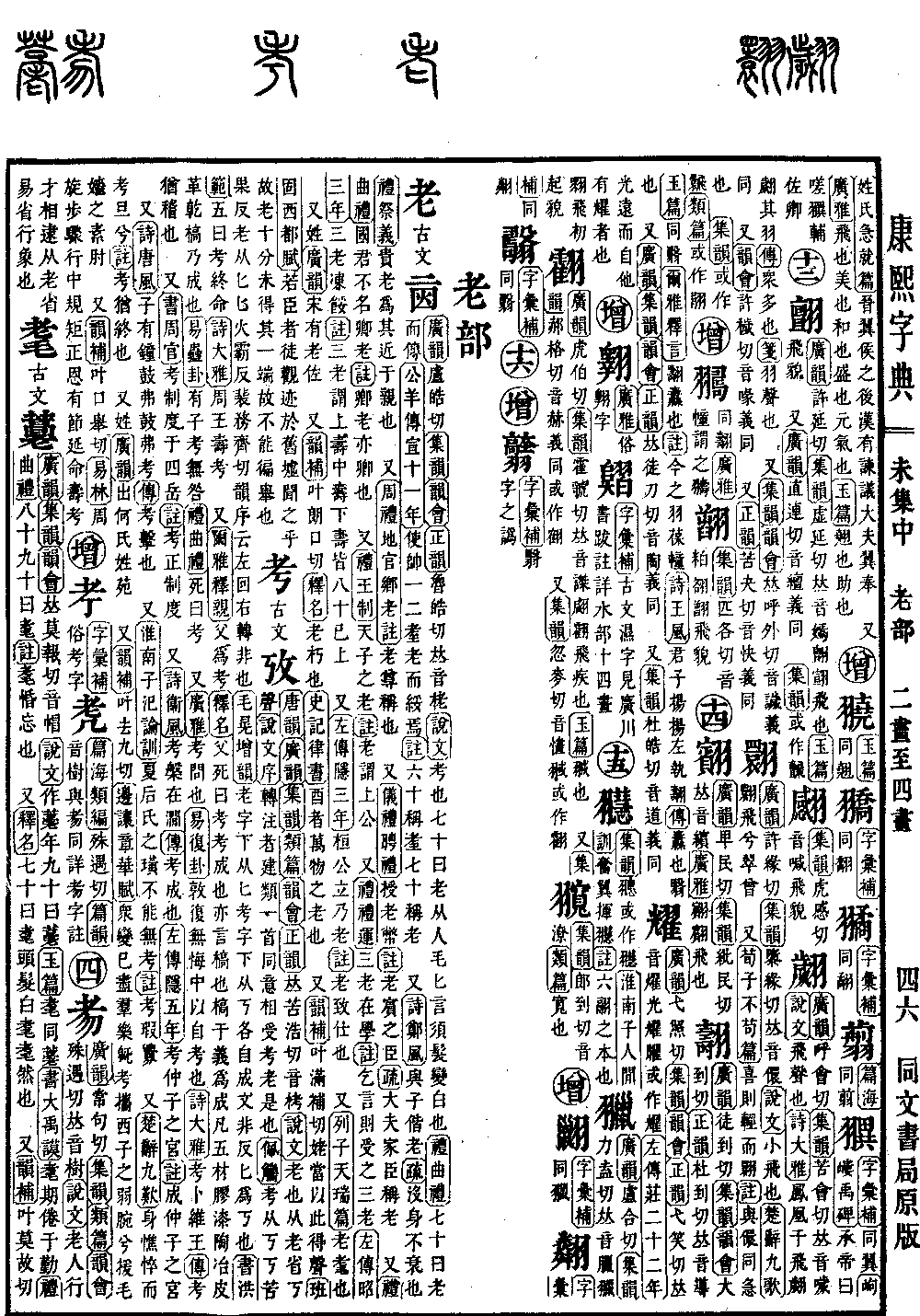
Page 960, Entry 32
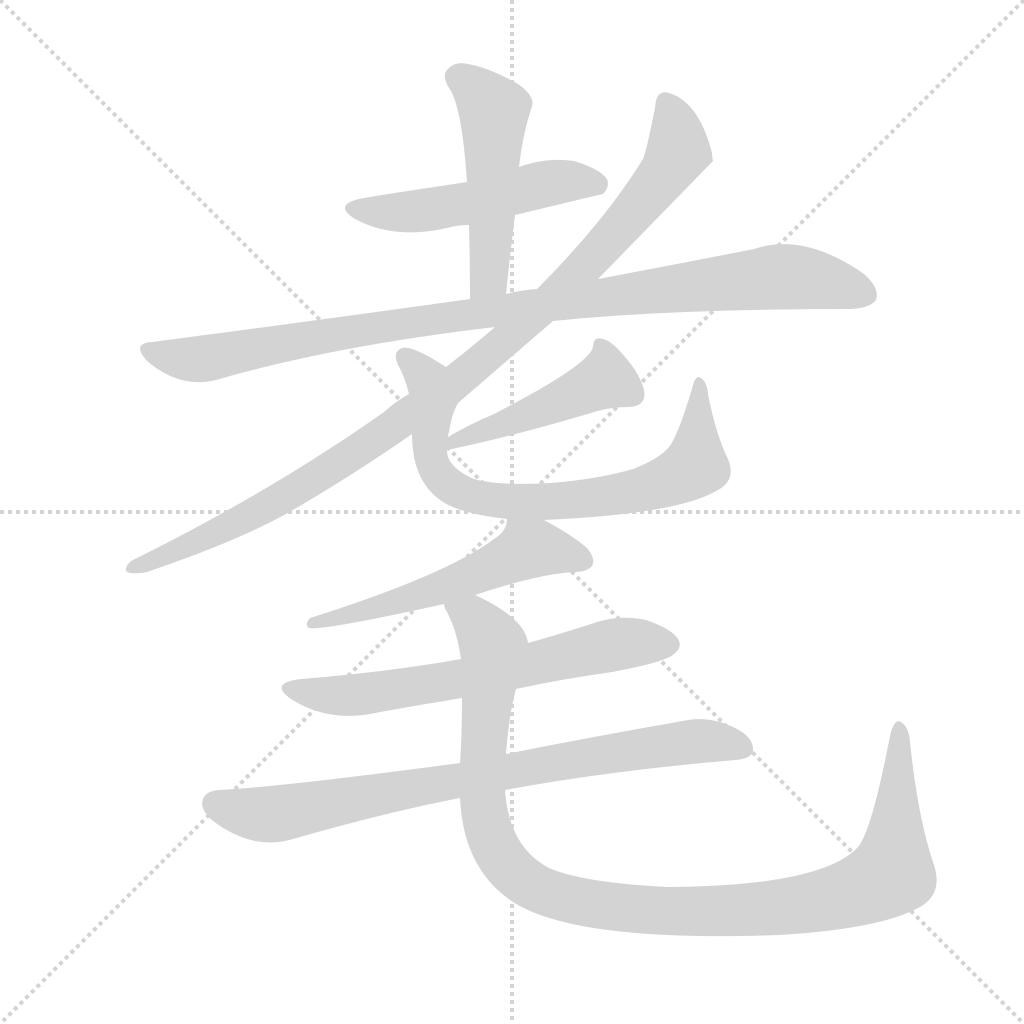
Ancient form. According to the Guangyun (Guangyun), Jiyun (Jiyun), and Yunhui (Yunhui) dictionaries, it is pronounced mao (falling tone). According to the Shuowen Jiezi (Shuowen), it is written in a variant form. To be ninety years of age is called mao. According to the Yupian (Yupian), mao is the same as the present character. In the Book of Documents (Shujing), specifically the Counsels of the Great Yu (Dayumo) chapter, it is written: those of the age of mao become weary of diligence. In the Book of Rites (Liji), specifically the Summary of the Rules of Proper Conduct (Quli) chapter, it states that one at eighty or ninety is called mao. The commentary explains that mao signifies confusion and forgetfulness. Furthermore, according to the Explaining Names (Shiming), seventy is called mao, referring to when the hair is white and one appears muddled. Additionally, according to the Yunbu (Yunbu), it also rhymes with the sound mao (falling tone). In the Songs of Chu (Chuci), specifically the Nine Laments (Jiutan) chapter, it is written: My face is sallow and withered, and I am ruined; my spirit is fractured and I am mournful and aged. My robes are trailing as they catch the wind; my garments are loose as they shield the dew. Furthermore, according to the Jiyun (Jiyun), it is commonly written as the character for flag (mao). In the Mencius (Mengzi), it is written: to restore those of mao age and young children. According to the Leipian (Leipian), it is also written in a variant form. Furthermore, according to the Jiyun (Jiyun), it is pronounced mao (rising tone). The meaning is the same.