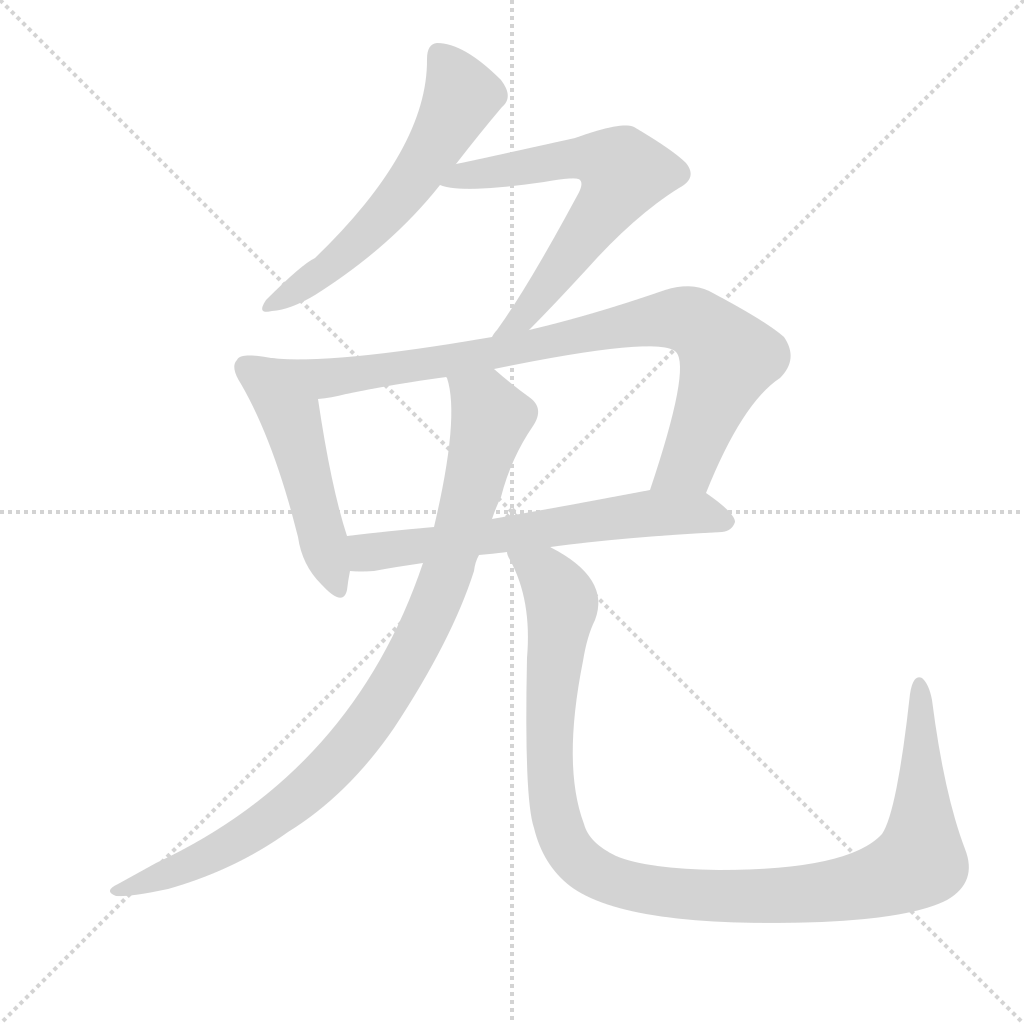
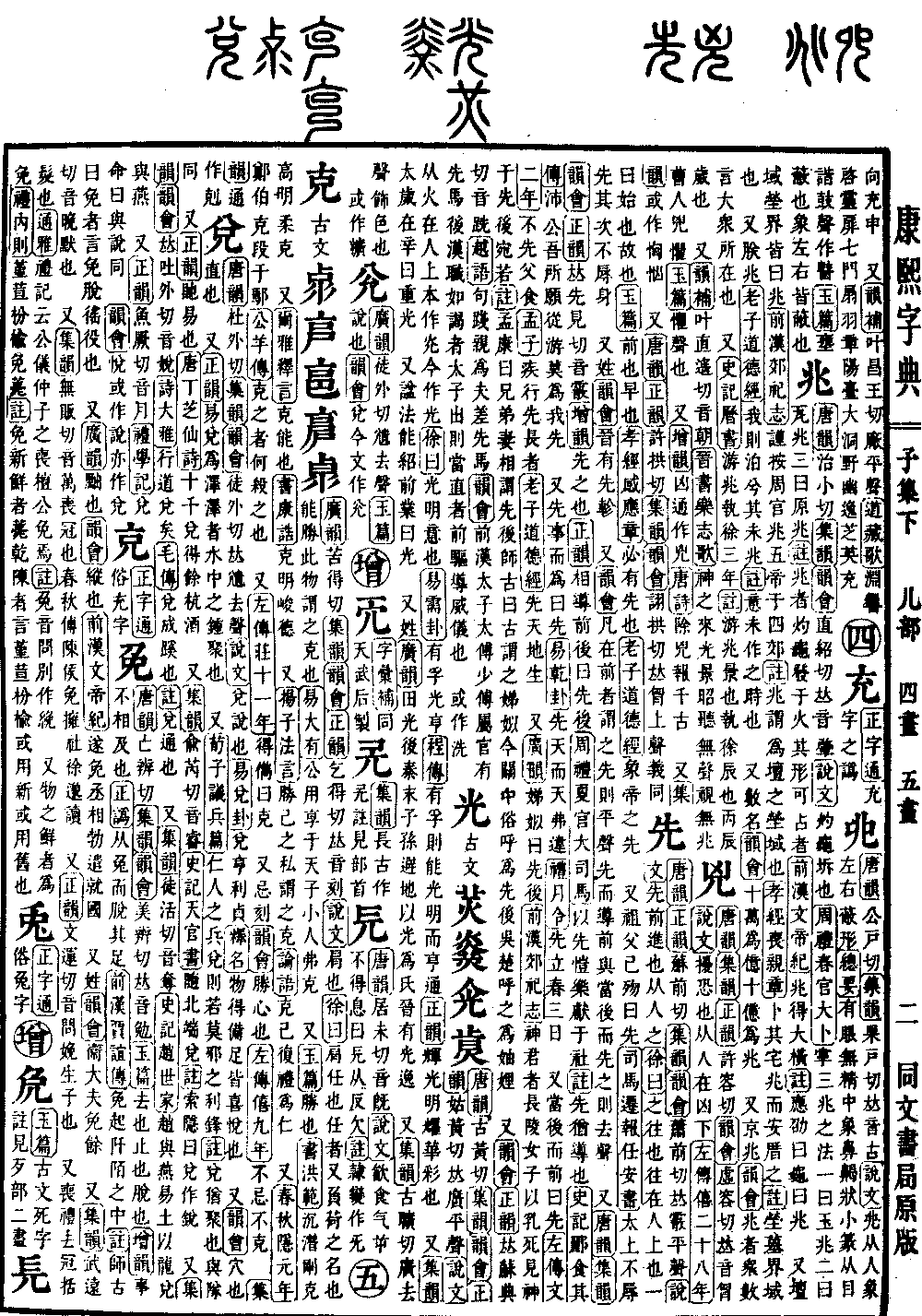
Zi Collection, Page Position: Lower. Radical: Legs (ér). Character: Mian. Stroke count: 7. Page 124, Number 23.
According to the Tang Rhymes (Tangyun), the Collected Rhymes (Jiyun), and the Collected Rhymes (Yunhui), the pronunciation follows the fanqie sounds of wang and bian or mei and bian, sounding the same as mian.
The Jade Chapters (Yupian) defines the term as to remove, to stop, or to escape from.
The Supplemented Rhymes (Zengyun) states it refers to matters being unrelated to each other.
Correcting Errors (Zheng'e) explains that the character form is derived from the character for rabbit but with the feet removed, serving as an associative compound representing the concept of breaking free.
Freed from among the field paths — History of the Former Han (Qianhan shu), Biography of Jia Yi. The commentary by Yan Shigu states that mian refers to being exempted from corvée labor.
The Comprehensive Rhymes (Guangyun) also defines it as to dismiss from office.
The Collected Rhymes defines it as to release.
At this, the Prime Minister Zhou Bo was dismissed and sent back to his fiefdom — History of the Former Han, Annals of Emperor Wen.
It is also a surname. The Collected Rhymes mentions Mian Yu, a high official of the State of Wei.
The Collected Rhymes also records the pronunciation as the fanqie sounds of wu and yuan, sounding the same as wan, meaning quiet and silent.
The Collected Rhymes further records the pronunciation as the fanqie sounds of wu and fan, sounding the same as wan, referring to a mourning cap worn during funeral rites. A marquis wore a mourning cap while holding the altar of the land — Commentary on the Spring and Autumn Annals (Chunqiu zhuan), as pronounced by Xu Miao.
According to the Correct Rhymes (Zhengyun), the pronunciation follows the fanqie sounds of wen and yun, sounding the same as wen, meaning to give birth to a child. It also refers to the ritual of removing the mourning cap and binding the hair during funeral ceremonies. At the funeral of Gongyi Zhongzi, Tan Gong performed the hair-binding ritual — Book of Rites (Liji), as cited in the Refinement of Language (Tongya). The annotation says that mian is pronounced as wen and is alternatively written in the variant form wen.
It also refers to items that are fresh. Violets, amaranth, and white elms, whether fresh or dried — Book of Rites, Internal Rules. The annotation explains that mian refers to fresh items while hao refers to dried ones, meaning that these plants are used either fresh or dried.