Mao Collection, Lower Volume
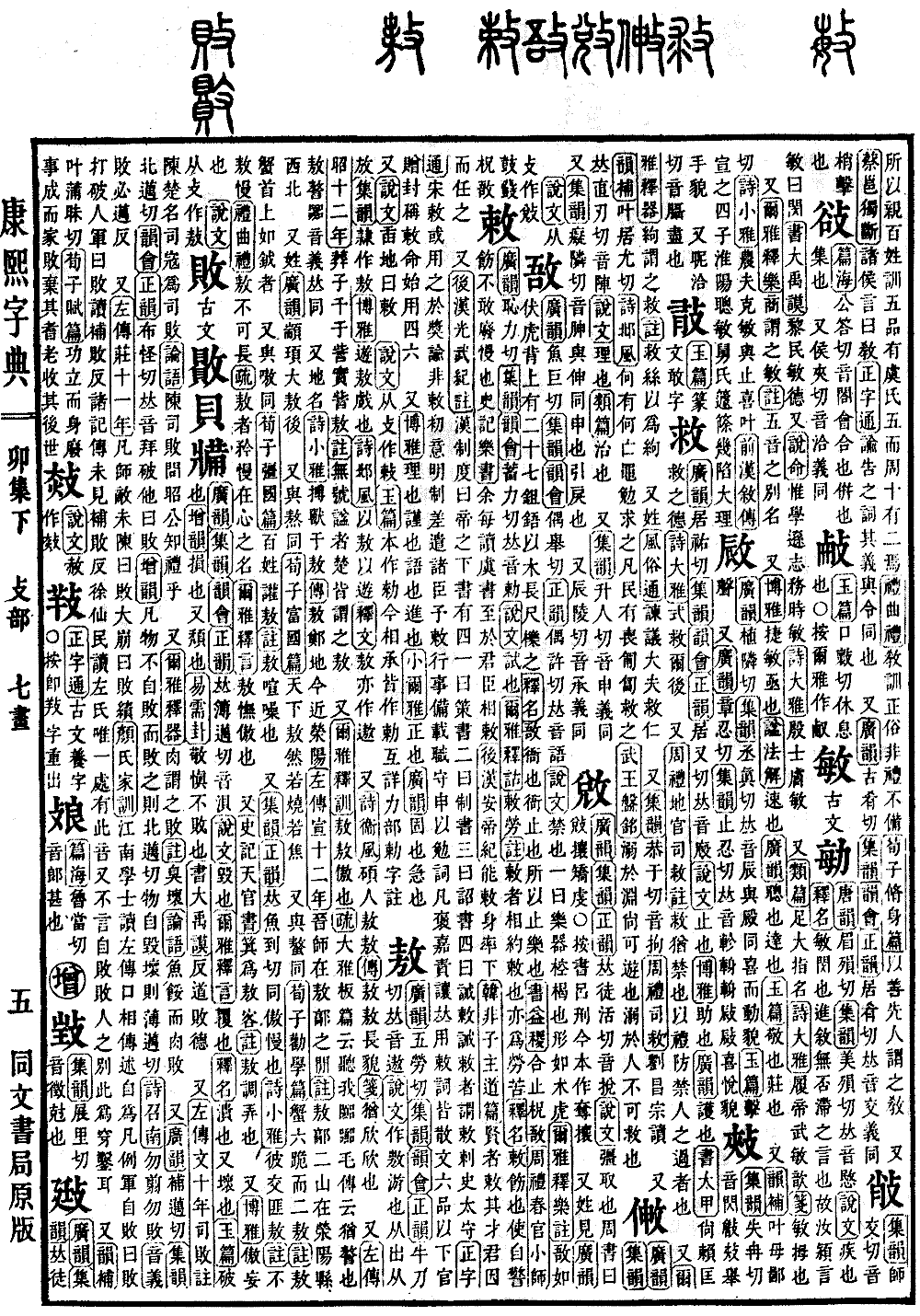
Radical: Tap (pū)
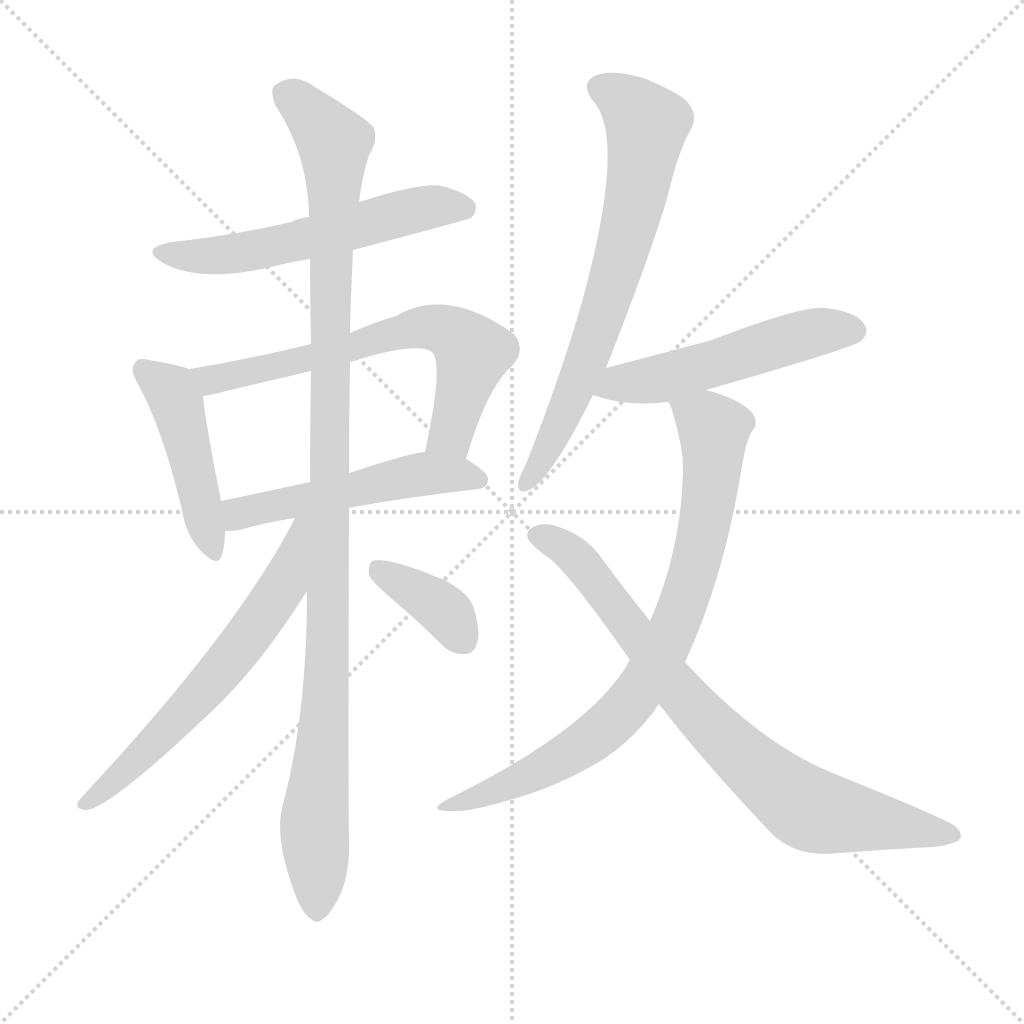
敕
Kangxi strokes: 11
Page 471, Entry 13
Broad Rhymes (Guangyun): Pronounced chi. Collected Rhymes (Jiyun) and Rhyme Anthology (Yunhui): Pronounced chi, tone as in chi.
Shuowen Jiezi (Explanation of Simple and Compound Characters): To test.
Erya: Explanations of Words (Erya Shigu): Chi means to exert effort. Commentary: Chi denotes mutual restraint and regulation. It also refers to labor and toil.
Explanation of Names (Shiming): Chi means to order, to cause one to be self-vigilant and not dare to be negligent or lazy.
Records of the Grand Historian (Shiji): Book of Music (Yueshu): Every time I read the Documents of Yu, I reach the part where sovereign and minister mutually restrain one another.
History of the Later Han (Hou Hanshu): Annals of Emperor An (Andi Ji): Capable of disciplining one's person and leading subordinates.
Han Feizi: Chapter on the Way of the Ruler (Zhudao Pian): The wise man restricts his talents, and the ruler consequently employs him.
Also, History of the Later Han (Hou Hanshu): Annals of Guangwu (Guangwu Ji): Commentary: The regulations of the Han state: There are four types of imperial edicts. The first is called a policy document (ceshu), the second is a decree (zhishu), the third is an imperial command (zhaoshu), and the fourth is a warning mandate (jiechi). A warning mandate refers to an instruction for inspectors and governors.
Correction of Characters (Zhengzitong): During the Song Dynasty, the mandate (chi) was sometimes used for commendations, which was not the original intent of the term. Under the Ming system, when officials were dispatched, they were given a mandate to guide their conduct, detailing their duties and including words of encouragement. Generally, for praise, rewards, or reprimands, a mandate was used, and the text was in prose. For the titles and posthumous honors of officials of the sixth rank and below, the term mandate decree (chiming) was used, and the text began to use the four-six parallel style.
Also, Guangya: To manage, to be cautious, to speak, to advance.
Little Erya (Xiao Erya): To rectify.
Broad Rhymes (Guangyun): To solidify, to be urgent.
Also, Shuowen Jiezi (Explanation of Simple and Compound Characters): To dig into the earth is called chi.
Shuowen Jiezi (Explanation of Simple and Compound Characters): Written with the tap radical as chi.
Jade Chapters (Yupian): Originally written as chi, but now it is commonly written as chi. See the entry for the character chi under the strength (li) radical for further details. The character chi was originally written with the tap radical.