Wu Collection, Lower Volume
Radical: Spirit (shì)
Page 840, Entry 01
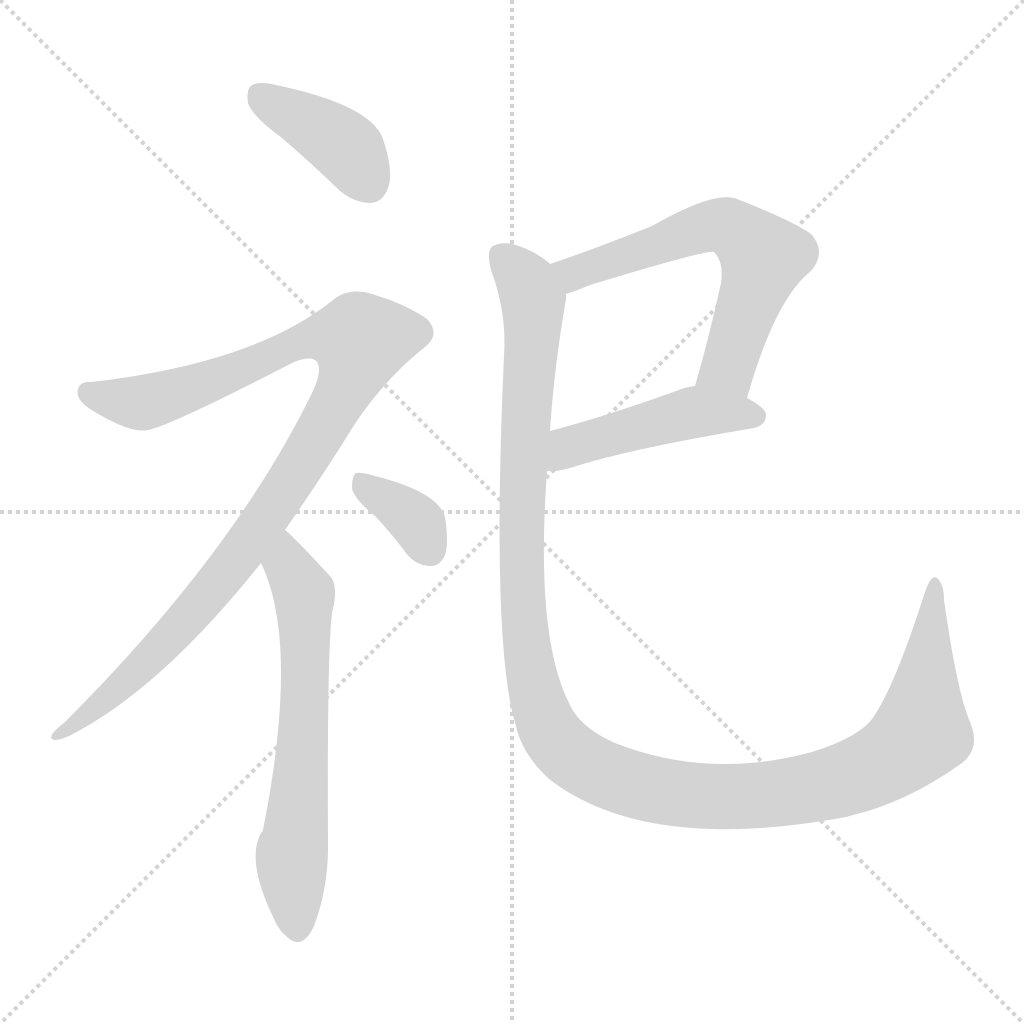
Ancient script form.
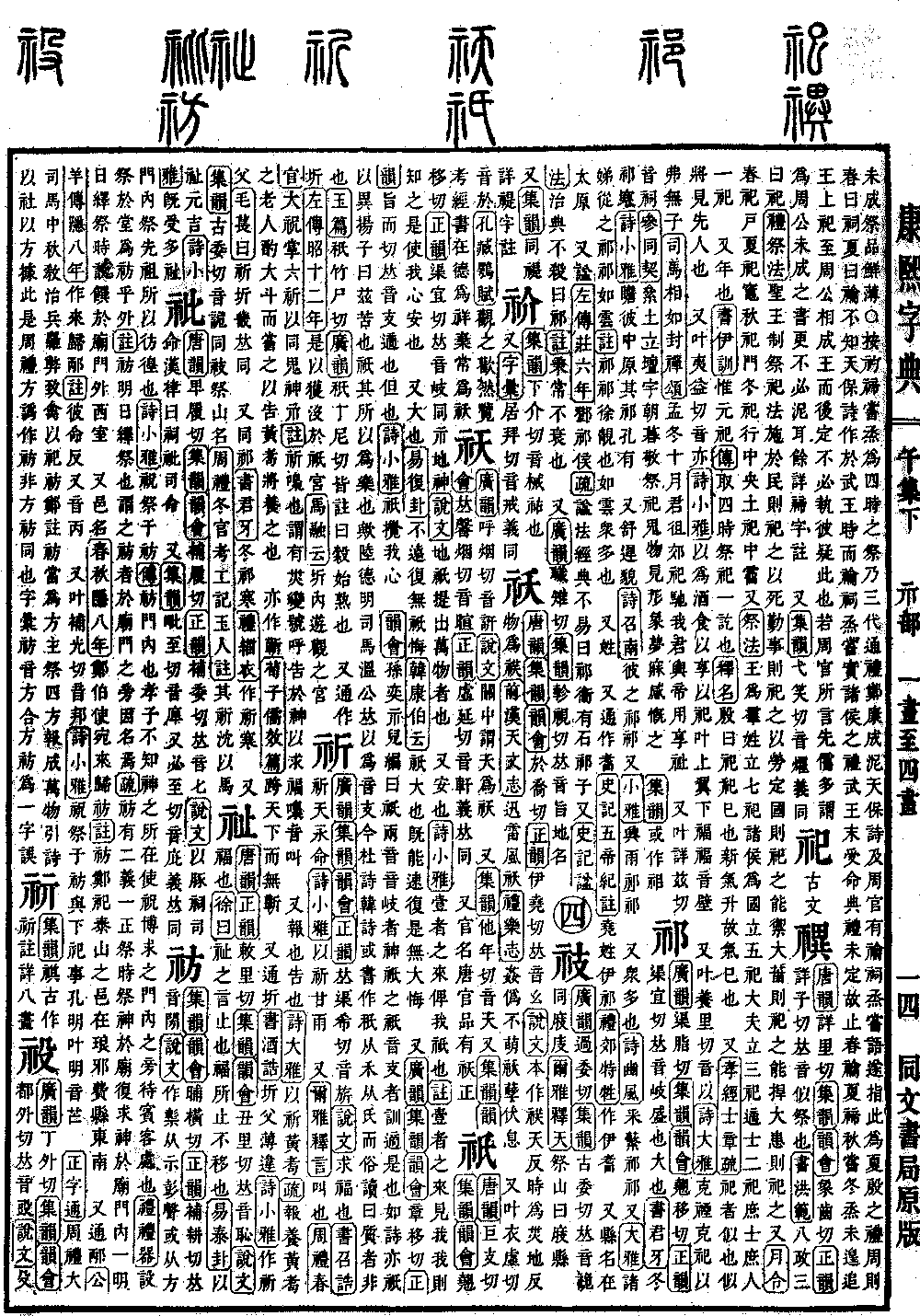
Tang Dynasty Rhymes (Tangyun): Pronounced si (rising tone). Collected Rhymes (Jiyun) and Rhymes Compilation (Yunhui): Pronounced si (rising tone). Correct Rhymes (Zhengyun): Pronounced si (rising tone).
To offer sacrifice. Book of Documents (Shangshu), Great Plan (Hongfan): The eight policies, the third is sacrifice. Book of Rites (Liji), Law of Sacrifices (Jifa): The sage kings established the system of sacrifice; those who bestowed laws upon the people are sacrificed to, those who died serving public affairs are sacrificed to, those who brought peace to the nation through their labor are sacrificed to, those who were able to ward off great disasters are sacrificed to, those who were able to defend against great calamities are sacrificed to.
Also, Monthly Ordinances (Yueling): In spring, sacrifice to the door; in summer, sacrifice to the furnace; in autumn, sacrifice to the gate; in winter, sacrifice to the path; at the center, the earth, sacrifice to the central gutter.
Also, Law of Sacrifices (Jifa): The King established seven sacrifices for the various lineages, the feudal lords established five sacrifices for their states, the grand officials established three sacrifices, the ranked scholars established two, and the common scholars and the common people established one sacrifice.
Also, a year. Book of Documents (Shangshu), Instructions of Yi (Yixun): In the first year (si). Commentary: This takes the four seasons of sacrifice as one completion.
Explication of Names (Shiming): During the Shang Dynasty, it was called si. Si means to cease (yi); the new energy ascends, and the old energy ceases.
Also, Commentary on the Classic of Filial Piety (Xiaojing), Chapter on Scholars: To sacrifice is to resemble (si); it is to resemble as if one were about to see the ancestors.
Also, rhyming with the pronunciation yi (entering tone). Book of Odes (Shijing), Lesser Odes (Xiaoya): To prepare wine and food, to enjoy and to sacrifice. Rhyming with yue and fu, the sound is like bi.
Also, rhyming with the pronunciation yi (rising tone). Book of Odes (Shijing), Greater Odes (Daya): To be able to purify and to be able to sacrifice, so as not to be without heirs. Sima Xiangru, Eulogy on the Feng and Shan Sacrifices (Fengshan Song): In the first month of winter, the tenth month, the ruler journeys to the suburban sacrifice, driving our ruler’s carriage, the Emperor accepts the blessed offerings.
Also, rhyming with the pronunciation ci (rising tone). Triplex Unity (Cantongqi): Piling earth to build an altar and chamber, morning and evening, respectfully offer sacrifices. The ghosts and spirits reveal their forms, in dreams and in sleep they stir deep emotions.
Collected Rhymes (Jiyun): Sometimes written in a variant form.