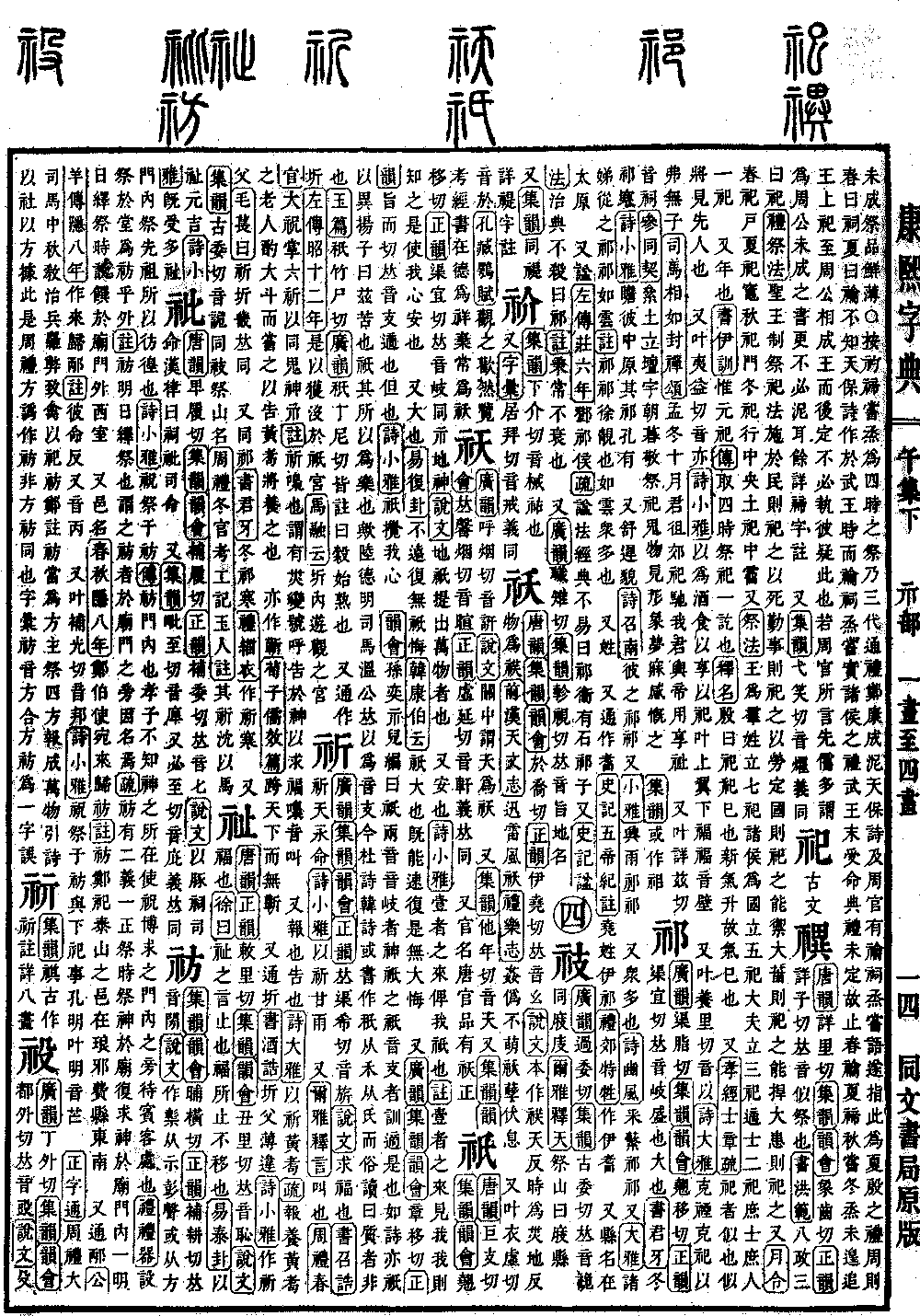
Wu Collection, Lower Volume
Radical: Spirit (shì)
Kangxi stroke count: 9
Page 840, Entry 09
Broad Rhymes (Guangyun), Collected Rhymes (Jiyun), Rhyme Compendium (Yunhui), Correct Rhymes (Zhengyun): Pronounced quxi (rising tone), sounds like qi.
Explanation from the Origin of Characters (Shuowen): To pray for blessings.
Book of History (Shangshu), Announcement of Duke Shao: Pray to Heaven for a long mandate.
Book of Odes (Shijing), Minor Odes: To pray for sweet rain.
Also, from the Er Ya: Explanation of Words (Erya: Shiyan): To cry out.
Rites of Zhou (Zhouli), Spring Officials: The Great Invoker manages the six prayers to bring together spirits and deities. Commentary: Prayer is to call out; it means when there is a disaster or change, one cries out and informs the gods to seek blessings. The character is pronounced jiao (falling tone).
Also, to report or to announce. Book of Odes (Shijing), Greater Odes: To report to the elderly. Commentary: To report on the nourishing of elderly people; using a large dipper to taste and thus announce to the elderly that one will provide care.
Also written as qi (variant form). Xunzi: Efficacy of the Confucians: To span under Heaven without seeking (qi).
Also interchangeable with qi (boundary). Book of History (Shangshu), Announcement on Drunkenness: The official in charge of boundaries (qifu) presses those who deviate. Book of Odes (Shijing), Minor Odes: Written as qifu. Mao Chang says: The characters for prayer (qi), breaking (zhe), and boundary (ji) are identical.
Also synonymous with qi (great/abundant). Book of History (Shangshu), Jun Ya: The winter cold is severe (qi). Book of Rites (Liji), Black Robes: Written as severe cold (qi).
Also, according to Collected Rhymes (Jiyun): Pronounced gui (rising tone), sounds like gui. Identical to the name of a mountain sacrifice. Rites of Zhou (Zhouli), Winter Officials, Record of Tradesmen, Commentary on Jade Makers: Those sacrificed to the mountain and submerged in water use horses.