Xu Collection, Upper Volume
Radical: Gate (mén)
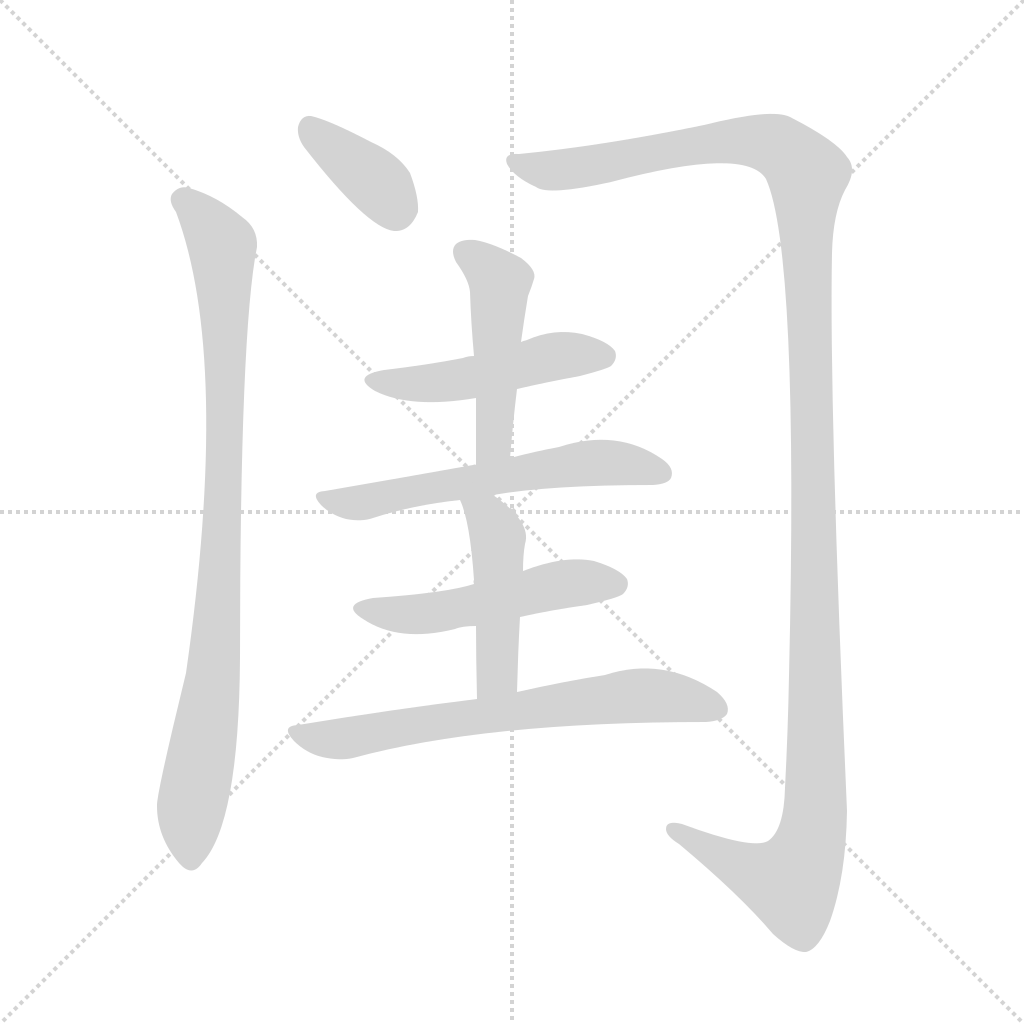
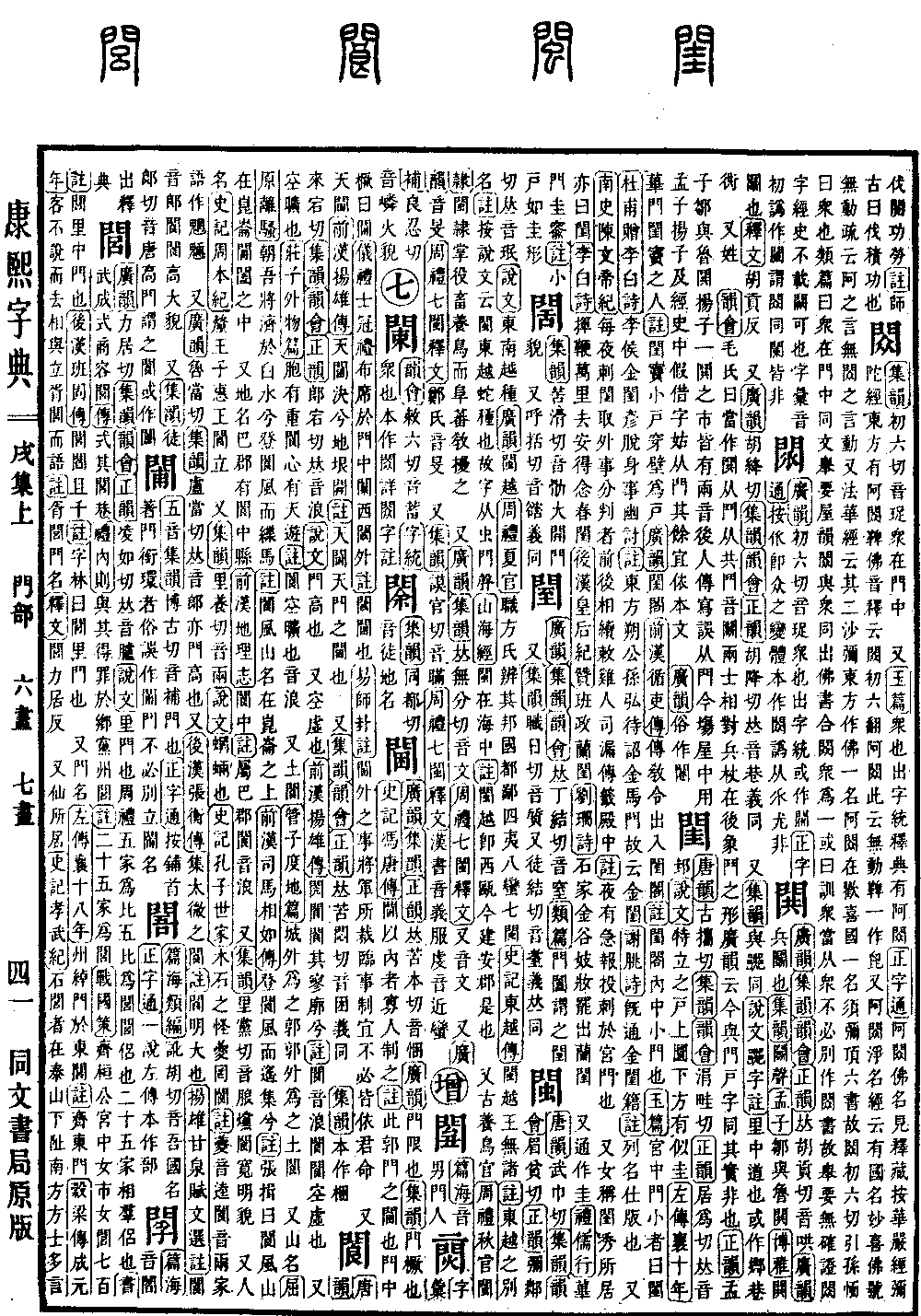
閨
Kangxi strokes: 14
Page 1335, Entry 01
Pronounced gui.
As defined in the Analytical Dictionary of Characters (Shuowen jiezi): A gate established separately. The top is round and the bottom is square, shaped like a jade scepter (gui).
As mentioned in the Commentary on the Zuo Tradition (Zuo zhuan), tenth year of Duke Xiang: Households with gate-doors and small entrances. Annotation: A gate-aperture, a small gate, made by carving a hole in a wall.
As noted in the Broad Rhymes (Guangyun): The inner apartments or women's quarters.
As stated in the History of the Former Han (Qianhan shu), Biography of Meritorious Officials: Conveying teachings and orders in and out of the inner courtyard's small gate. Annotation: The inner gate, a small entrance within the inner residence.
As defined in the Jade Chapters (Yupian): A relatively small gate within a palace is called a gui.
From a poem by Du Fu: Master Li is a man of talent within the court, freeing himself to engage in deep and secluded inquiry. Annotation: Dongfang Shuo and Gongsun Hong once awaited imperial edicts at the Golden Horse Gate, hence it is referred to as the Golden Gui.
From a poem by Xie Tiao: The name is already recorded in the official registers. Annotation: Refers to names listed on the official roster of officials.
From the History of the Southern Dynasties (Nan shi), Annals of Emperor Wen: Every night, he received reports on external affairs from the palace gate to process them separately, continuing without interruption, and ordered the dawn-callers to manage the water clock, relaying tallies within the palace. Annotation: During the night, if there were urgent reports, the calling card was cast into the palace gate.
Women are referred to as having refined qualities (guixiu), and the place where they reside is also called a gui.
From a poem by Li Bai: Flicking the whip to travel ten thousand miles, how could one not miss the wife within the women's quarters?
From the History of the Later Han (Houhan shu), Praise to the Annals of the Empresses: Managing administrative affairs from within the women's quarters.
From a poem by Liu Shan: The musician from Shi Chong's Golden Valley Garden, having finished her makeup, steps out of the women's chamber.
Also used interchangeably with the character for jade scepter (gui).
As mentioned in the Book of Rites (Liji), Conduct of the Scholars: A gate-door shaped like a jade scepter. Annotation: A small gate shaped like a jade scepter.