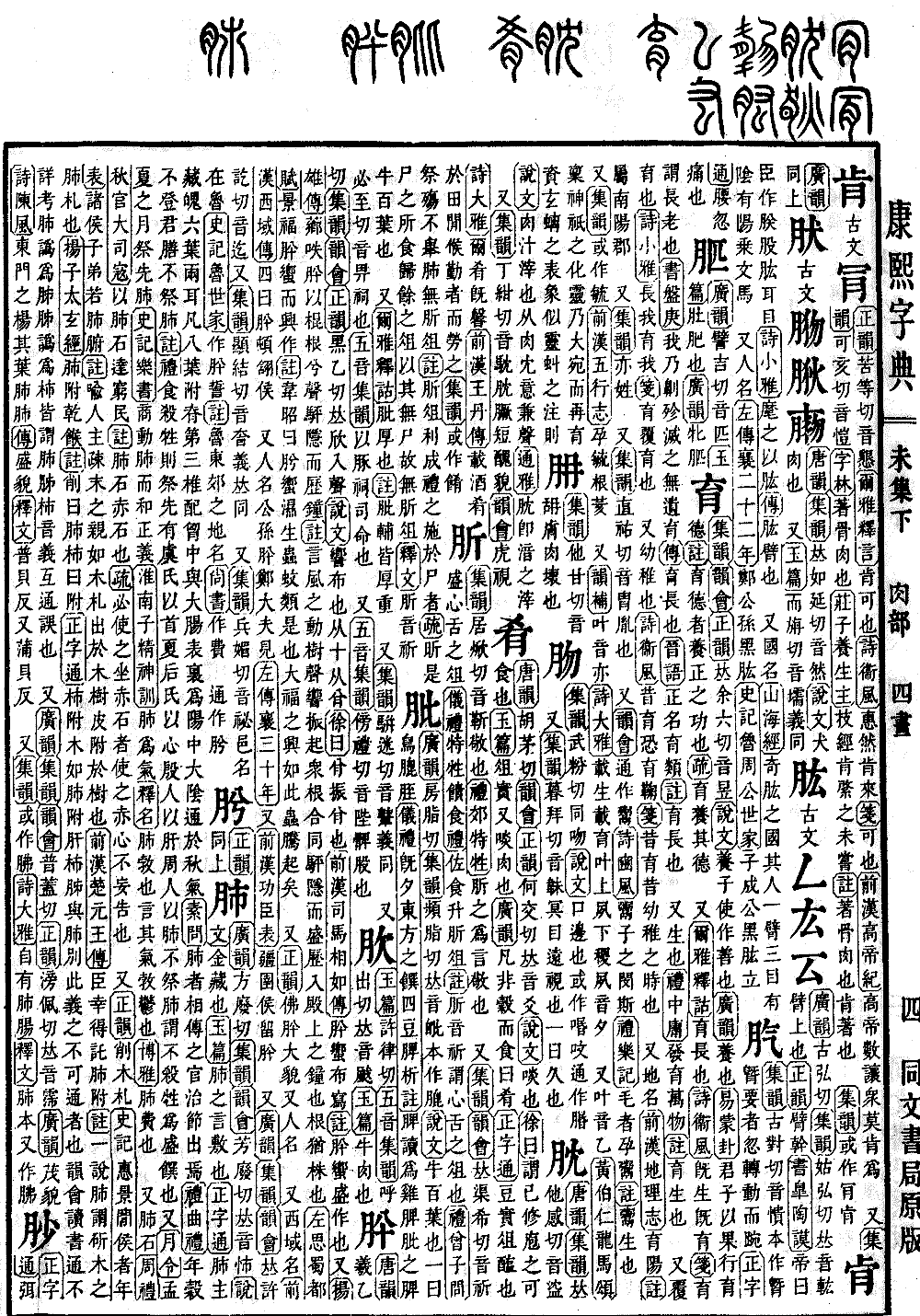
Wei Collection, Lower Volume
Radical: Meat (ròu)
Entry: Ken
Kangxi Strokes: 10
Page 976, Entry 01
Ancient form. According to Proper Rhymes (Zhengyun), pronounced ken (third tone).
In Approaching Elegance (Erya), Interpretation of Words, it says, ken means to be willing.
In Book of Odes (Shijing), Odes of Wei, it says, kindly willing to come. The commentary says, it means to be willing.
In History of the Former Han (Qianhan), Annals of High Emperor, it says, the High Emperor repeatedly resigned, but the crowd was not willing to act.
Also, in Collected Rhymes (Jiyun), pronounced kai (third tone).
In Forest of Characters (Zilin), it means flesh attached to the bone.
In Master Zhuang (Zhuangzi), Sustaining Life, it says, have never tried the intersections or the places where flesh attaches to bone. The commentary says, it means flesh attached to bone. Ken means to attach.
In Collected Rhymes (Jiyun), it is sometimes written in the variant forms ken or ken.