Wei Collection, Middle Volume
Radical: Ear (ěr)
耻
Kangxi Stroke Count: 10
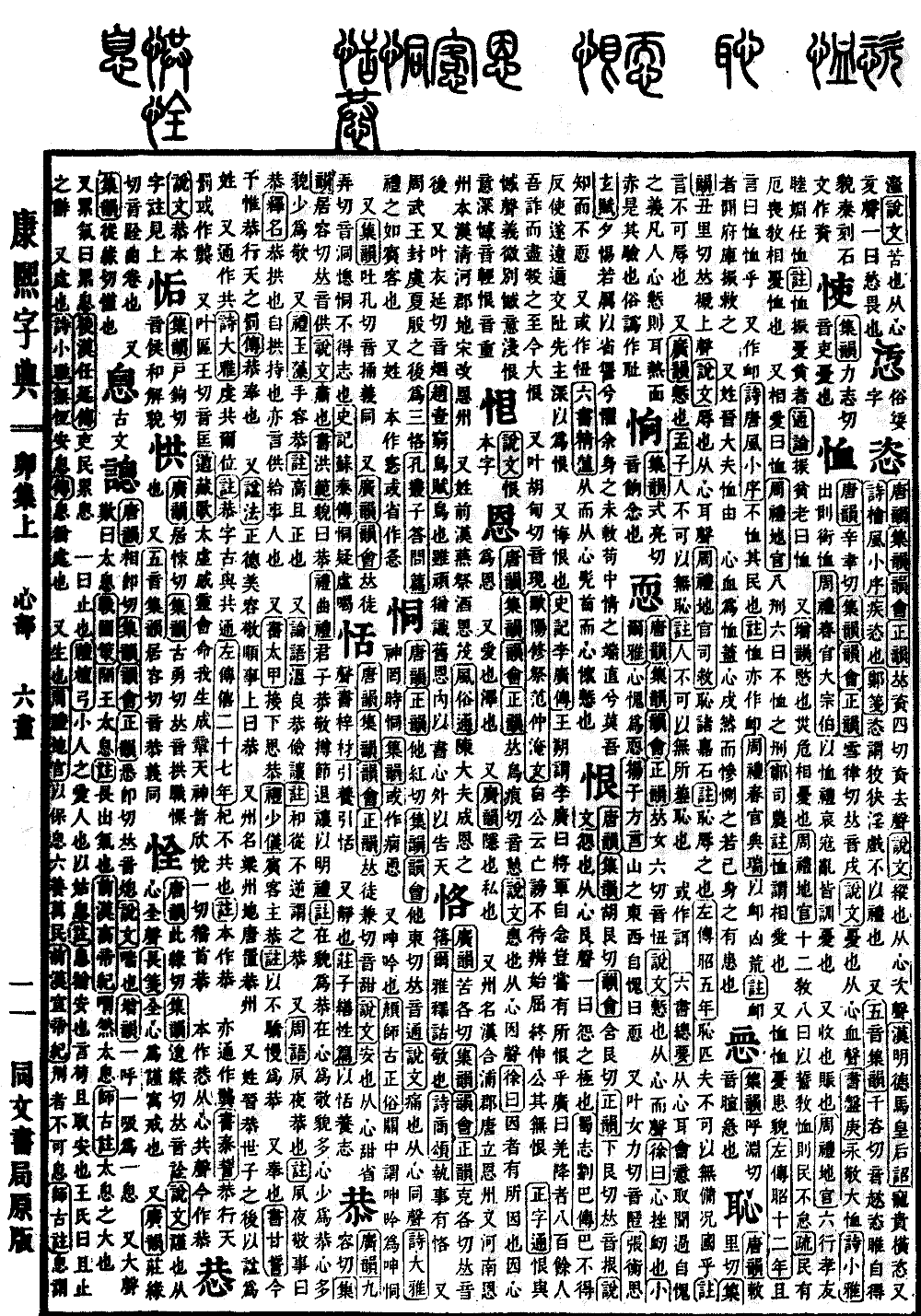
Page 385, Entry 01
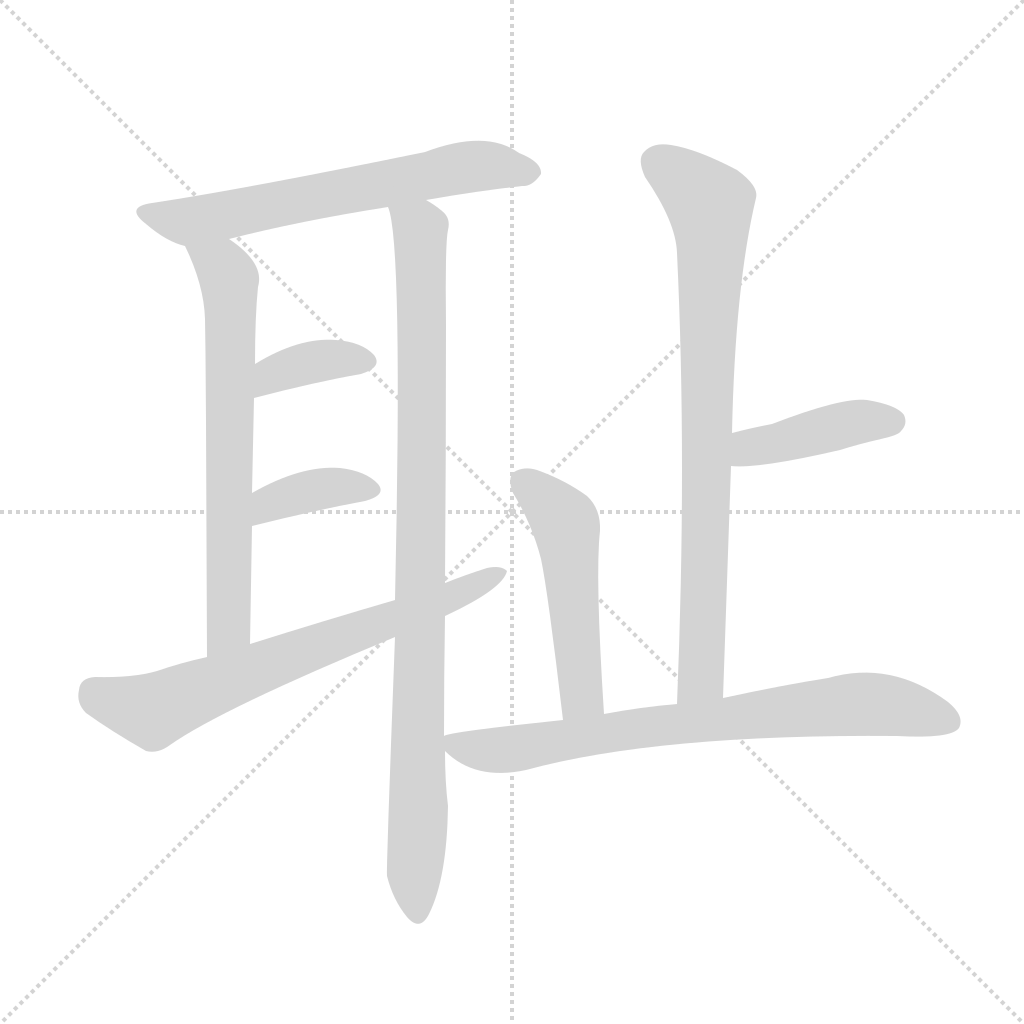
Zhengzitong: This is the vulgar form of the character for shame.
耻
Tangyun: Pronounced chi (rising tone).
Jiyun: Pronounced chou (rising tone), with a sound identical to the rising tone of the character for to strip (chi).
Shuowen Jiezi: Defined as to humiliate. The character structure is composed of the Heart radical, with Ear as the phonetic component.
Rites of Zhou (Zhouli), Earth Office, Ministry of Correction: Records to humiliate those on the penal stone.
Annotation: Interpreted as causing someone to suffer humiliation.
Zuo Tradition (Zuozhuan), Year 5 of Duke Zhao: Records that an ordinary person cannot be without preparedness, how much more so a state.
Annotation: Interpreted as cannot be humiliated.
Guangyun: Defined as ashamed.
Mencius (Mengzi): States that a person cannot be without shame.
Annotation: Interpreted as a person cannot be without a heart of shame.
Sometimes also written in a variant form (e).
Liushu Zongyao: The character shape is formed by the ideographic combination of Heart and Ear. It derives from the meaning of feeling ashamed upon hearing of one's own faults. Generally, when a person feels inner shame, their ears become hot and their face turns red; this is the proof. The vulgar form is incorrectly written as 耻.