You Collection, Upper Volume
Radical: Horn (jiǎo)
Kangxi Strokes: 12
Page 1141, Entry 08
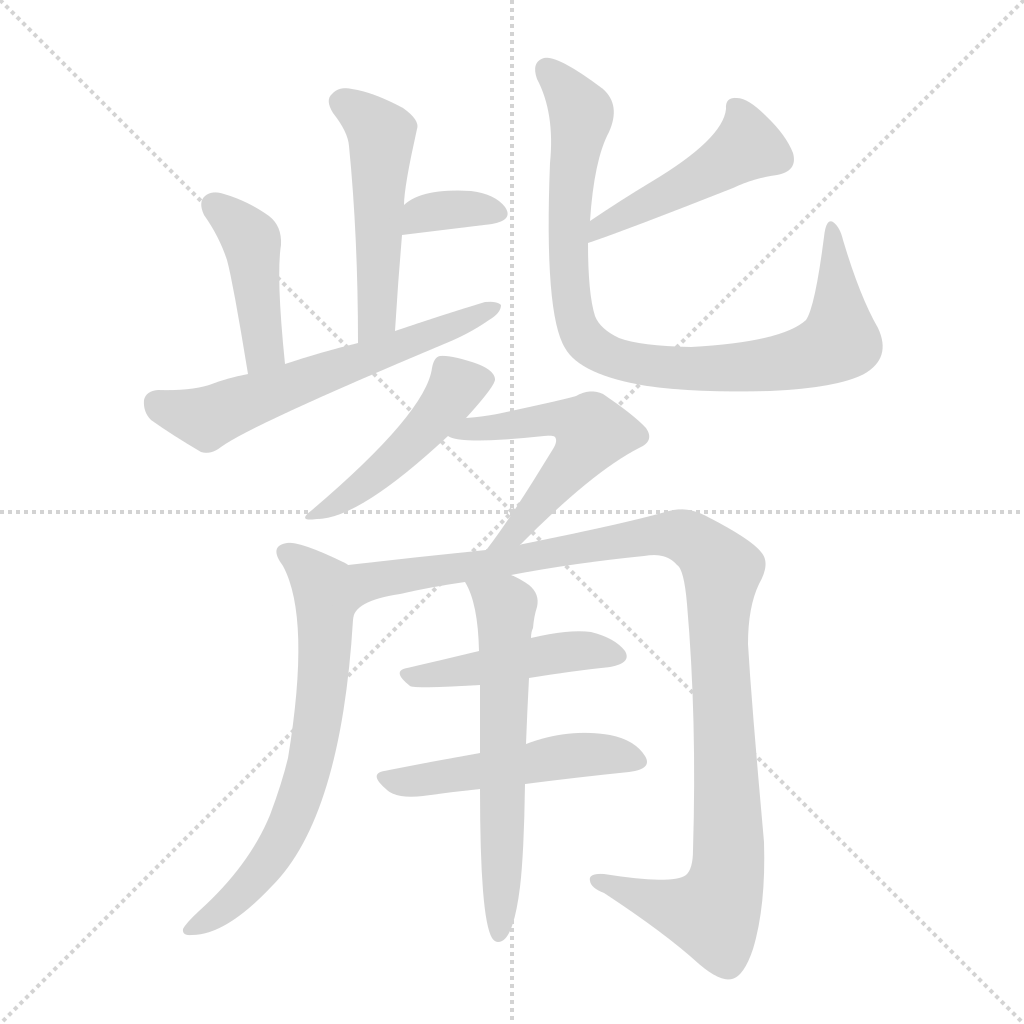
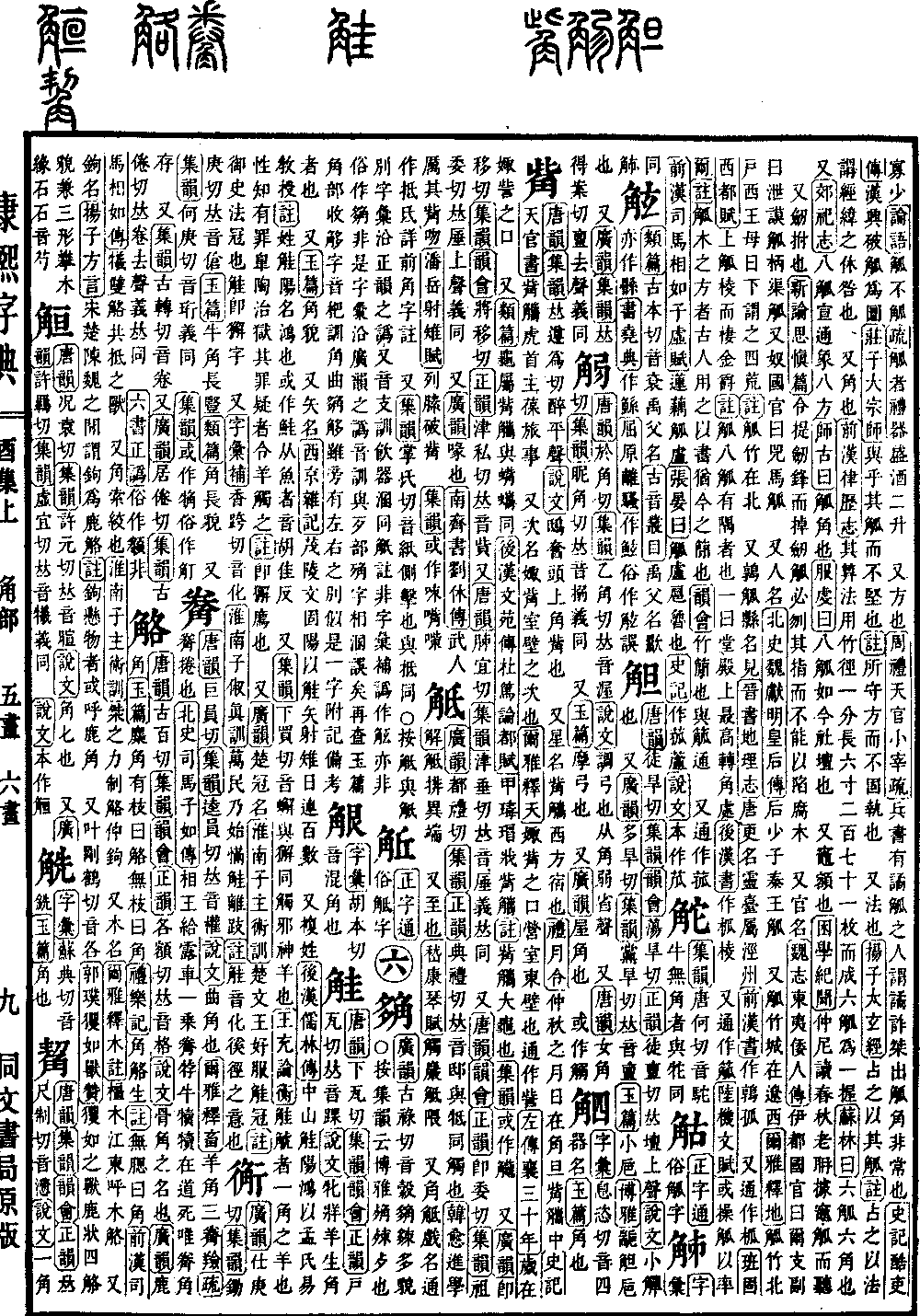
Pronounced zui (level tone). According to the Shuowen Jiezi (Explanation of Writing and Analysis of Characters), this refers to the horn-like beak on the head of an owl. It is also the name of a constellation. Zhui-xi is a constellation of the Western Mansion. In the Book of Rites (Liji), in the Monthly Ordinances (Yueling) chapter, it states: In the month of mid-autumn, the sun is in the Horn mansion, and at dawn the Zhui-xi constellation culminates. In the Records of the Grand Historian (Shiji), in the Treatise on Celestial Offices (Tianguan shu), it states: Zhui-xi is the head of the tiger, governing affairs of garrisons and travel. It also refers to a secondary zodiacal name. Ju-zui is the name of the secondary division corresponding to the Encampment and Eastern Wall mansions. In the Erya (Approaching Elegance), in the Explanation of the Heavens (Shitian) chapter, it states: The mouth of Ju-zui refers to the Encampment and Eastern Wall. It is interchangeably written as zi. In the Zuo Tradition (Zuo zhuan), in the thirtieth year of Duke Xiang, it states: The year is in the mouth of Ju-zi. Furthermore, according to the Classified Compendium (Leipian), it refers to a type of turtle. Zhui-xi is the same as tui-xi. In the Book of the Later Han (Hou Hanshu), in the Biography of Du Du within the Traditions of Literary Men, it mentions: Armored with hawksbill, and killing the Zhui-xi. The commentary states: Zhui-xi is a large turtle.
Pronounced zi.
Pronounced zui (rising tone).
Pronounced zui (rising tone). The meaning is the same as above.
Pronounced zui (rising tone). The meaning is the same as above.
Also refers to a beak. In the Book of Southern Qi (Nan Qishu), in the Biography of Liu Xiu, it states: The warriors sharpened their beaks and mouths. In Pan Yue’s Rhapsody on Pheasant Shooting (Shezhi fu), it mentions: Arranging the crops and breaking the beaks. According to the Classified Compendium (Leipian), it is sometimes written as zui. Originally, it was written as the character for mouth with the character for this entry. It is also the same as the character for beak.
Textual research: The Shuowen Jiezi states this refers to the head of an owl. I have corrected the original text to reflect this.