Zi Collection, Middle Volume
Radical: Person (rén)
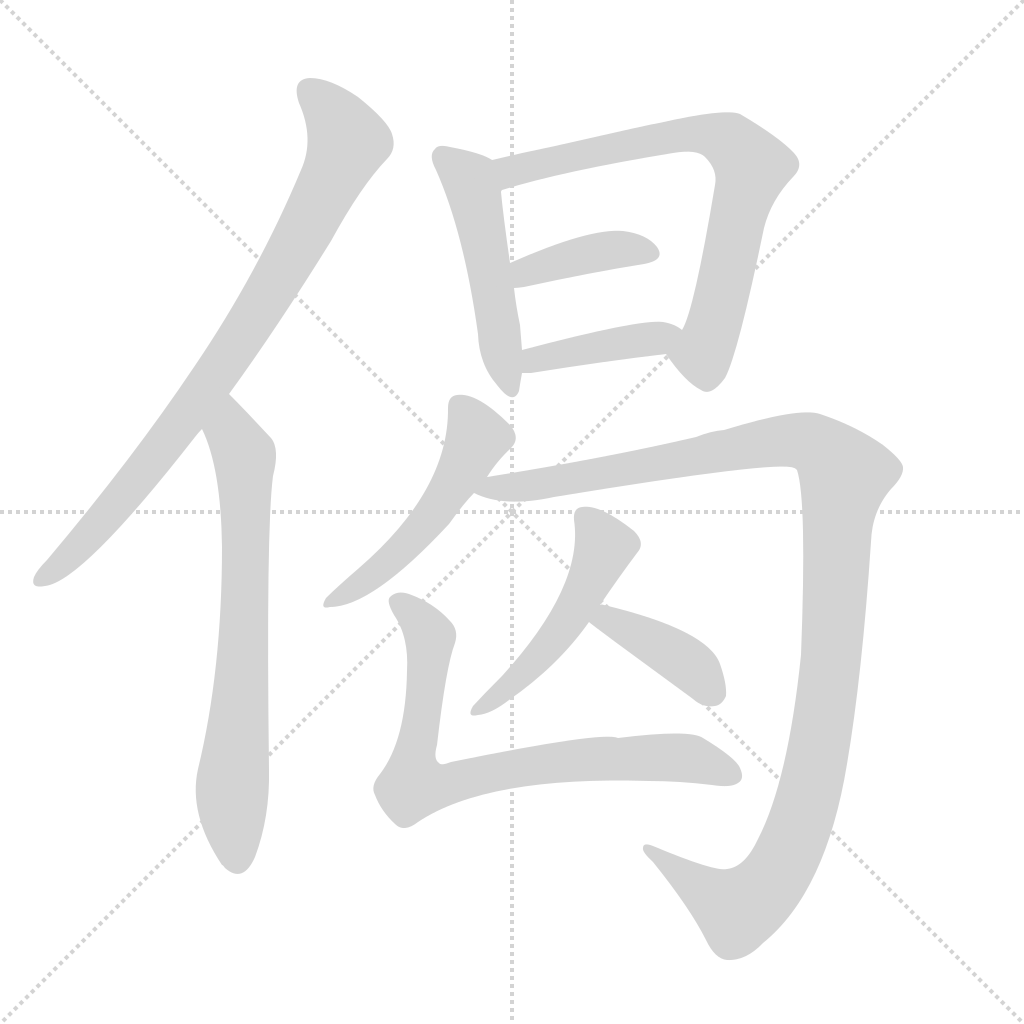
Jie
Kangxi strokes: 11
Page: 110, entry 04
Guangyun: Pronounced jie
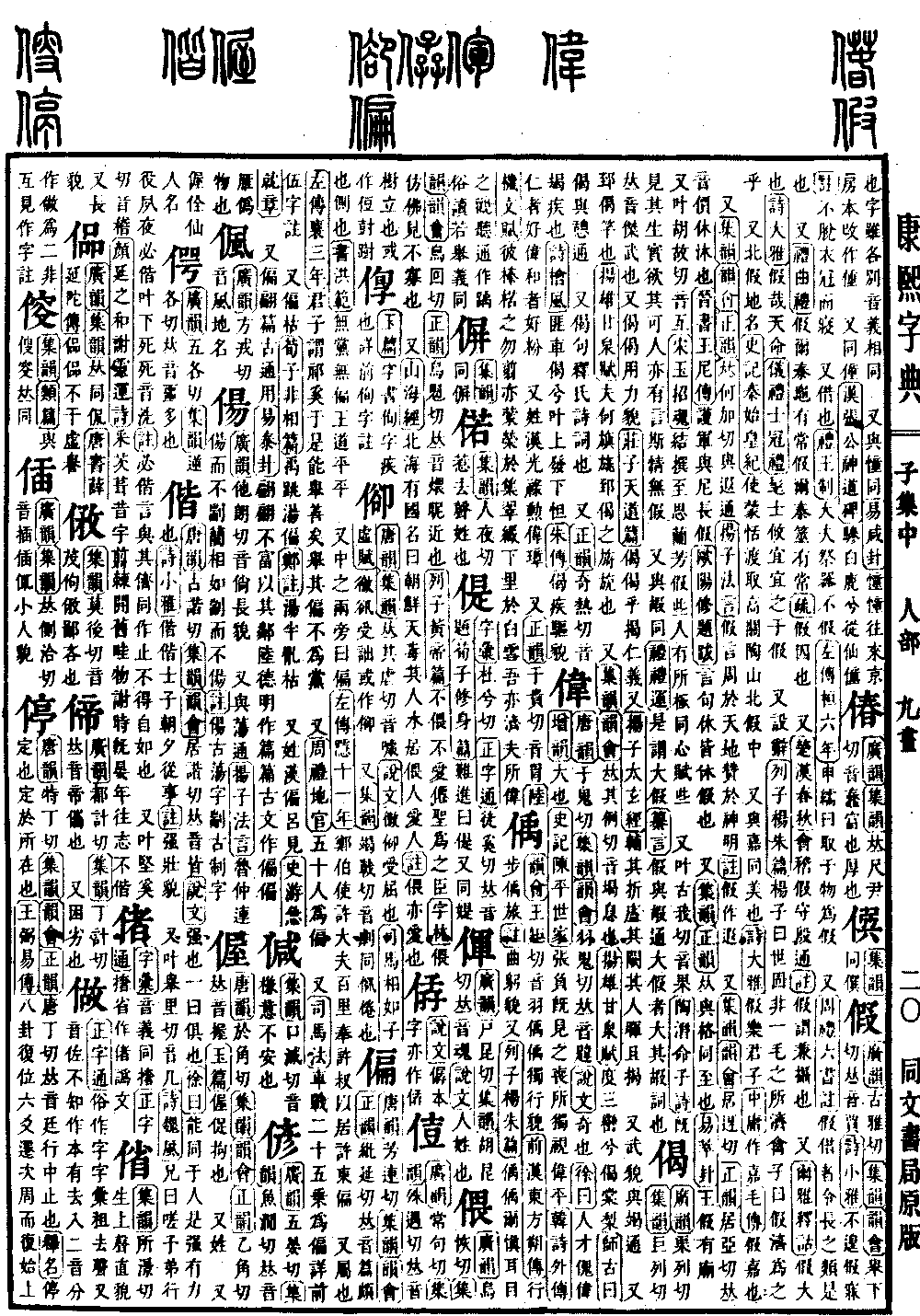
Jiyun: Pronounced jie, same as the word for outstanding. Meaning: courageous or martial. Also, jie-jie, the appearance of exerting force.
Zhuangzi, Chapter on the Way of Heaven (Zhuangzi, Tiandao pian): To exert oneself to promote benevolence and righteousness.
Also, Yangzi, Classic of the Great Mystery (Taixuanjing): Assisting in its breakage, filling its gaps, that person is brilliant and martial. Also denotes a courageous appearance. Interchangable with the word for exhausted.
Also, zhi-jie, referring to a flagpole.
Yang Xiong, Rhapsody on Ganquan Palace (Ganquan fu): Those banners, how elegant the ribbons upon the high poles are.
Also, Jiyun, Yunhui: Pronounced e, same as the word for a dam. Meaning: to rest.
Yang Xiong, Rhapsody on Ganquan Palace (Ganquan fu): Crossing the three peaks, resting at Tangli Palace.
Shigu comments: Jie is interchangeable with the word for rest.
Also, jie-ju: Refers to Buddhist verse.
Also, Zhengyun: Pronounced qie, same as the word for to depart. Meaning: rapid or swift.
Book of Odes, Airs of Gui (Shijing, Kuai feng): Is it not that the carriage runs fast. Rhymes with the preceding word fa and the following word da.
Zhu Xi's Commentary (Zhu zhuan): Jie, the appearance of galloping swiftly.
Textual research: Yangzi, Classic of the Great Mystery (Taixuanjing): Assisting in its breakage, filling its gaps, that person is brilliant and martial. Per the original text, the word jie has been corrected to jie.
Wang Hongyuan's Note: Yangzi, Classic of the Great Mystery (Taixuanjing).