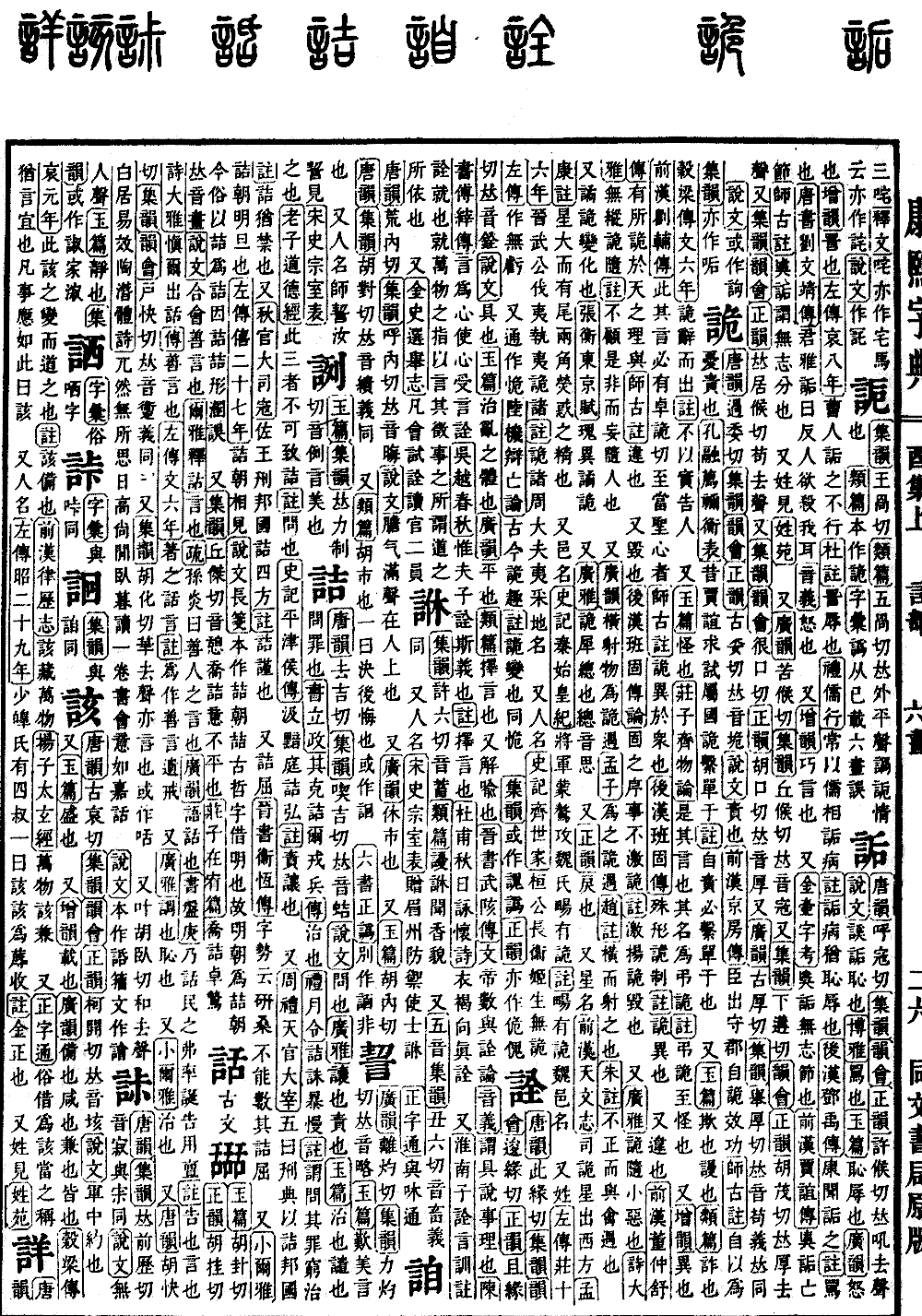
You Collection, Upper Volume
Radical: Speech (yán)
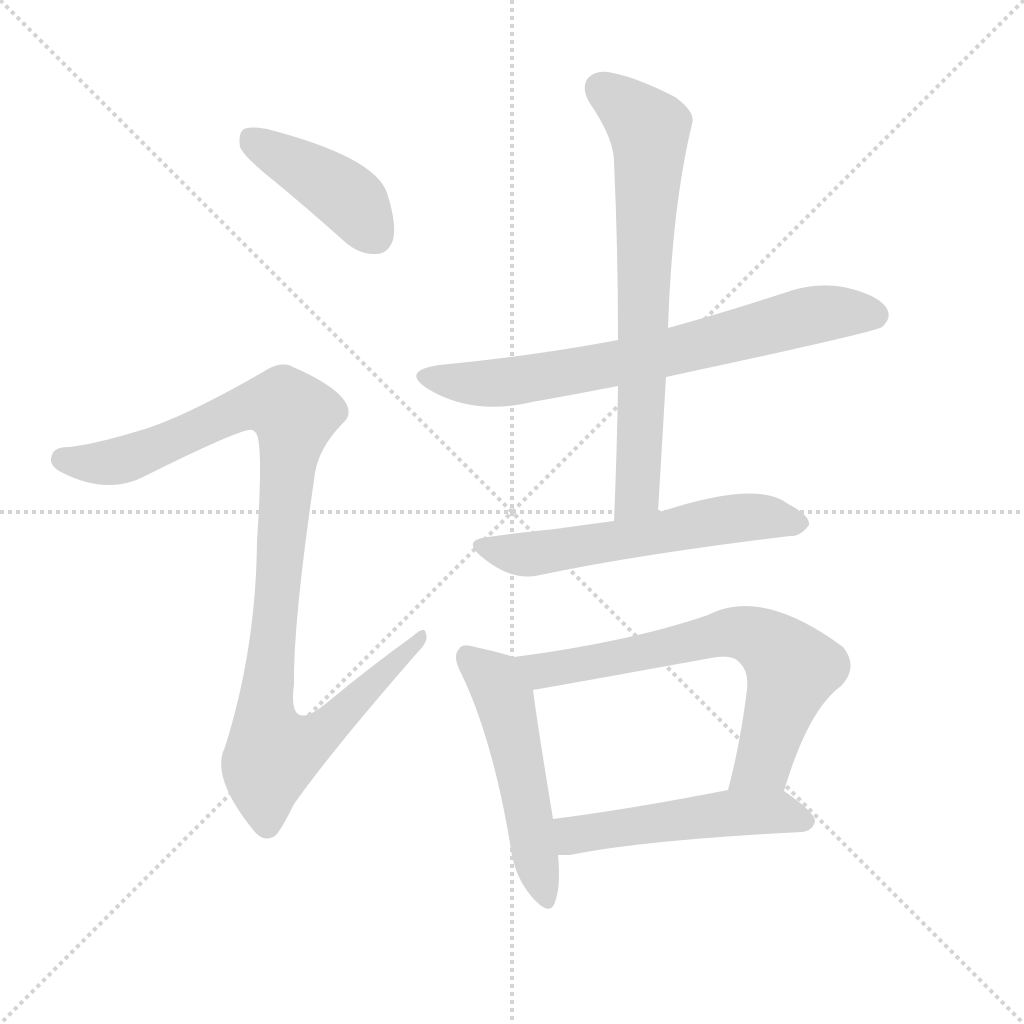
詰
Kangxi stroke count: 13
Page 1158, Entry 02
Pronounced jié
Pronounced jié
Pronounced jié
Shuowen Jiezi (Shuowen): To question.
Guangya: To rebuke or cross-examine.
Yupian: To govern, to reprimand, or to hold accountable for a crime.
Book of Documents (Shujing), Chapter on Establishing Government (Lizheng): To be able to manage your weapons and troops. Commentary: To govern.
Book of Rites (Liji), Monthly Ordinances (Yueling): To punish the violent and the arrogant. Commentary: To interrogate regarding their crimes and thoroughly investigate.
Laozi, Tao Te Ching: These three cannot be pursued with questions. Commentary: To press for an answer.
Records of the Grand Historian (Shiji), Biography of Pingjin Hou: Ji An interrogated Gongsun Hong in the courtyard. Commentary: To rebuke.
Zhou Rites (Zhouli), Office of Spring, Grand Administrator: The fifth is the regulations, used to govern the states. Commentary: Governed, equivalent to prohibit.
Zhou Rites (Zhouli), Office of Autumn, Minister of Justice: Assist the king in the states and govern the four quarters. Commentary: Governed, meaning to be cautious.
Also, convoluted or twisted. Jin Shu, Biography of Wei Heng: The discourse on the power of characters says: Even the legendary mathematicians Yan and Sang could not count their twists and turns.
Xiao Erya: The following morning.
Zuo Zhuan, 27th Year of Duke Xi: To meet the following morning.
Shuowen Changjian: Originally written as zhe-chao. Zhe is an ancient form of the character for wise (zhe). It implies brightness. Thus, the bright morning is referred to as zhe-chao. Today, people use the character for jie in place of zhe, which is an error caused by the visual similarity between the two characters.
Pronounced qì
Qiao-jie: A state of internal agitation or dissatisfaction.
Zhuangzi, Zaiyou: Agitated and arrogant.