Xu Collection, Upper Volume
Radical: Gate (mén)
Threshold
Kangxi stroke count: 16
Page 1337, Entry 06
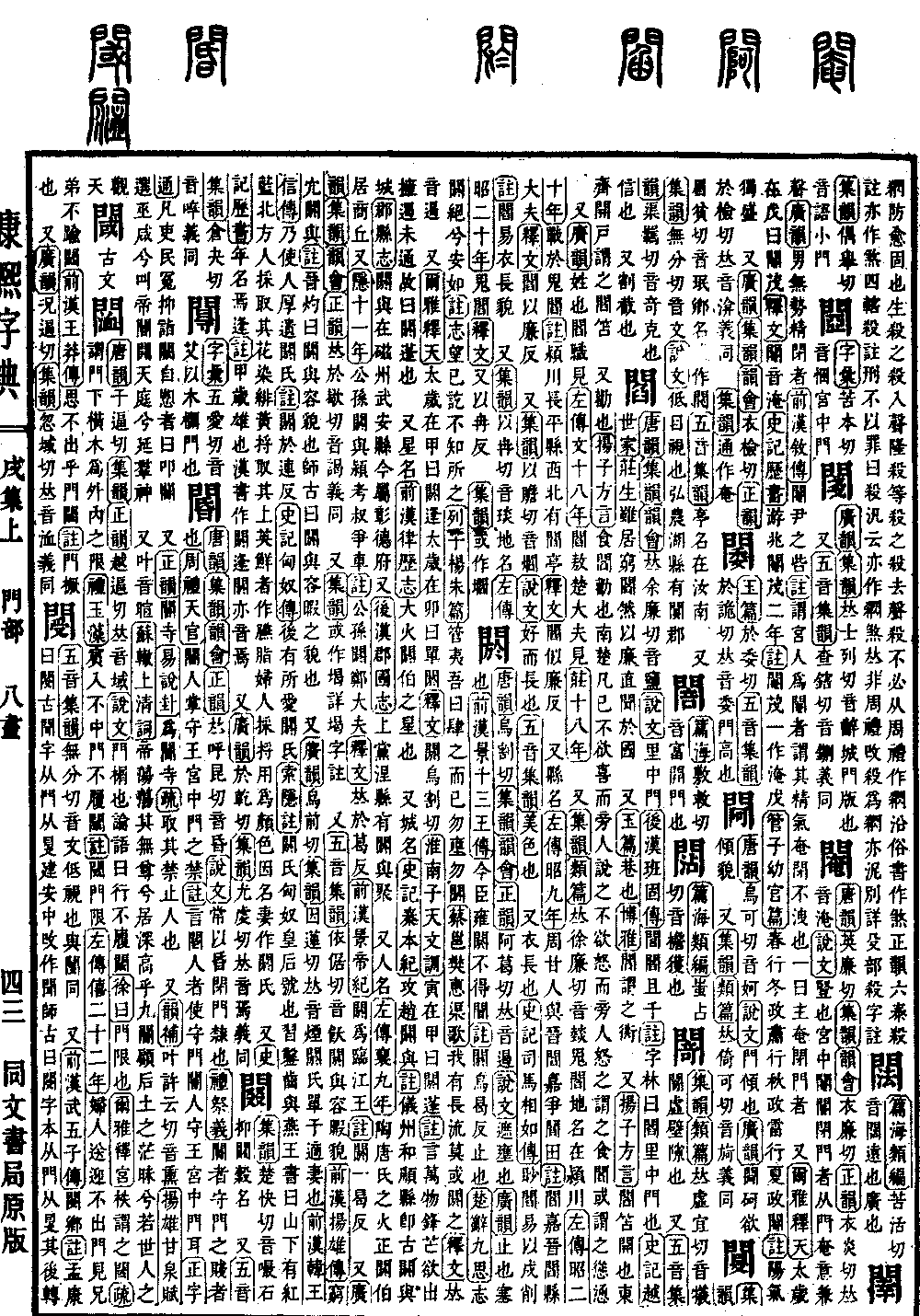
Ancient form. Pronounced yu (falling tone) according to Tang Rhymes (Tangyun) and according to Collected Rhymes (Jiyun) and Correct Rhymes (Zhengyun). In the Explaining Graphs and Analyzing Characters (Shuowen), it is defined as a door threshold. The Analects (Lunyu) states: when walking, do not step on the threshold. Xu says: it is a door threshold. In the Er Ya, which explains palace structures, it states: the lower part of a door is called a threshold. The commentary explains: it refers to the horizontal wood beneath a door that serves as a boundary between inside and outside. In the Book of Rites (Liji), specifically the Jade Bead Ornamentation (Yuzao) chapter: guests should not pass through the center of the door, and they should not step on the threshold. The commentary notes: the threshold is the door sill. In the Zuo Tradition (Zuozhuan), during the twenty-second year of Duke Xi: women do not go beyond the main gate to see off or welcome guests, and when seeing brothers, they do not step over the threshold. In the History of the Former Han (Qianhan), specifically the Biography of Wang Mang: his thoughts did not go beyond the scope of the threshold. The commentary notes: it is a threshold. Also pronounced xu (falling tone) according to Guang Rhymes (Guangyun) and Collected Rhymes (Jiyun). The meaning is the same.