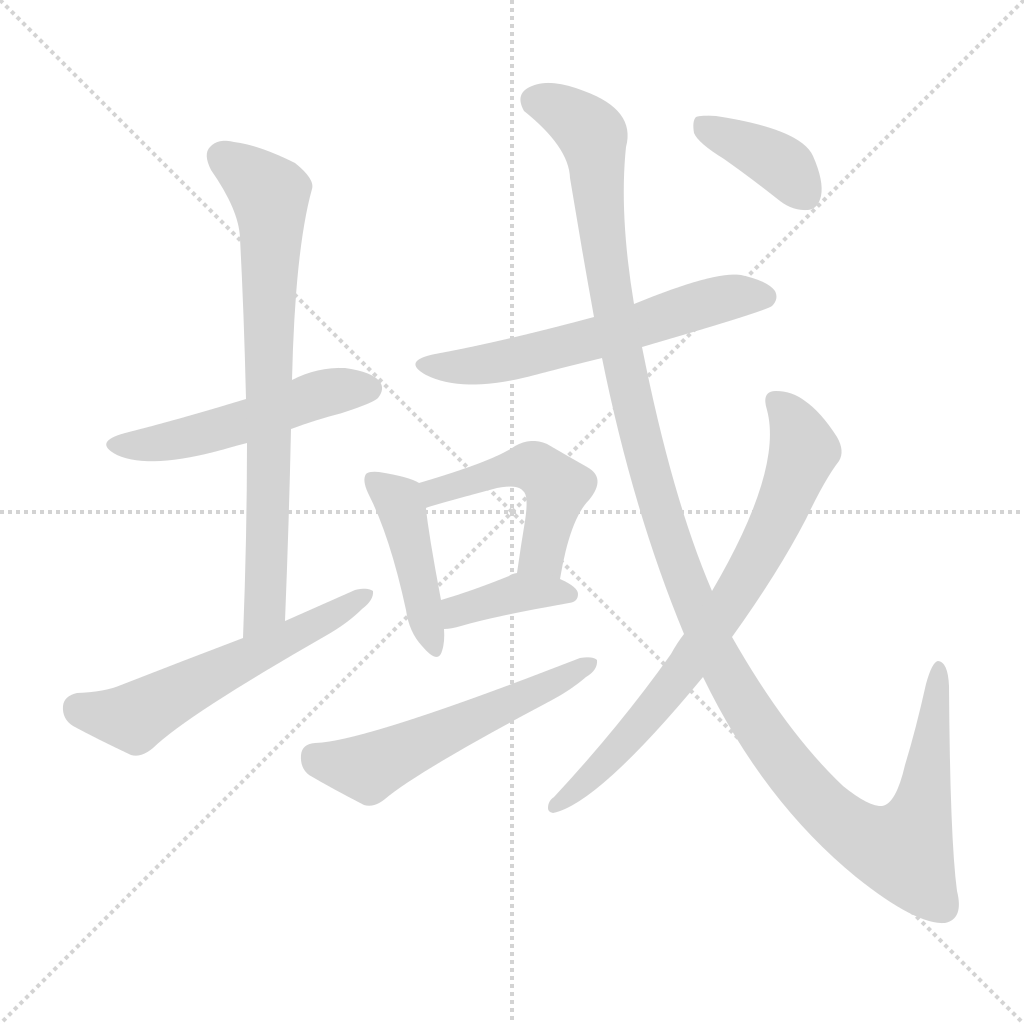
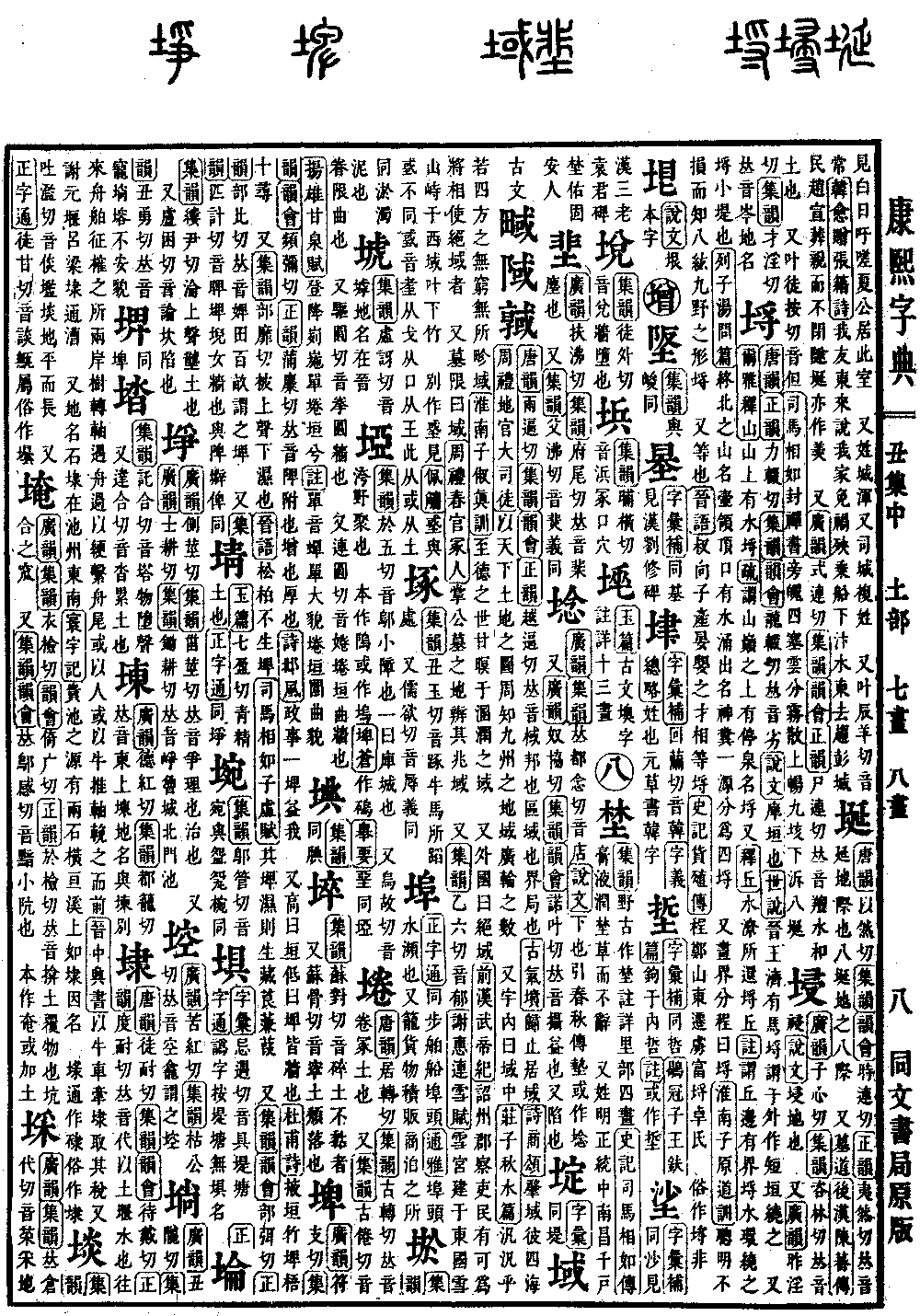
Chou Collection, Middle Volume. Radical: Earth (tǔ). Kangxi strokes: 11. Page 230, Entry 17. Archaic form. Pronounced yu. A state. A region, a boundary. As recorded in the Ancient Book of Vapors (Guqifen): Returning to dwell within the domain. From the Book of Odes (Shijing), Eulogies of Shang: Extending the domain to the four seas. From the Rites of Zhou (Zhouli), Office of Earth, Grand Minister of Instruction: By using the maps of the land under heaven, one fully knows the regions of the Nine Provinces and the breadth and length of their dimensions. Also, the space within the universe is called the domain. From the Zhuangzi, Autumn Floods chapter: Floating as if in the infinite four directions, without any boundaries. From the Huainanzi, Authentic Instruction: In the age of supreme virtue, people slept sweetly in the domain of chaos. Also, foreign lands are called remote domains. From the History of the Former Han (Qianhan), Annals of Emperor Wu: An edict was issued for provinces and commanderies to examine officials and commoners to find those capable of serving as generals or ministers and sending them to remote domains. Also, a tomb boundary is called a domain. From the Rites of Zhou (Zhouli), Office of Spring, Superintendent of Tombs: In charge of the land for public cemeteries, distinguishing their burial grounds and boundaries. Also, pronounced yu. From Xie Huilian, Snow Rhapsody: The snow palace was built in the eastern state, and the snow mountain stood in the western domain. Rhymes with the word bamboo. Also written as a variant form, see the Peixi. It is different from another character. The character pronounced die, which contains the weapon radical, the mouth radical, and a component, is different. This entry contains the domain component and the earth radical. The characters are identical. The character pronounced di is identical.