Supplementary Notes
Chou Collection
Radical: Earth (tǔ)
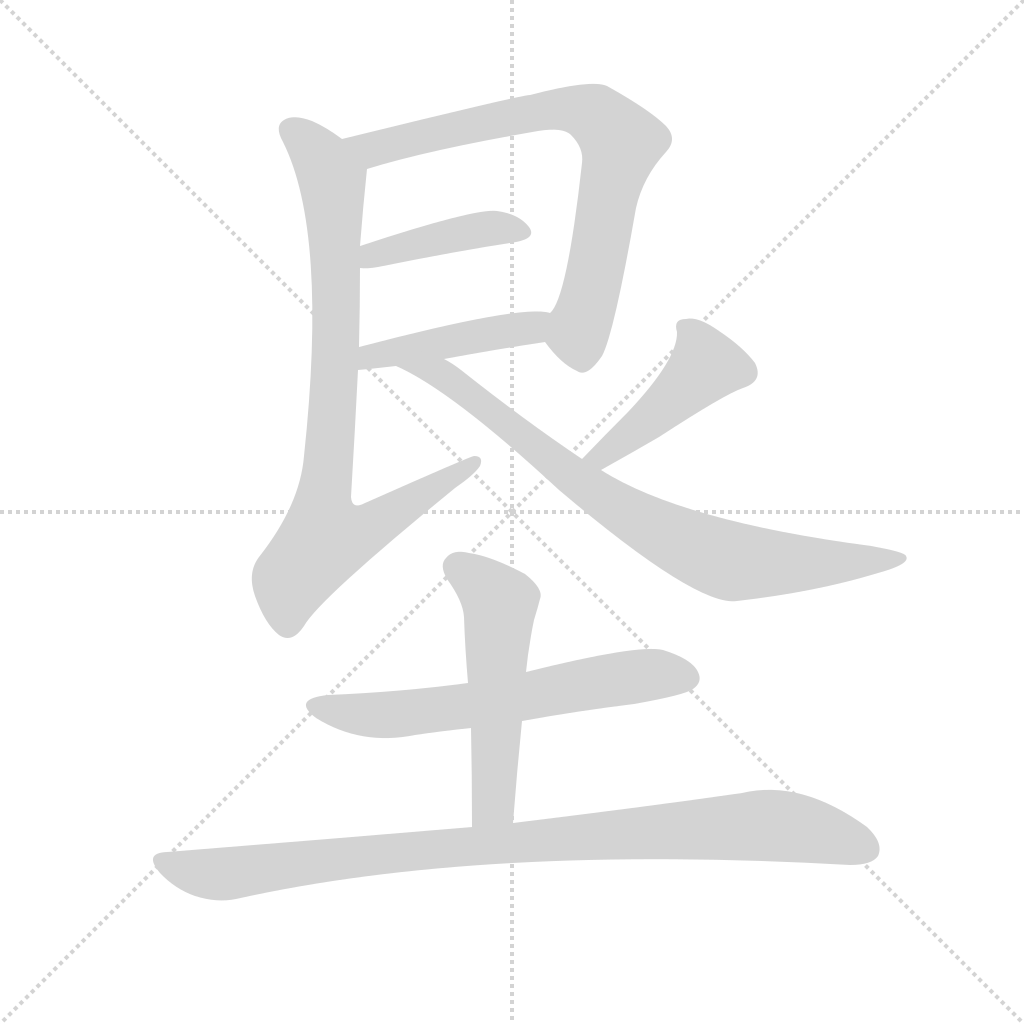
Ken
Kangxi stroke count: 16
Page 240, Entry 02
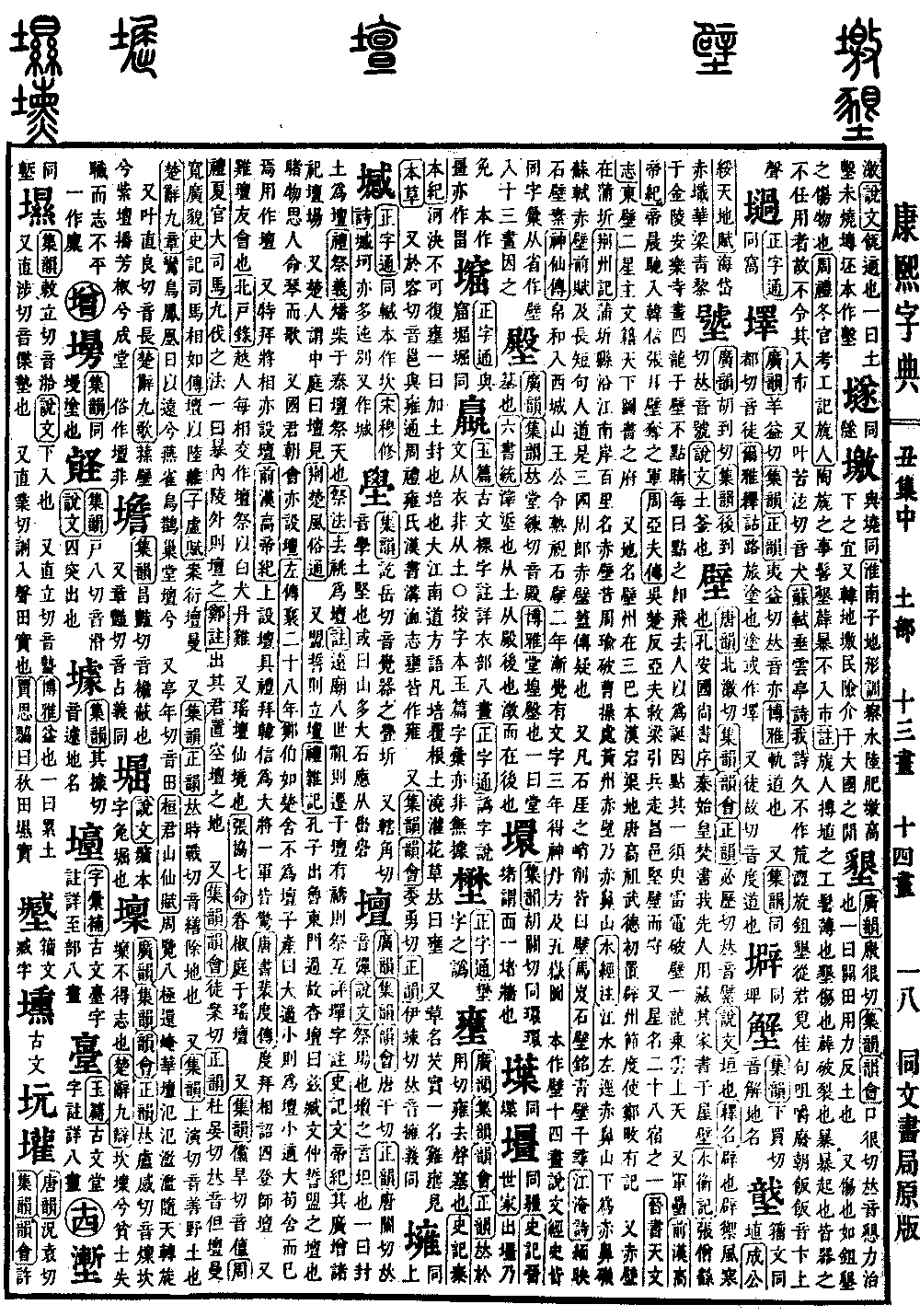
Categorized Compendium of the Sea of Characters (Pianhai Leibian): Same as the character meaning bank or shore (yin).
Ken
Broad Rhymes (Guangyun): Pronounced ken (rising tone)
Collected Rhymes (Jiyun), Rhyme Meetings (Yunhui): Pronounced ken (rising tone)
Meaning: To exert effort in managing land. One theory indicates the act of breaking new ground or turning over soil. It also refers to causing damage; for example, a hoe turning soil may damage objects.
Book of Rites (Zhouli), Winter Bureau, Artificer's Record (Kaogongji), Potters: In the production of pottery, items that are too thin, damaged, fractured, or have uneven surfaces may not be sold in the market.
Commentary: Potters are the craftsmen who make ceramic ware. Ji refers to the vessel body being too thin. Ken refers to having damage. Xue refers to being fractured. Bao refers to the surface being uneven. These are all unusable items, which is why they are not allowed in the market.
Also rhyming with xuan (rising tone), pronounced quan (rising tone).
Su Shi, Hanging Cloud Pavilion Poem (Chuiyunting shi): My poetry has not been written for a long time; my brushwork is rusty and unrefined, and I am just beginning to plow the field of writing once again. I seek fine verses from you, savoring them repeatedly, delaying my morning meal. Fan is pronounced bian (rising tone).