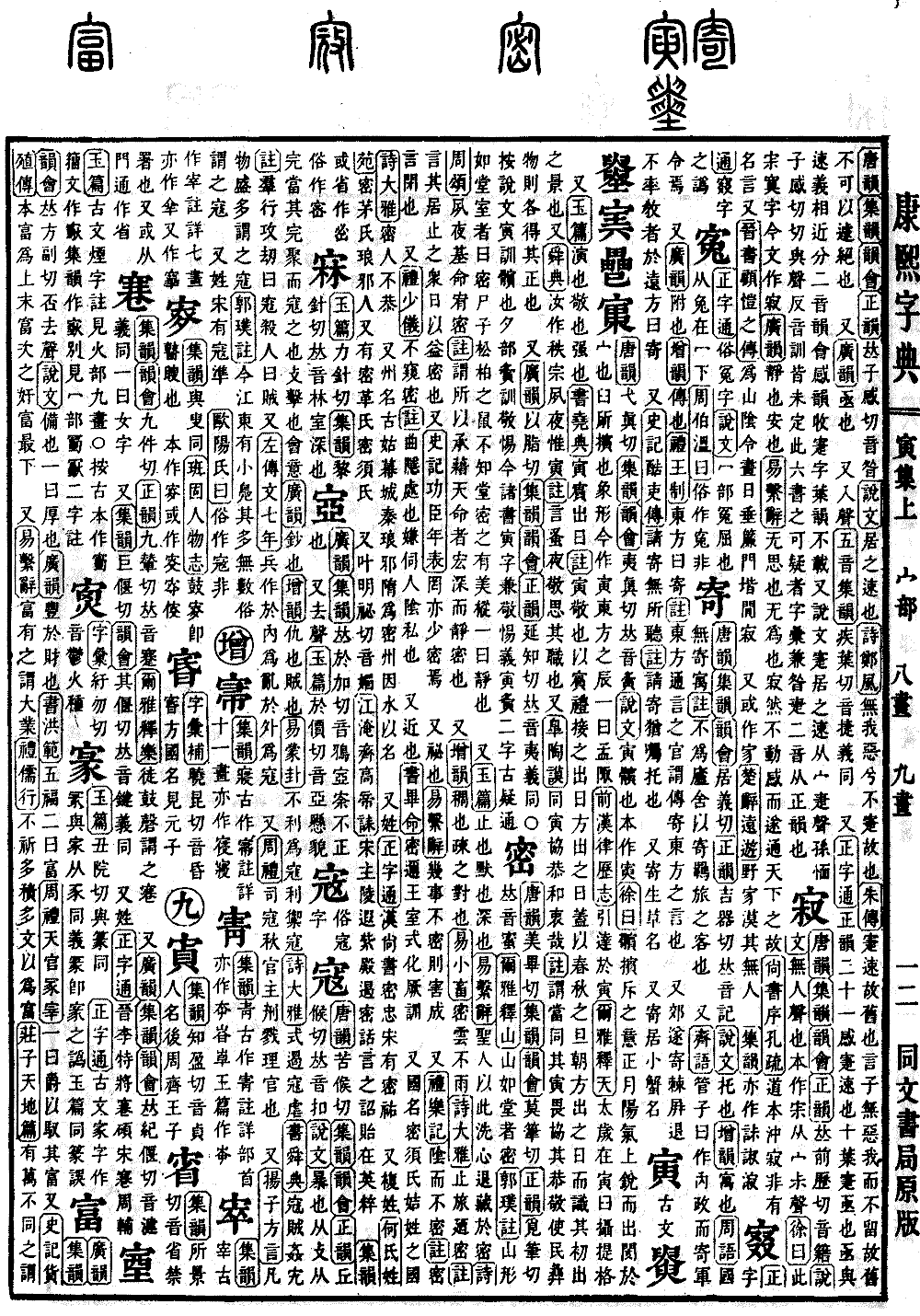
Yin Collection, Upper Volume
Radical: Roof (bù)
Kangxi stroke count: 11
Page 288, Entry 04
Pronounced ji (falling tone).
In the Shuo Wen Jie Zi (Shuowen), it means to entrust. According to the Zeng Yun, it means to lodge. In the Discourses of the States (Zhouyu), it is written: A state should have no lodging or guests. The commentary explains: This refers to not building houses to lodge traveling guests.
In the Discourses of Qi (Qiyu), Guanzi said: Establish domestic policies and attach military orders to them.
According to the Guang Yun, it means to attach. According to the Zeng Yun, it means to transmit. In the Book of Rites (Liji), specifically the Royal Regulations (Wangzhi), it states: The East is called ji. The commentary explains: This refers to the official who communicates with the East, meaning one who transmits and conveys words from the East. Also, in the suburbs and peripheral areas, thorns were placed to demarcate boundaries, and those who did not follow instructions were banished to distant places; this was called ji.
In the Records of the Grand Historian (Shiji), specifically the Biographies of Harsh Officials, it is written: Neither requests nor entreaties were heeded. The commentary explains: Requests and entreaties refer to solicitation or pleading.
It is also the name of a plant, the mistletoe. It is also the name of a small crab, the hermit crab.