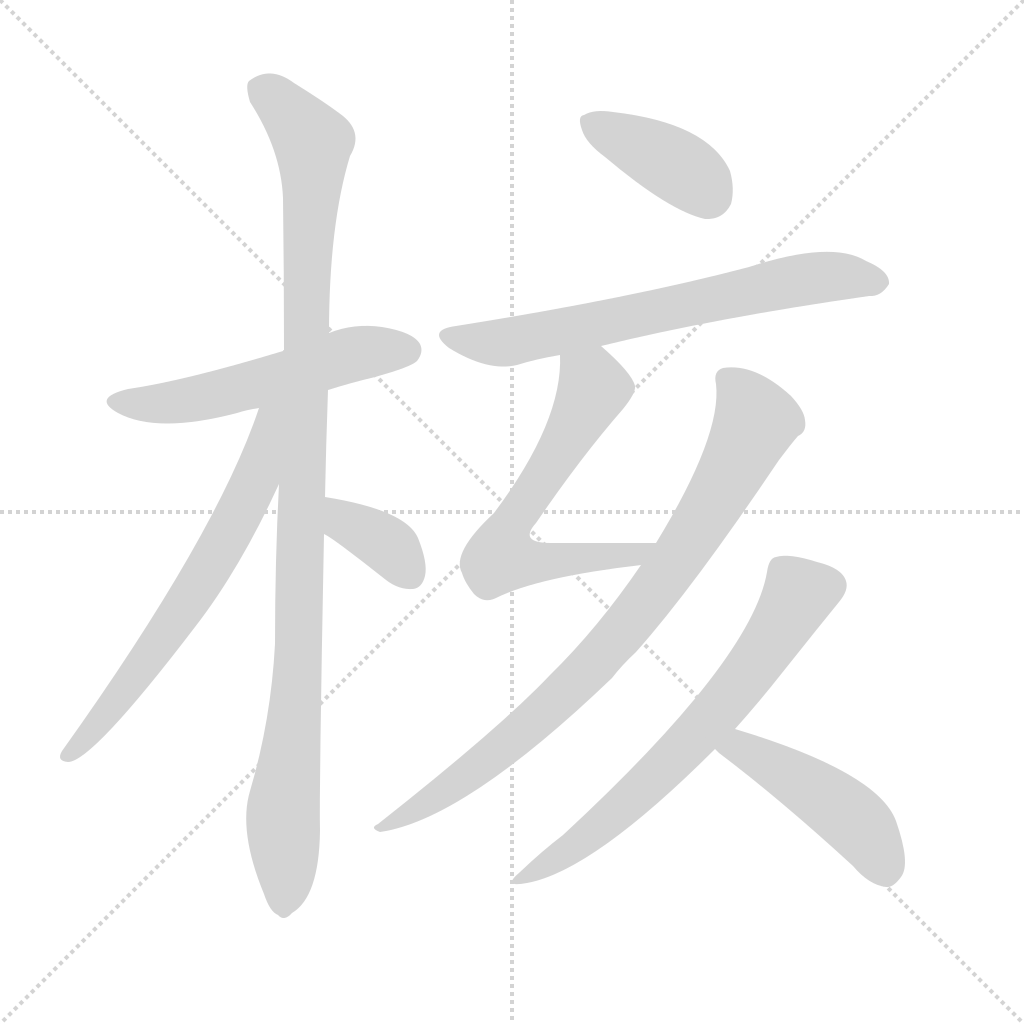
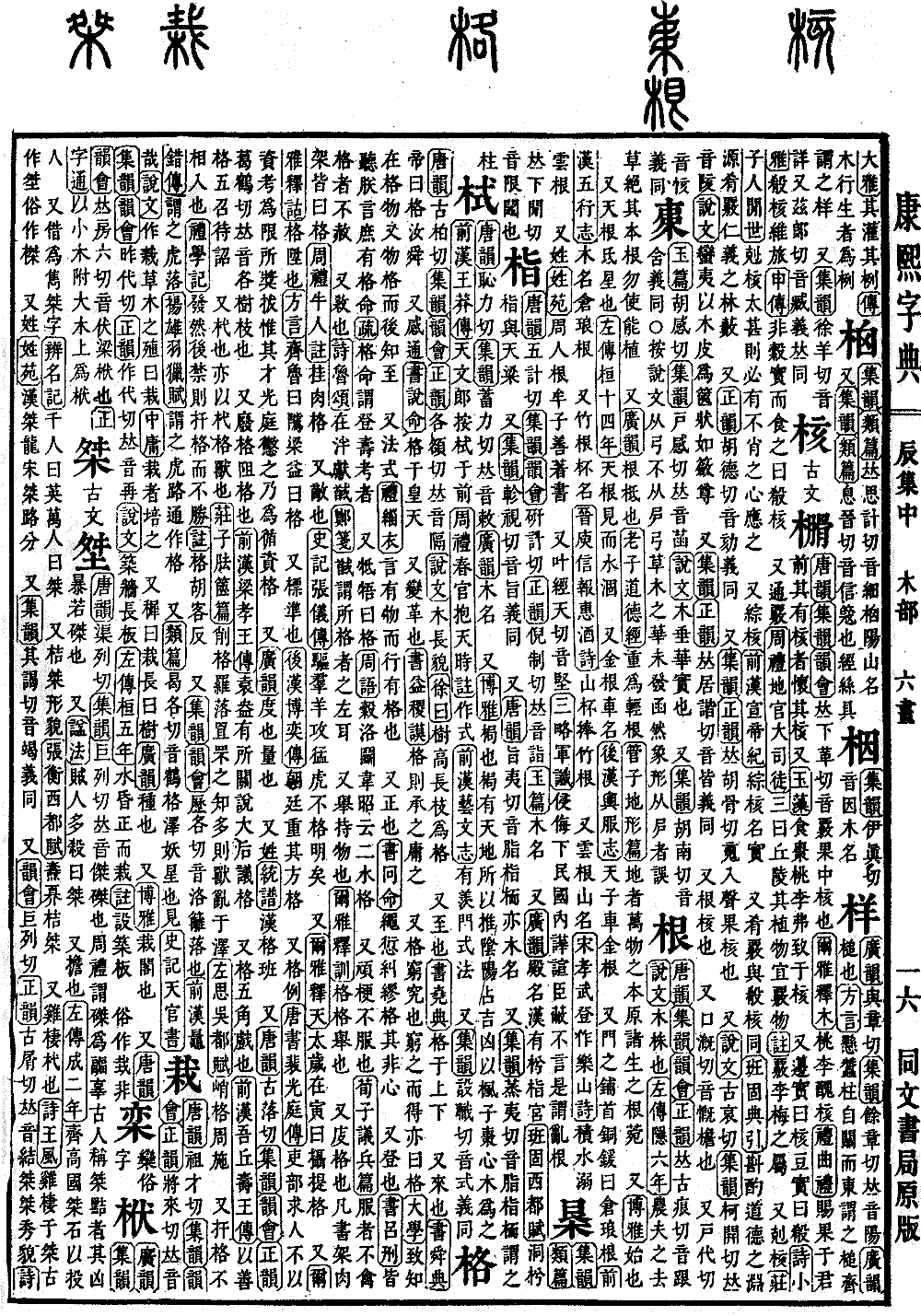
Chen Collection, Middle Volume
Radical: Tree (mù)
Kangxi Strokes: 10
Page 524, Entry 04
Ancient form. Pronounced he. The hard core within a fruit.
Book of Literary Selections (Erya), Explanation of Trees: Fruits such as peaches and plums have cores.
Book of Rites (Liji), Summary of the Rules of Propriety: When fruit is bestowed in the presence of a ruler, one must collect the cores of any fruits that contain them.
Jade Ornament (Yuzao): When eating dates, peaches, or plums, do not spit out the cores.
Also, food served in a bian (a type of bamboo ceremonial vessel) is called he, while food served in a dou (a type of high-footed vessel) is called yao.
Book of Odes (Shijing), Lesser Odes: Vegetable dishes and fruits are all arranged. The commentary states: He refers to food placed in the bian. The sub-commentary states: It refers to items such as peaches or plums.
Also interchangeable with he (to examine).
Rites of Zhou (Zhouli), Earth Office, Grand Minister: The third is hilly terrain, which is suitable for planting fruit-bearing vegetation. The commentary states: He refers to items such as plums or apricots.
Also, kehe refers to harsh criticism.
Zhuangzi, In the World of Men: If the harsh criticism and pressure are too severe, the other party will surely develop evil intentions and seek revenge.
Also, zonghe refers to comprehensive examination.
Book of Han (Hanshu), Annals of Emperor Xuan: Comprehensively examine whether the name and the reality correspond.
Also, yaohe, identical to xiaohe.
Ban Gu, Records of the Hall (Dianyin): Consider the origins of morality and evaluate the abundance of benevolence and righteousness.
Also, Correct Rhymes (Zhengyun): Pronounced he. Meaning is the same.
Also, Collected Rhymes (Jiyun) and Correct Rhymes (Zhengyun): Pronounced with an entering tone. Refers to fruit cores.
Also, Explanation of Writing (Shuowen): Pronounced gai. Explanation of Writing: Barbarians use tree bark to make chests; the shape resembles a mirror box or a wine vessel.
Also, Collected Rhymes (Jiyun) and Correct Rhymes (Zhengyun): Pronounced jie. Meaning is the same. Also refers to root cores.
Also, pronounced kai. Refers to the eaves of a house.
Also, pronounced hai. Meaning is the same.
Textual verification: In Book of Odes (Shijing), Lesser Odes, the line reads xiaohe weilü. The commentary says: Items that are not grains but are edible are called xiaohe. Note: Zheng Xuan’s sub-commentary states that items not being grains but being edible are called xiao, and there is no character for he. It has been corrected to: The commentary states: He refers to food placed in the bian. The sub-commentary states: It refers to items such as peaches or plums.