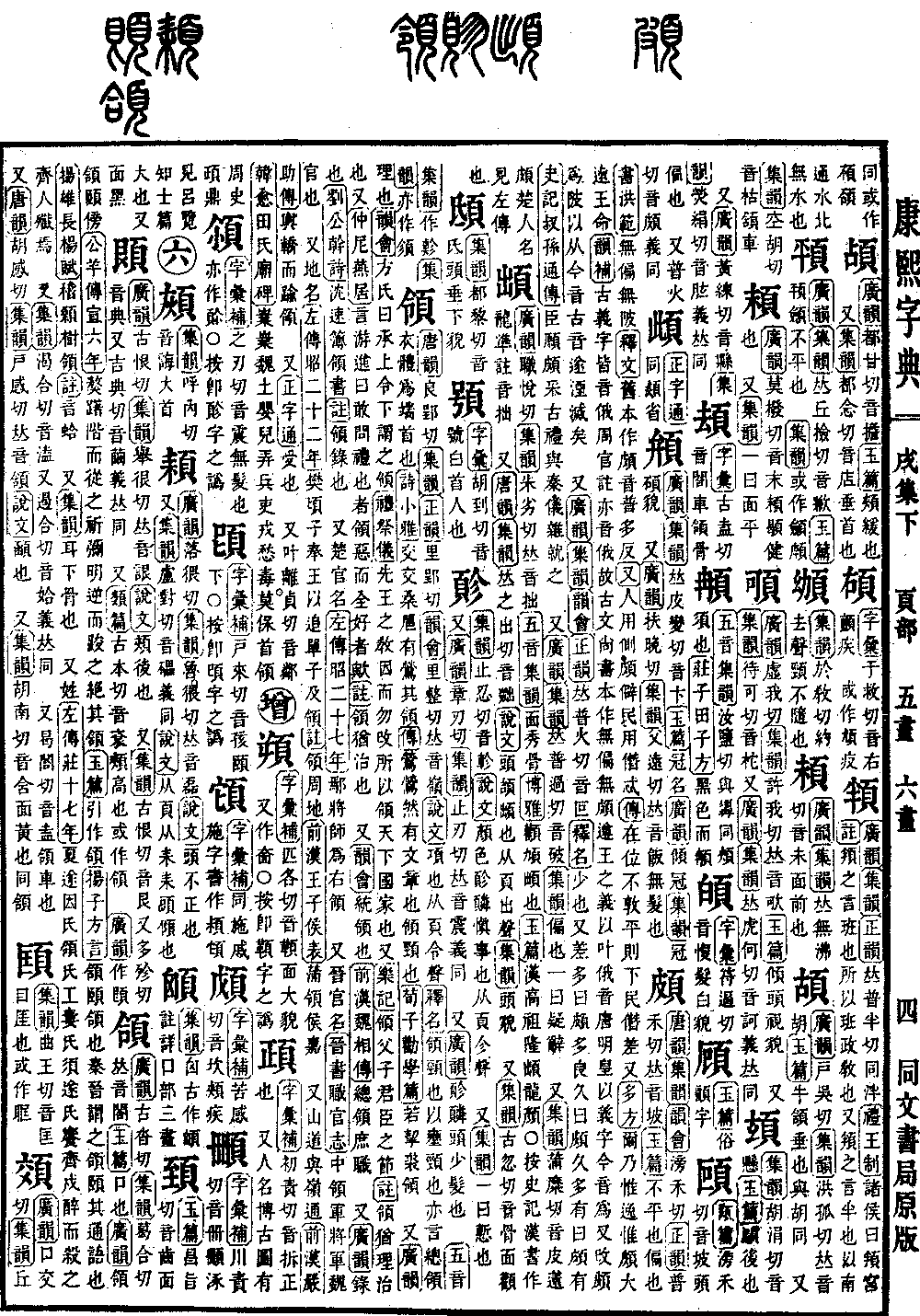
Xu Collection, Lower Volume
Radical: Leaf (yè)
Page 1402, Entry 36
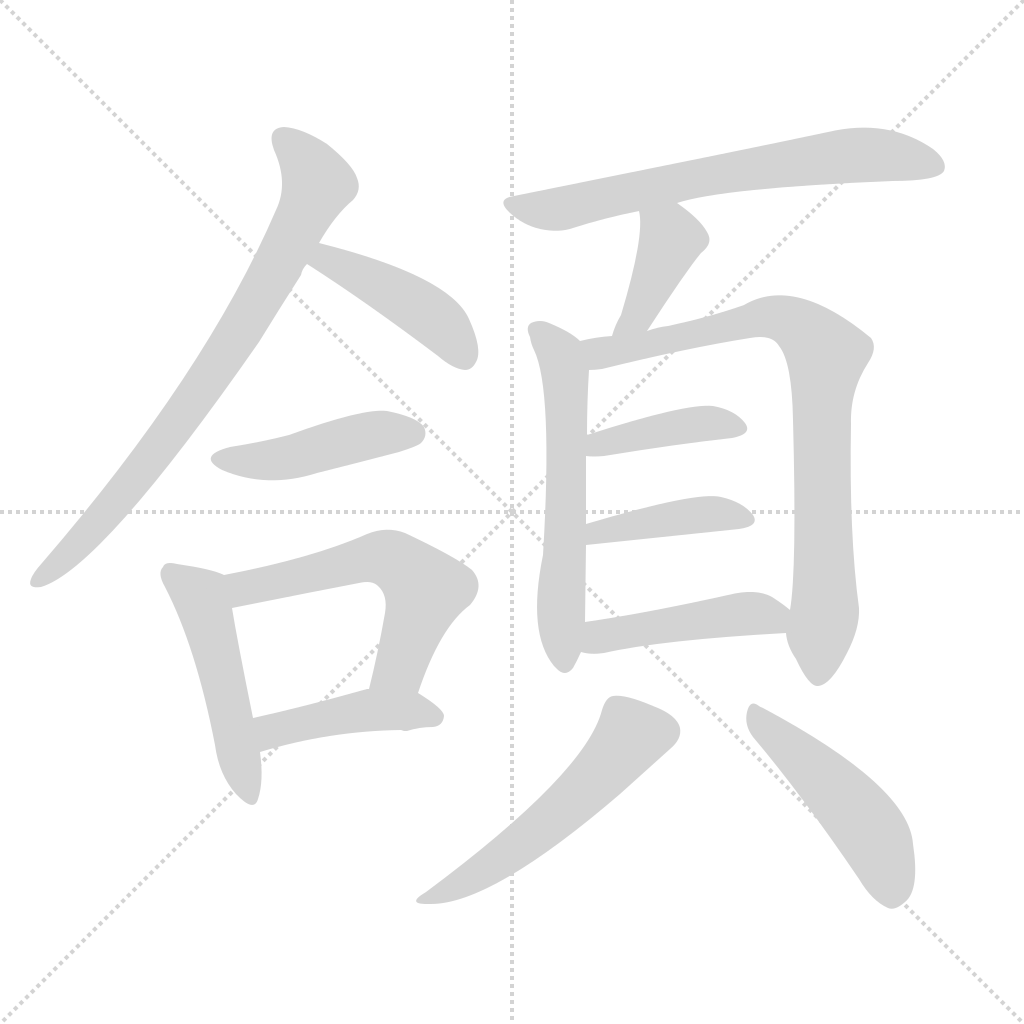
Pronounced ge.
According to the Extensive Dictionary of Rhymes (Guangyun), it refers to the mouth.
According to the Extensive Dictionary of Rhymes (Guangyun), it refers to the jowl or the side of the lower jaw.
As cited in the Commentary of Zuo (Gongyang Zhuan), sixth year of Duke Xuan: A mastiff crouched on the steps, and Qi Miming met it and forced it to retreat, snapping its jaw.
The Jade Chapters (Yupian) cites this as the character for jaw.
According to the Regional Languages of Yangzi (Fangyan): The chin and the lower jaw are both called he. In the Qin and Jin regions, it is referred to as he, while yi is the common term used elsewhere.
In the Changyang Rhapsody by Yang Xiong: Bowing the forehead and planting the jaw. The commentary notes the pronunciation as ge.
Also, according to the Collected Rhymes (Jiyun), it refers to the bone beneath the ear.
Also a surname. As cited in the Zuo Commentary (Zuo Zhuan), seventeenth year of Duke Zhuang: In summer, the Sui, Yin, He, Gonglou, Xusui clans entertained the Qi garrison, made them drunk, and killed them; the people of Qi were wiped out.
Also, according to the Collected Rhymes (Jiyun), pronounced ke.
Also, according to the Collected Rhymes (Jiyun), pronounced a. The meaning is the same.
Also, according to the Collected Rhymes (Jiyun), pronounced he. Refers to the jaw carriage.
Also, according to the Tang Rhymes (Tangyun), pronounced han.
According to the Explaining Graphs and Analyzing Characters (Shuowen Jiezi), it refers to the chin.
Also, according to the Collected Rhymes (Jiyun), pronounced han. Refers to a sallow complexion. Equivalent to the character for chin.