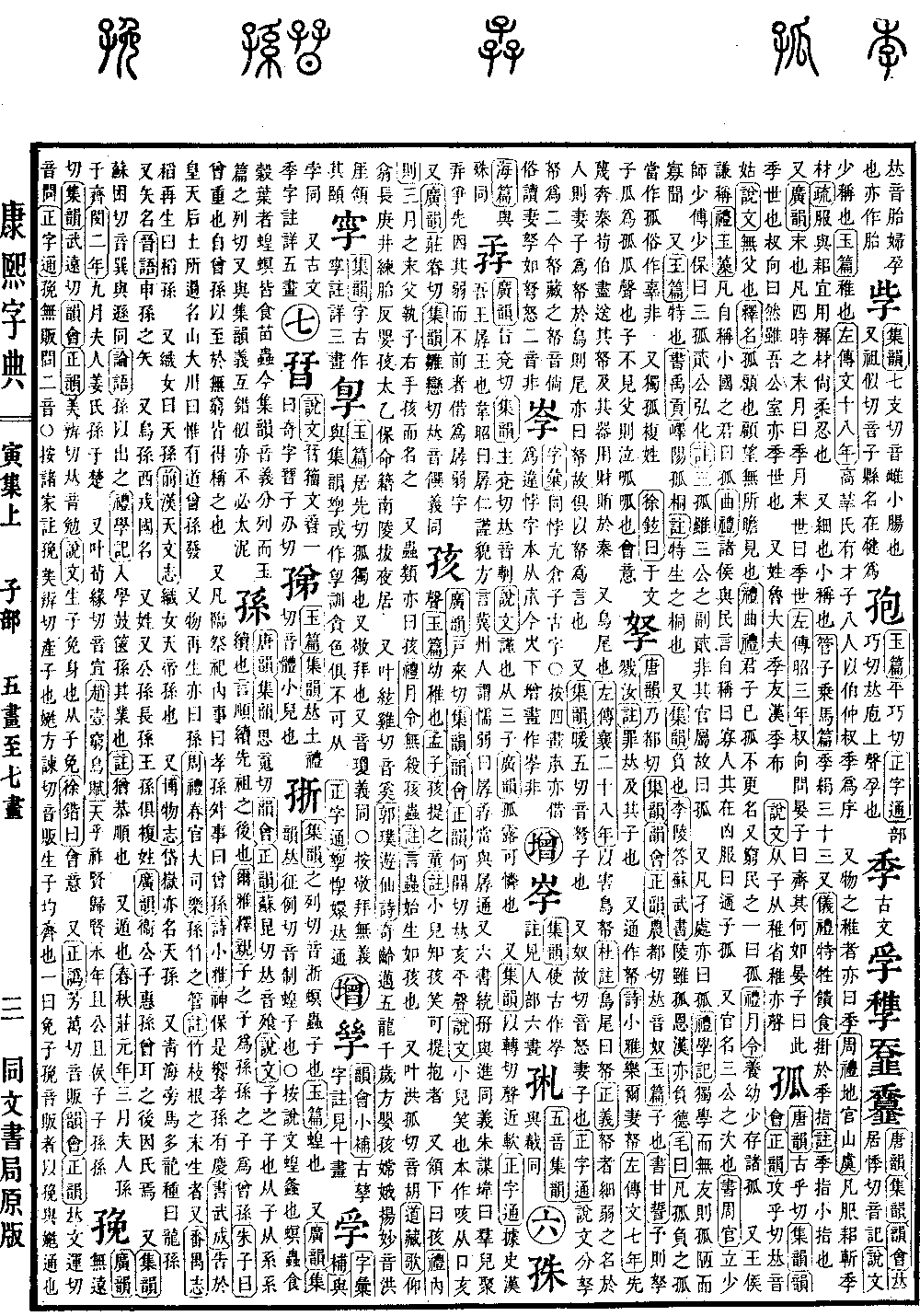
Yin Collection, Upper Volume
Radical: Child (zǐ)
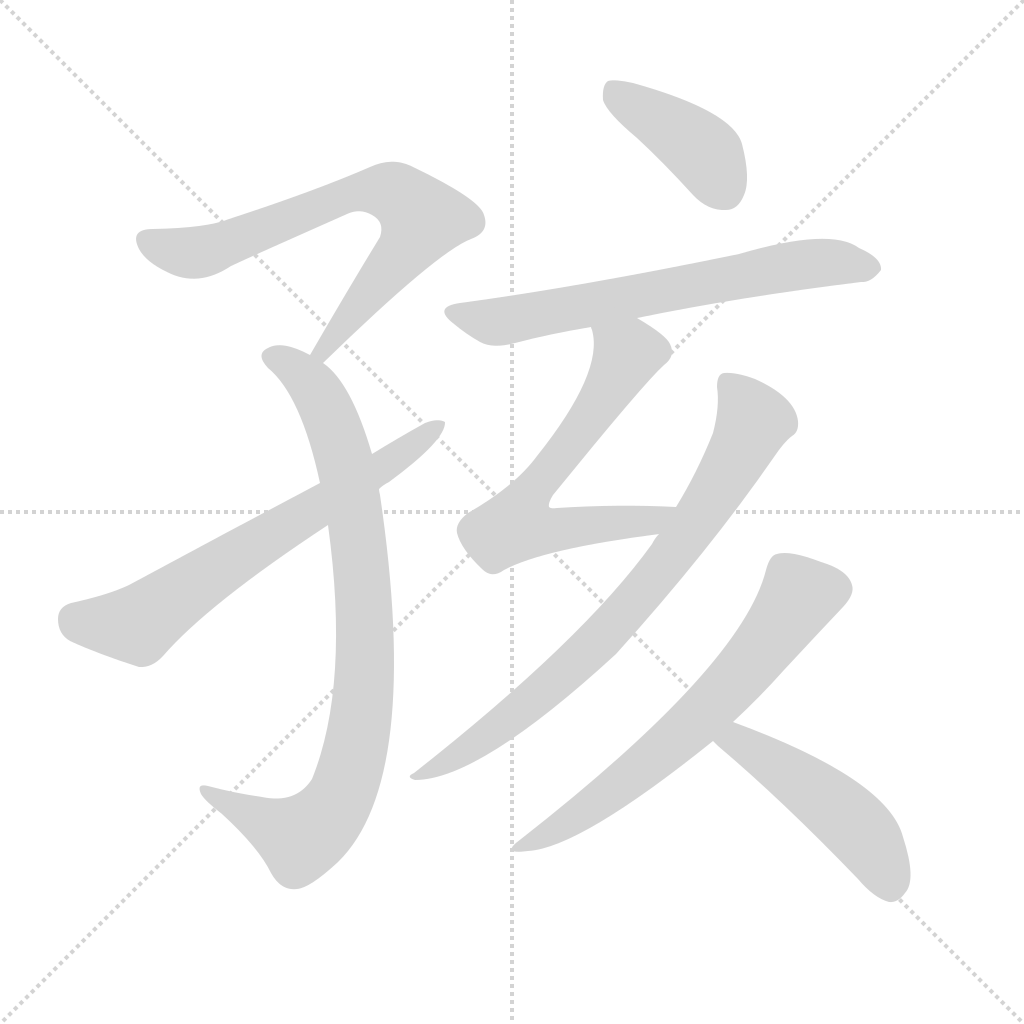
Entry: Child (hái)
Kangxi Strokes: 9
Page 279, Entry 15
Guangyun (Dictionary of Sounds): Pronounced lái
Jiyun (Collective Rhymes), Yunhui (Collection of Rhymes), Zhengyun (Correct Rhymes): Pronounced kāi
Pronounced hái (level tone)
Shuowen Jiezi (Explanation of Graphs and Analysis of Characters): The laughing of a small child. Originally written as a character meaning to cough, with the mouth radical and the sound component hài.
Yupian (Jade Chapters): Infancy or being childish.
Mencius (Mengzi): The child who is carried in the arms. Annotation: A small child who knows how to laugh, and who can be lifted and carried.
Also refers to the area beneath the jaw.
Book of Rites (Liji), Inner Regulations: At the end of the third month, the father takes the child's right hand and names the child.
Also refers to insect-like creatures.
Book of Rites (Liji), Monthly Ordinances: Do not kill young insects. Annotation: Referring to insects that have just been born, resembling small children.
Also rhyming with hóng/gū, pronounced hú.
Daozang Ge (Songs of the Daoist Canon): Looking up to capture the Great Venus, refining the fetus to return to infancy. The Taiyi guards the book of life, while the Southern Mound lifts the night residence.
Also rhyming with xián/jī, pronounced xī.
Guo Pu, Wandering Immortal Poetry: Remarkable age surpasses the five dragons, a thousand years and still an infant. Chang'e raises a marvelous sound, Hongya nods his chin.