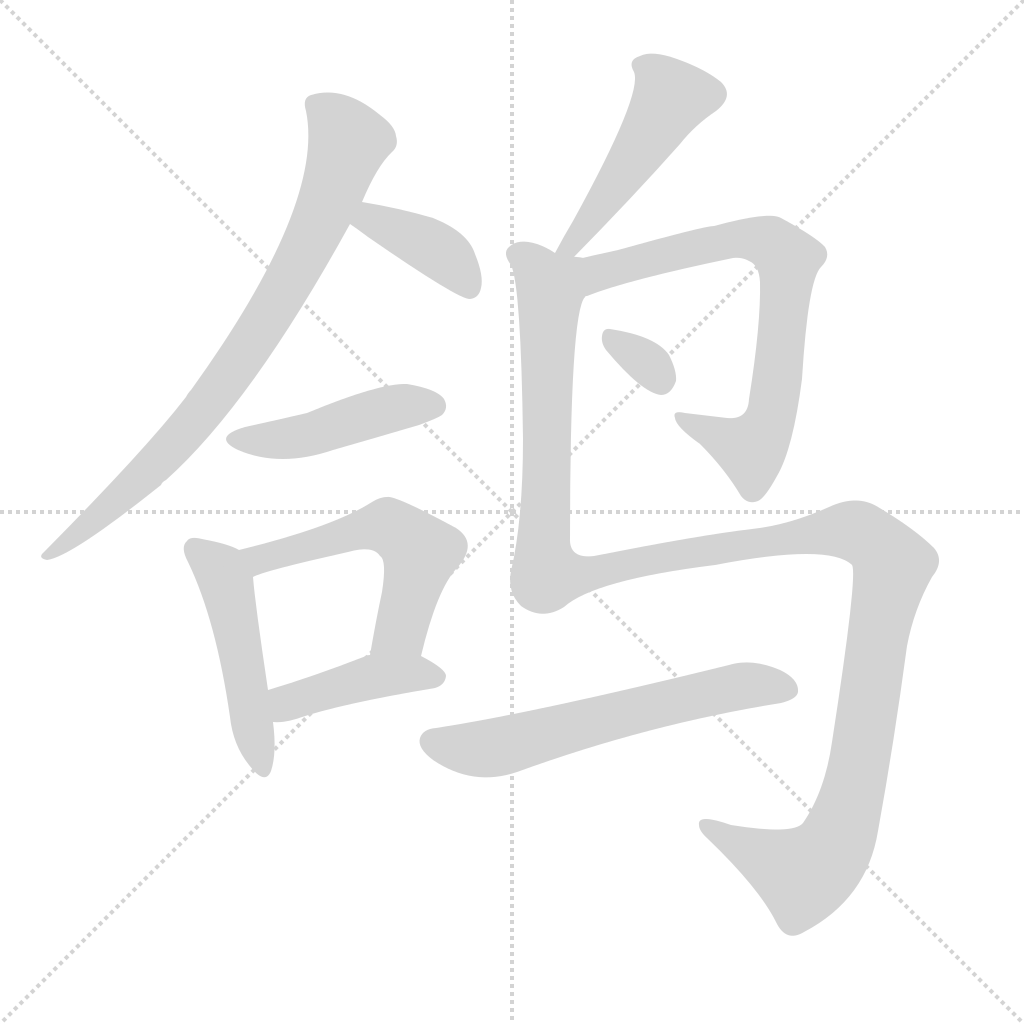
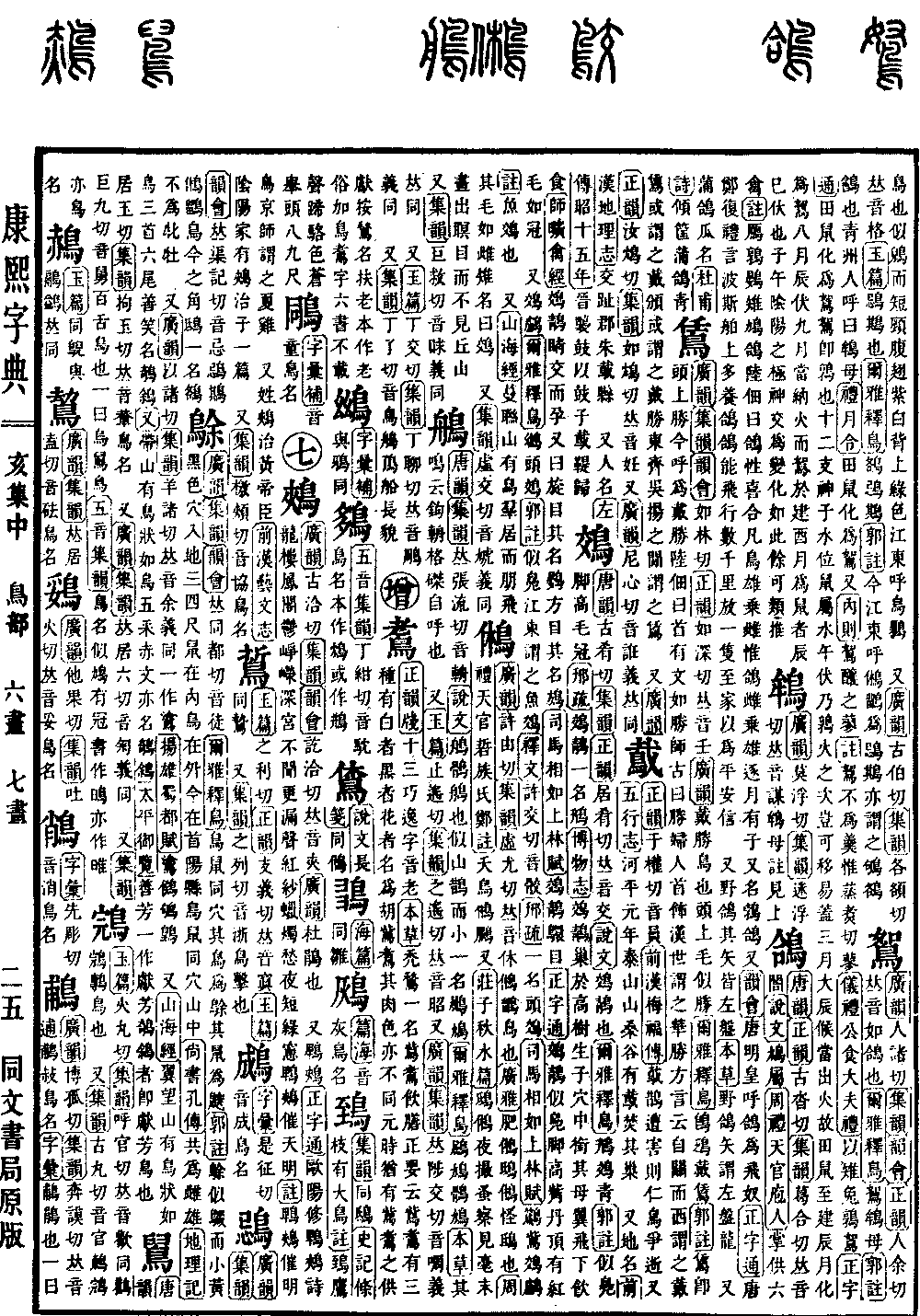
Hai Collection, Middle Volume. Radical: Bird (niǎo). Character: Pigeon. Kangxi stroke count: 17. Page 1489, Entry 12.
Pronounced he.
According to the Explaining and Analyzing Characters (Shuowen Jiezi), a type of dove.
According to the Rites of Zhou (Zhouli), Office of Heaven, Chef: In charge of providing the six types of poultry. Commentary: Geese, quail, grouse, pheasants, doves, and pigeons.
Lu Dian states: The nature of the pigeon is to be fond of congregating in flocks. In all bird species, the male is usually on top and the female on the bottom during mating, but only with pigeons is the female on top and the male on the bottom, and they are capable of laying eggs every month. They are also called bo ge.
According to the Rhyme Collection (Yunhui), Emperor Ming of Tang referred to pigeons as flying servants.
According to the Investigation of Characters (Zhengzitong), Zheng Fuli of the Tang Dynasty stated that Persian ships often kept pigeons. These pigeons could fly thousands of miles, and one would be released to return home as a messenger to report safety.
Also, the wild pigeon: its droppings spiral to the left. According to the Materia Medica (Bencao), wild pigeon droppings are called left-coiling dragons.
Also, pu ge is a name for a type of melon. Du Fu poem: Tipping the basket of green pu ge melons.