Chou Collection, Upper Volume
Radical: Mouth (kǒu)
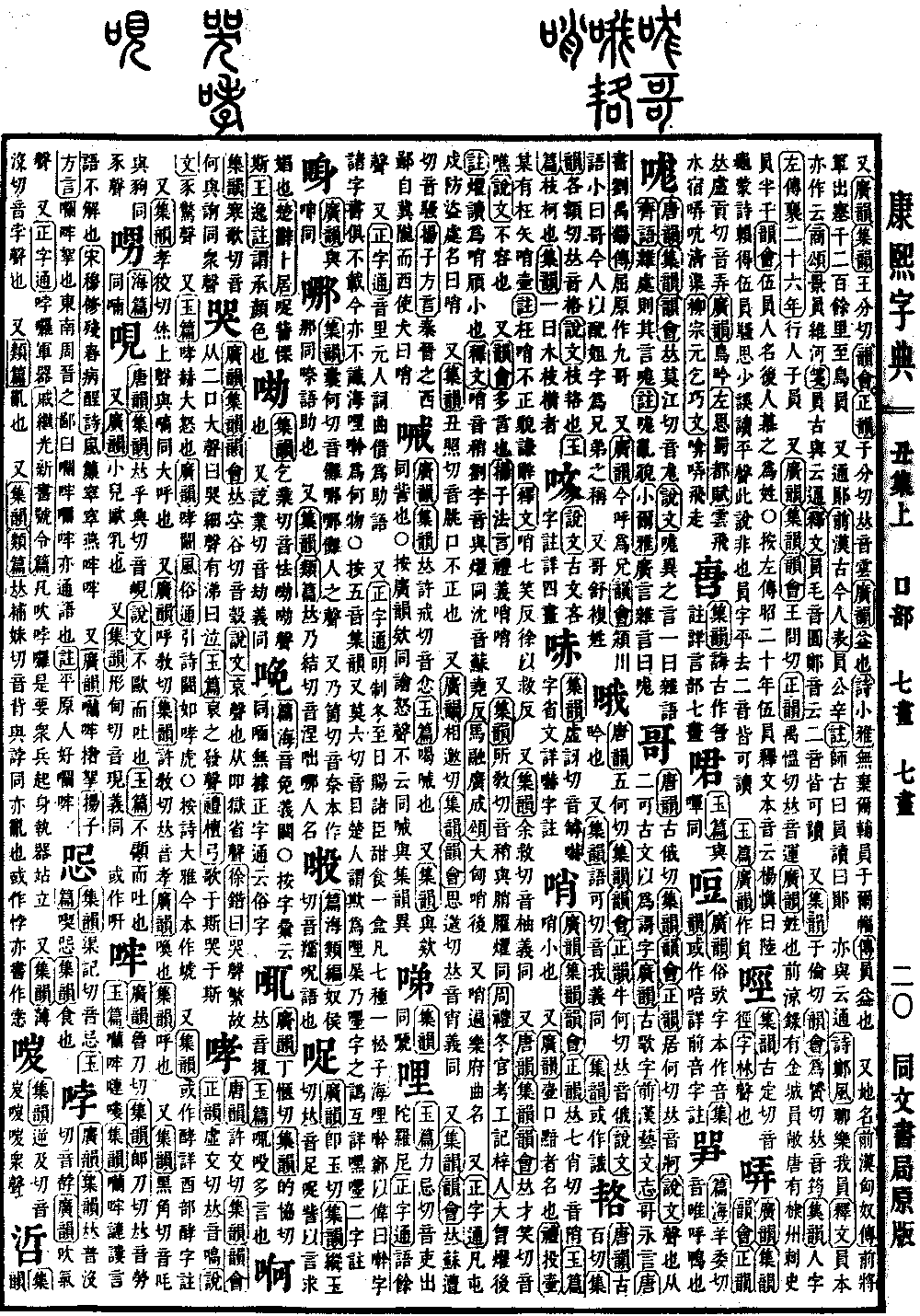
哥
Kangxi strokes: 10
Page 190, Entry 08
Pronounced ge.
According to the Explaining Graphs and Analyzing Characters (Shuowen Jiezi), it refers to sound. Composed of two mouth-related components, it was used as the character for song in ancient texts. According to the Expanded Rhymes (Guangyun), it is the ancient character for song. According to the History of the Former Han (Qianhan Shu), records of arts and literature, it refers to singing and prolonged speech. According to the History of the Tang (Tang Shu), biography of Liu Yuxi, Qu Yuan composed the Nine Songs.
Additionally, according to the Expanded Rhymes (Guangyun), it is now used to refer to an elder brother. According to the Collection of Rhymes (Yunhui), in the dialect of Yingchuan, the young address the elder as ge, and nowadays people pair ge with the character for elder sister as a way to address siblings.
There is also Geshu, a compound surname.