Hai Collection, Middle Volume
Radical: Bird (niǎo)
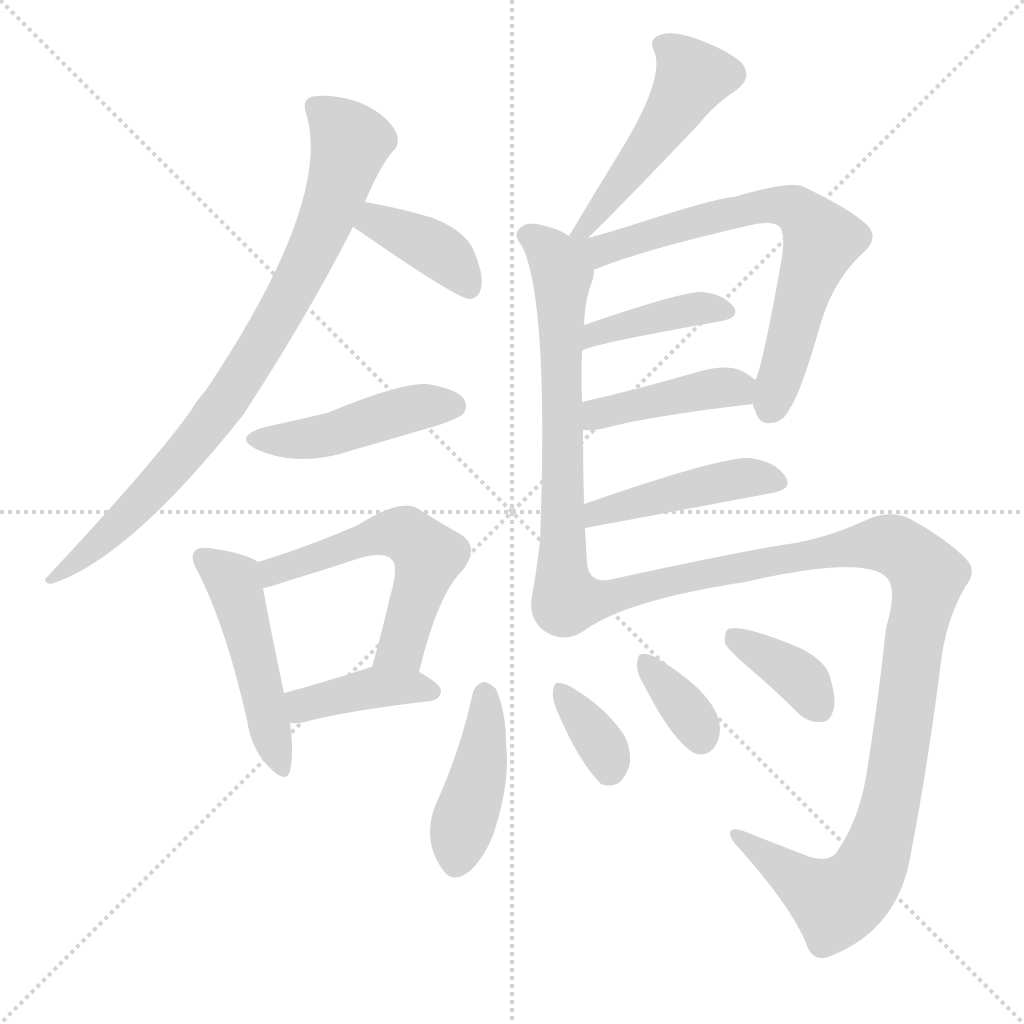
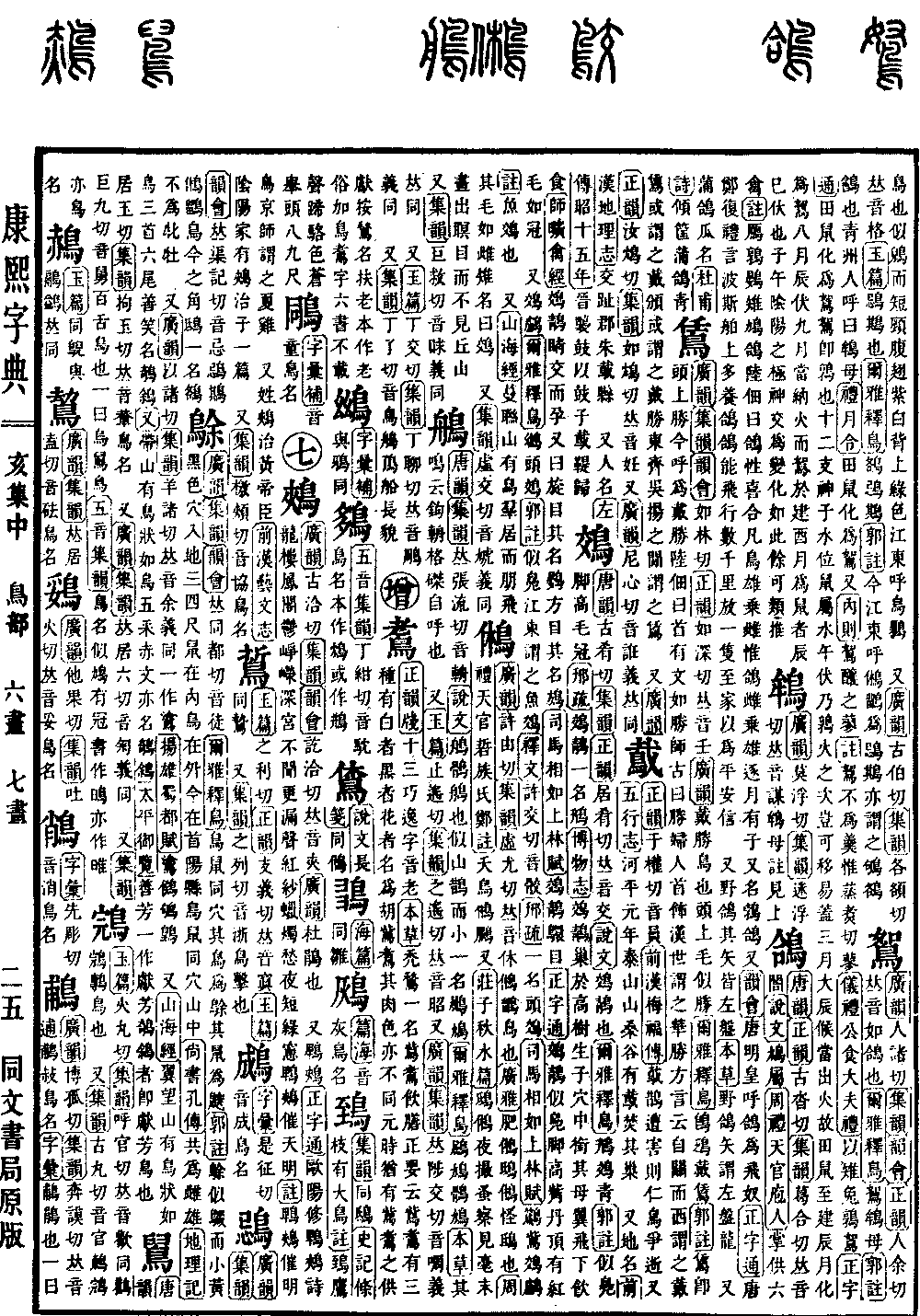
Ge (Pigeon)
Kangxi stroke count: 17
Page 1489, Entry 03
Pronounced ge.
According to the Explaining Graphs and Analyzing Characters (Shuowen Jiezi), a type of dove.
Rites of Zhou (Zhouli), Offices of Heaven, Chef: Responsible for providing the six types of poultry. Commentary: Wild goose, quail, pheasant, turtle dove, and pigeon. Lu Dian notes: The pigeon by nature prefers to flock together. Among most birds, the male is on top and the female is on bottom; only with pigeons is the female on top and the male on bottom, and they lay eggs every month. Also known as bo ge.
According to the Collection of Rhymes (Yunhui), Emperor Xuanzong of Tang called the pigeon a flying slave.
According to the Correct Meaning Through Investigation (Zhengzitong), Zheng Fuli of the Tang dynasty stated that Persian ships often kept pigeons. Pigeons can fly thousands of miles; one is released to fly home as a messenger to report peace.
Regarding wild pigeons, their droppings all spiral to the left. According to the Materia Medica (Bencao), wild pigeon droppings are called left-coiling dragons.
Also, pu ge is a name for a type of melon. Du Fu poem: Tipping the basket of green pu ge melons.