Si Collection, Upper Volume
Radical: Water (shuǐ)
洽; Kangxi brush strokes: 10; Page 622, Entry 21
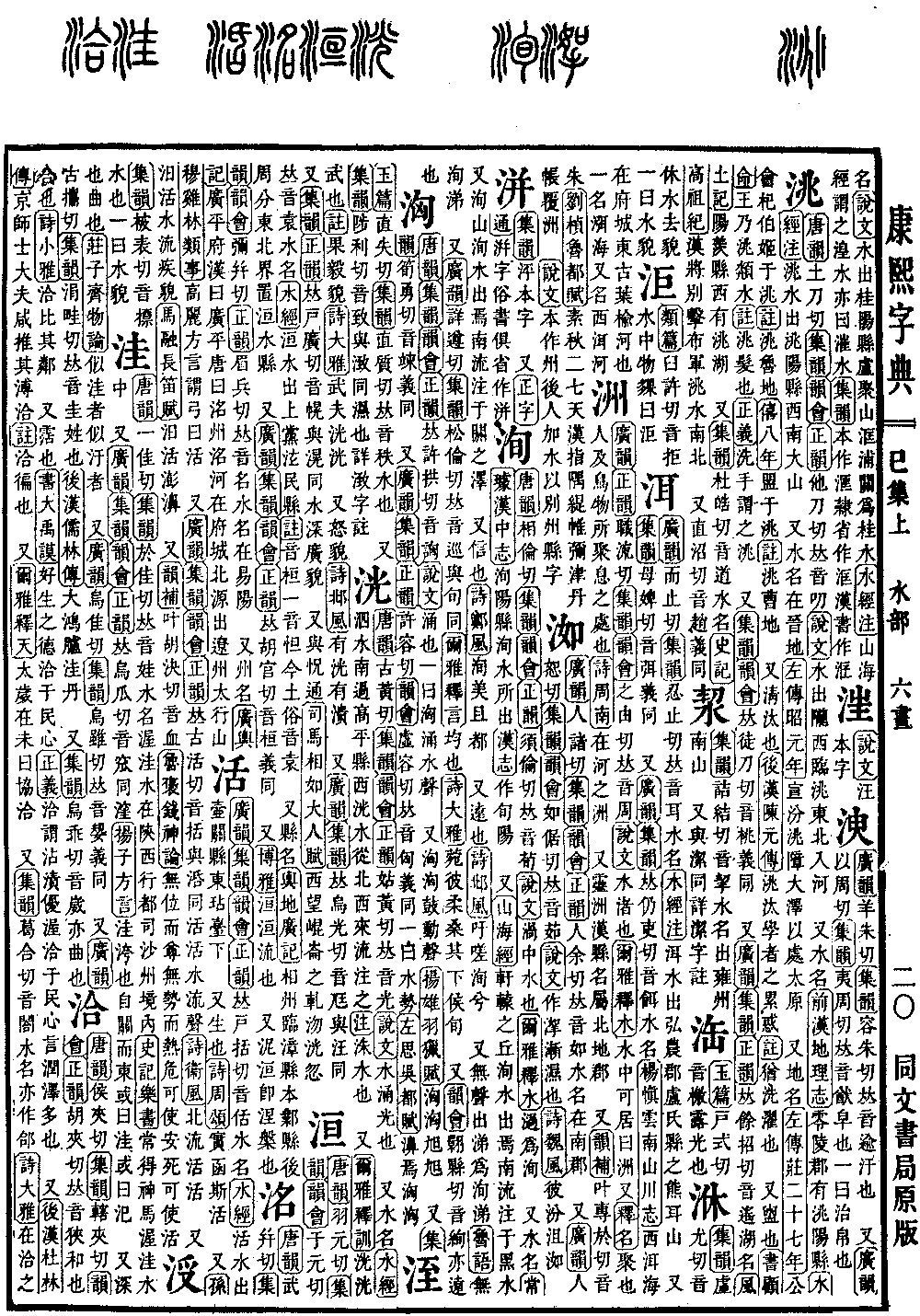
Pronounced xia. To harmonize; to join. Book of Odes (Shijing): Harmonizing with neighbors. Also, to moisten. Book of Documents (Shujing): The virtue of loving life moistens the hearts of the people. Commentary: This means to moisten, soak, or penetrate; to be abundant and sufficient, so that it reaches the hearts of the people, meaning the grace is widespread. Also, from the Biography of Du Lin in the Book of the Later Han (Hou Hanshu): The scholars and officials of the capital all praised his profound and extensive knowledge. Note: This means to reach everywhere. Also, from the Erya (Erya): The year of the Tai Sui in the Wei year is called Xieqia. Also, pronounced ge. A river name. Also written as He. Book of Odes (Shijing): On the sunny side of the He River. Also, in the Rhythm Supplement (Yunbu), rhymed as xi. From the Ode on the Beginning of the Sovereign (Huangchu Song) by Fu Xia: Singing of the nine achievements, dancing with eight lines of dancers, great grace is widespread, and imperial favor is harmonious. Also rhymed as xie. From the Ode on the Red and White Horse (Zhebaima Fu) by Yan Yanzhi: Military righteousness is respectfully displayed, and cultural education has become harmoniously sufficient. The peace of the Supreme Staircase can be attained, and the path of the flourishing kings can be followed.
Textual Research: In the Biography of Du Lin in the Book of the Later Han (Hou Hanshu), it mentions that the scholars and officials of the capital all praised his vast and harmonious knowledge. According to the original text, the word pu has been corrected to bo.