Chen Collection, Middle Volume
Radical: Tree (mù)
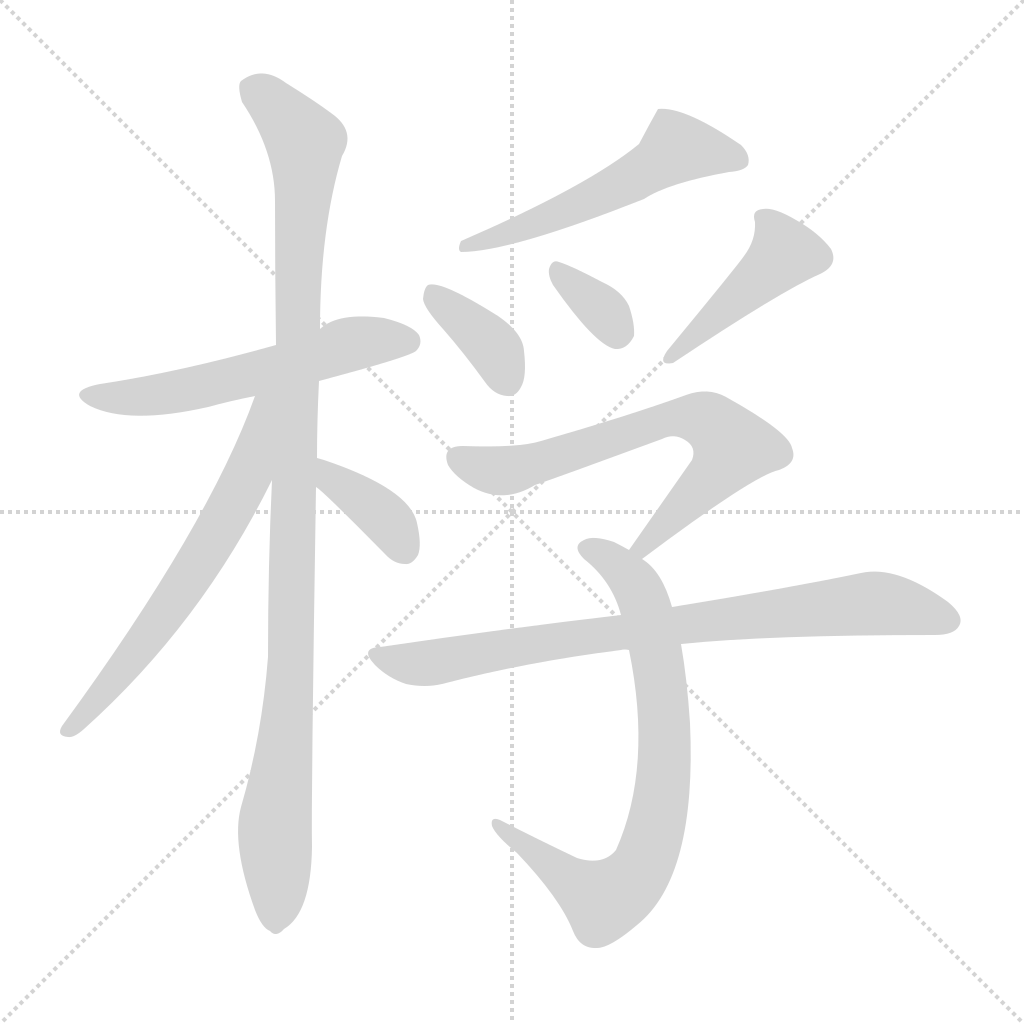
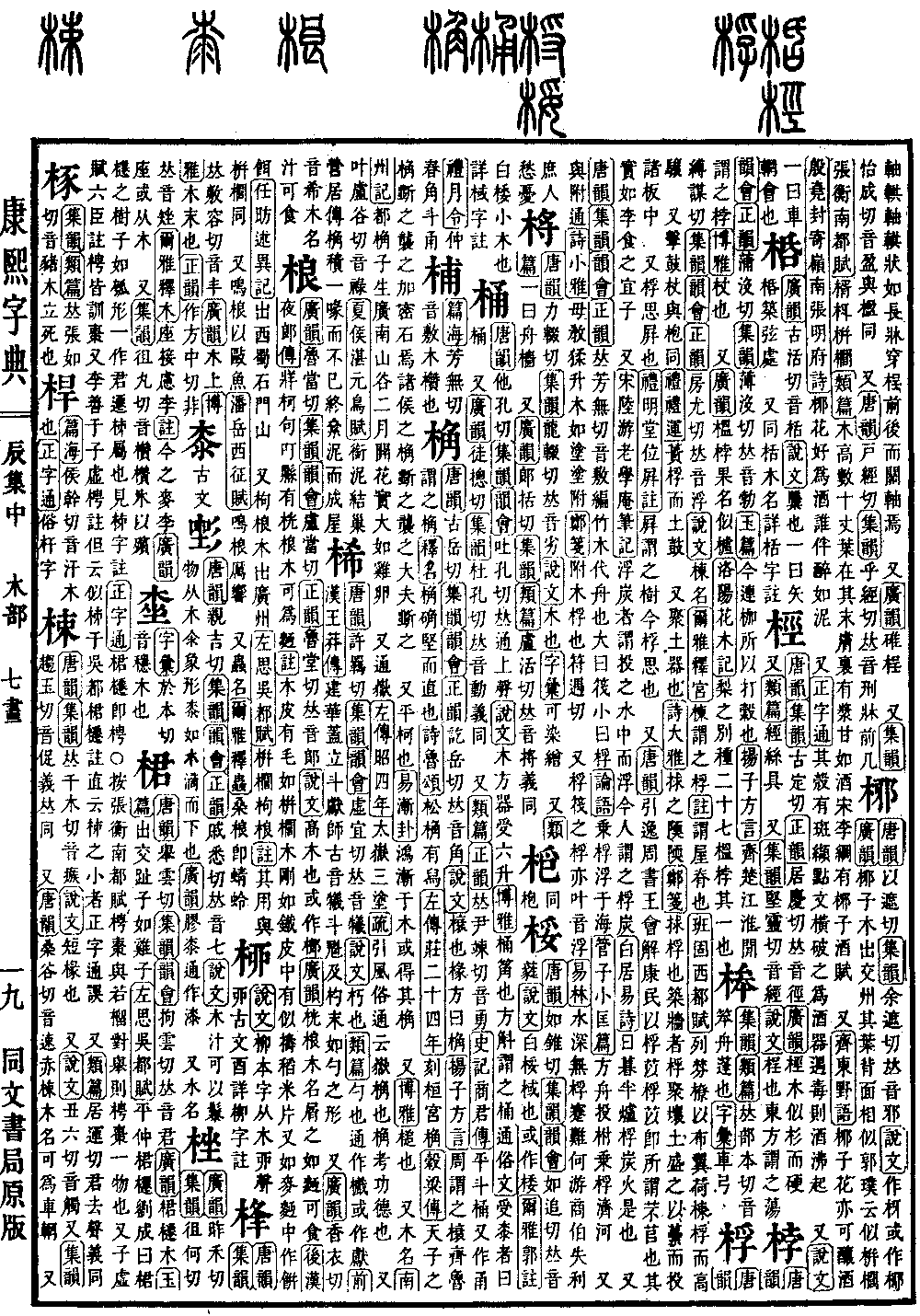
桴; Kangxi stroke count: 11; Page 527, Entry 06
Pronounced fu. According to the Shuowen Jiezi (Explaining Graphs and Analyzing Characters), it is the name of a ridgepole. In the Erya (Approaching Elegance), section on palaces, it states that the ridgepole is called a fu. The commentary notes that this refers to the roof ridge. In Ban Gu’s Western Capital Rhapsody (Xidu Fu), it is written: arranged with rafters like spread wings, bearing the ridgepoles to soar high.
Also, a stick for beating a drum. Same as the character fu (枹). In the Book of Rites (Liji), section on the evolution of rites: with a clod-striker and an earthen drum.
Also, a tool for gathering earth. In the Book of Odes (Shijing), section on the greater odes: gathering it in mounds. The commentary by Zheng Xuan states: fu refers to the act of gathering. Those who build walls use a fu to gather loose earth, fill it into baskets, and cast it into the wooden forms.
Also, fu-si refers to a screen. In the Book of Rites, commentary on the Mingtang Wei section: a screen is called a tree; it is what is now called fu-si.
Also, according to the Tang Yun (Tang Rhymes), citing the Lost Book of Zhou (Yi Zhoushu), chapter on the gathering of kings: pacifying the people with fu-yi. Fu-yi is what is known as plantain (fouyi). Its fruit resembles a plum; eating it is good for fertility.
Also, according to Lu You’s Notes from the Hall of Old Learning (Laoxuean Biji): floating charcoal refers to charcoal that floats when thrown into water; current people call it fu-tan. Bai Juyi’s poetry contains the line: at sunset, half a stove of floating charcoal fire.
Pronounced fu. Bound bamboo or wood used in place of a boat. Large ones are called rafts (fa), small ones are called fu. In the Analects (Lunyu): I would take a raft (fu) and float out to sea. In the Guanzi, section on minor rectifications: putting boats together and joining them, they took rafts (fu) to cross the river.
Also, interchangeable with the character fu (附). In the Book of Odes (Shijing), section on the lesser odes: do not teach a monkey to climb a tree, like daubing mud onto a mud-daubed surface. The commentary by Zheng Xuan states: fu refers to the wooden fu. Also pronounced fu.
The fu in the sense of a raft also rhymes as fu. In the Yi Lin (Forest of Changes): the water is deep with no raft (fu), how can one travel through hardship? The merchant prince lost his profit, and the common people are full of sorrow.