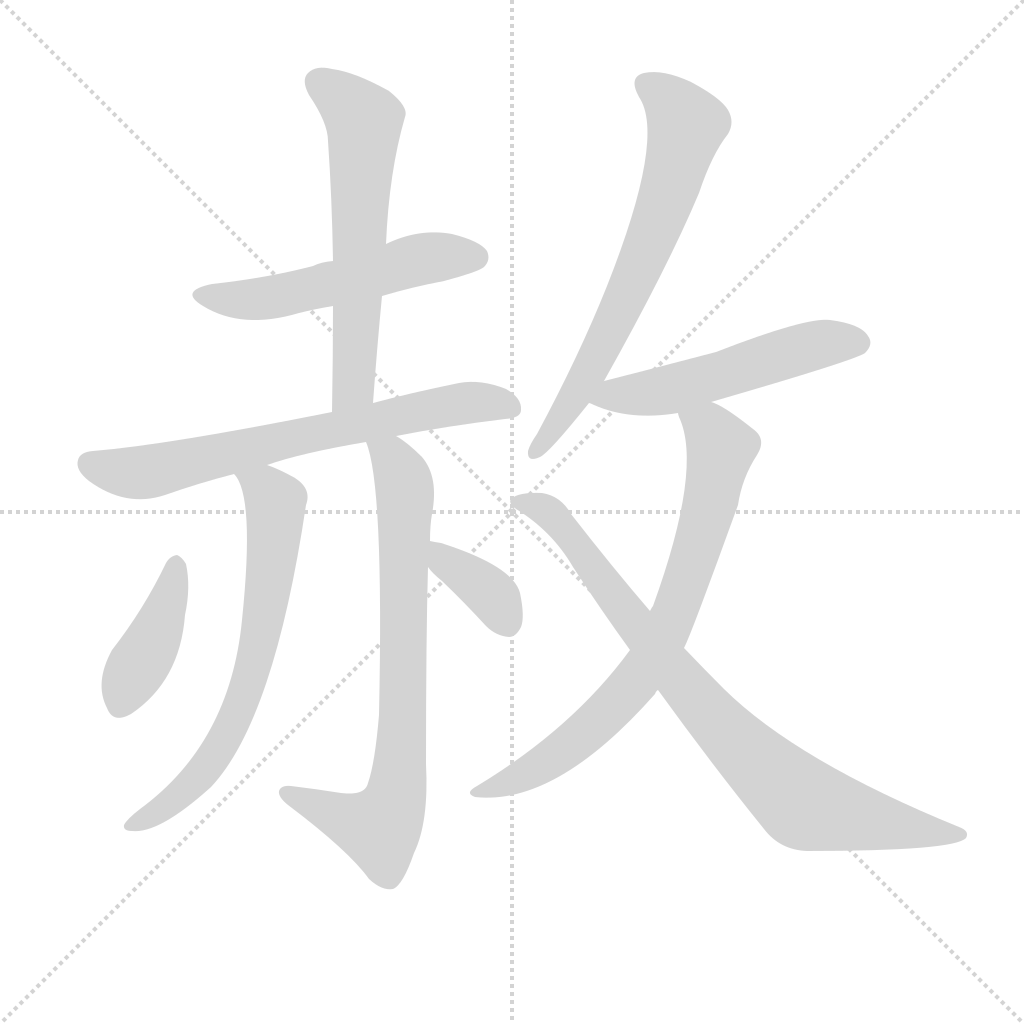
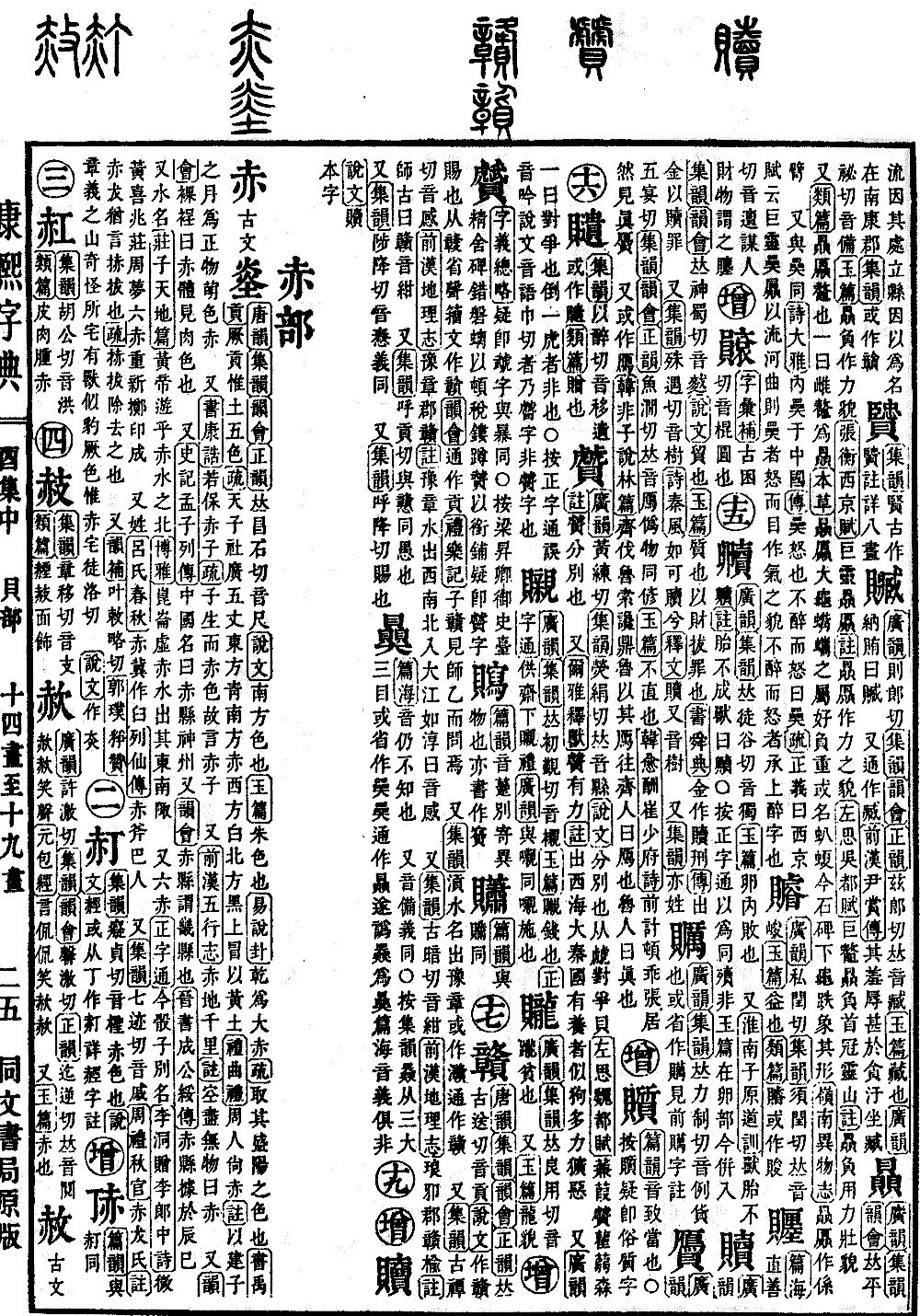
You Collection, Middle Volume
Radical: Red (chì)
Kangxi Strokes: 11
Page 1213, Entry 29
Ancient form.
Pronounced she (falling tone).
According to the Analytical Dictionary of Characters (Shuowen Jiezi), it means to set aside or to release. Also written with a variant form derived from the radical for also.
According to the Broad Rhymes (Guangyun), it means to pardon.
Book of Changes (Yijing), Hexagram of Deliverance: The superior man uses this to pardon errors and forgive crimes.
Book of Documents (Shangshu), Oath of Tang: There shall be no pardoning.
Also mentioned in the Code of Lu.
Rites of Zhou (Zhouli), Autumn Offices, Ministry of Punishments: Manages the laws of the three piercings, three leniencies, and three pardons.
Commentary: Pardon means to release.
History of the Former Han (Qianhan Shu), Treatise on Law: The three pardons; one is for the young and weak, two is for the old and senile, three is for the slow-witted and foolish.
Also a surname.
Garden of Stories (Shuoyuan): Zhao Zichen Shejue.
Also used interchangeably with the character meaning to release or abandon.
History of the Former Han (Qianhan Shu), Biography of Zhu Bo: Often did not release.
Also pronounced ce (entering tone). Originally written as the character meaning to command. Refers to striking a horse.
Also rhyming with ge (level tone) according to the Rhyme Supplement (Yunbu).
Poem by Han Yu on Dongfang Shuo: The immortals speak urgently, the hundred transgressions are surely not without penalty. Looking toward the place of glaring, the matter is unpardonable.
Note: The reading ge is used by Wu Cailao.
Textual research: History of the Former Han (Qianhan Shu), Treatise on Law, the three pardons, one is for the young and weak, two is for the old and senile, three is for the slow-witted and foolish. Carefully corrected the character for slow-witted according to the original text.