Mao Collection, Lower Volume
Radical: Tapping (pū)
12 strokes
Page 472, Entry 26
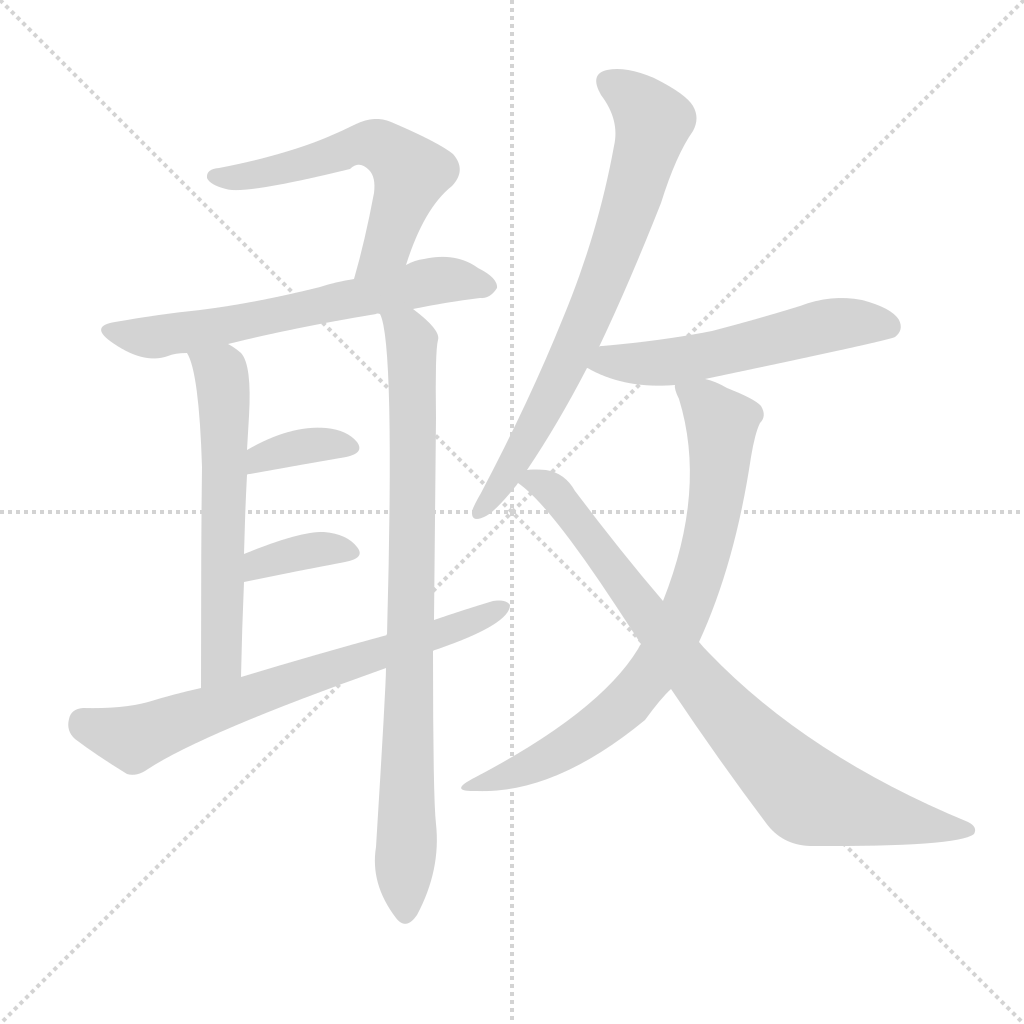
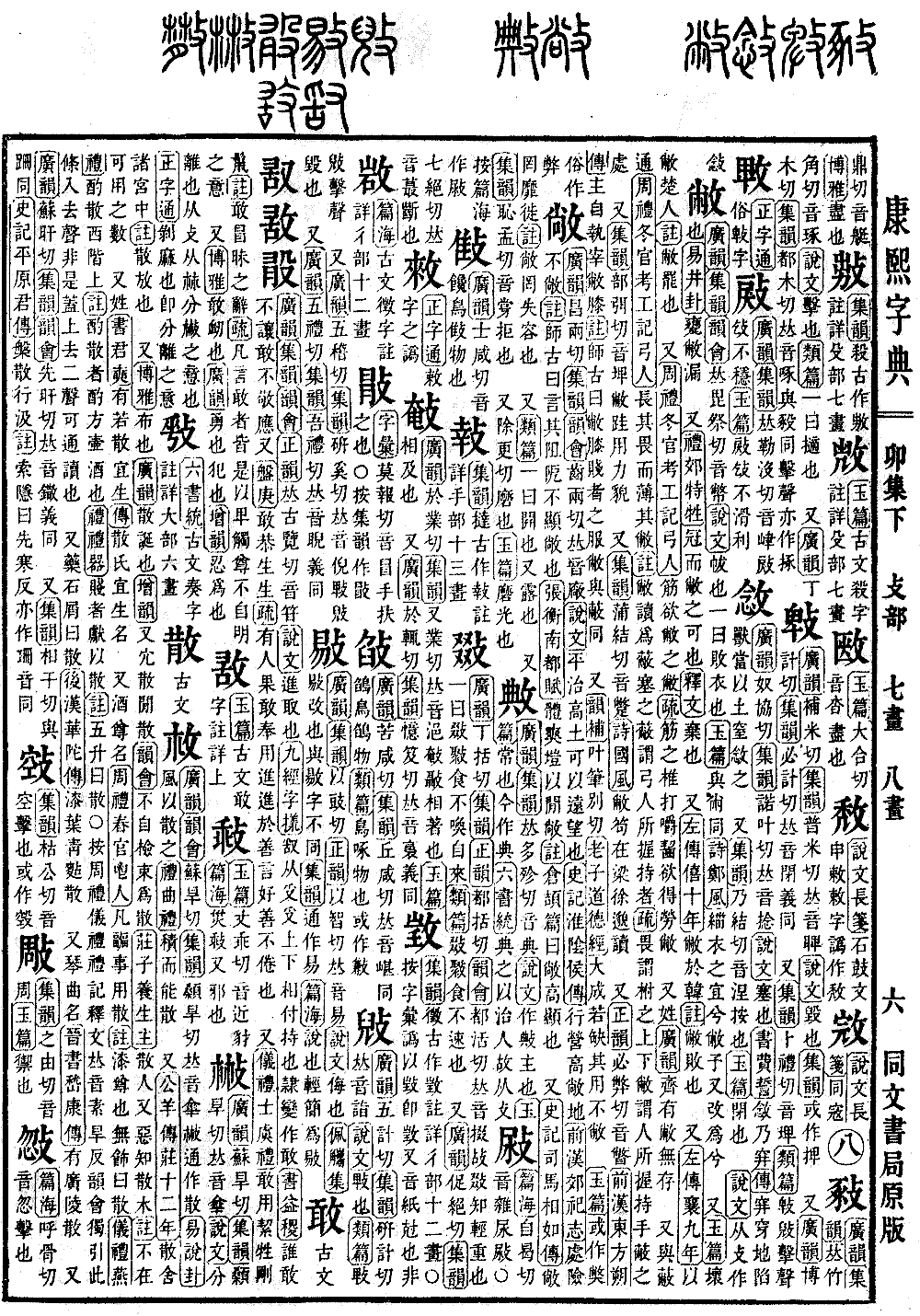
In ancient script. According to the Expanded Dictionary of Sounds and Rhymes (Guangyun), the Collected Rhymes (Jiyun), the Dictionary of Rhymes (Yunhui), and the Corrected Rhymes (Zhengyun), it is pronounced lan (rising tone). According to the Explaining Graphs and Analyzing Characters (Shuowen), it means to advance and take. According to the Nine Classics Character Styles (Jiujing Ziyang), it is formed from the character for hand and the character for ear. It represents the top and bottom supporting and holding one another. In clerical script, it is written as gan.
In the Book of Documents (Shangshu), section Yiji: Who dares to not be modest, dares to not respectfully respond. Also, in the section Pan Geng: Dare to respectfully bring forth life. The sub-commentary states: There are those who are resolute and daring in dedicating themselves to good words, practicing goodness without fatigue.
Also, in the Book of Etiquette and Ceremonial (Yili), section Shi Yu Li: Dare to use clean sacrificial animals with bristles. The commentary states: Dare is a term of rashness. The sub-commentary states: Whenever one says dare, it is a matter of approaching a superior, implying that one does not dare to clarify oneself.
Also, according to the Er Ya (Boya), dare means to be defeated. According to the Expanded Dictionary of Sounds and Rhymes (Guangyun), it means brave or to offend. According to the Supplemented Rhymes (Zengyun), it means to endure doing something.