Chou Collection, Upper Volume
Radical: Mouth (kǒu)
Kangxi Strokes: 6
Page 176, Entry 02
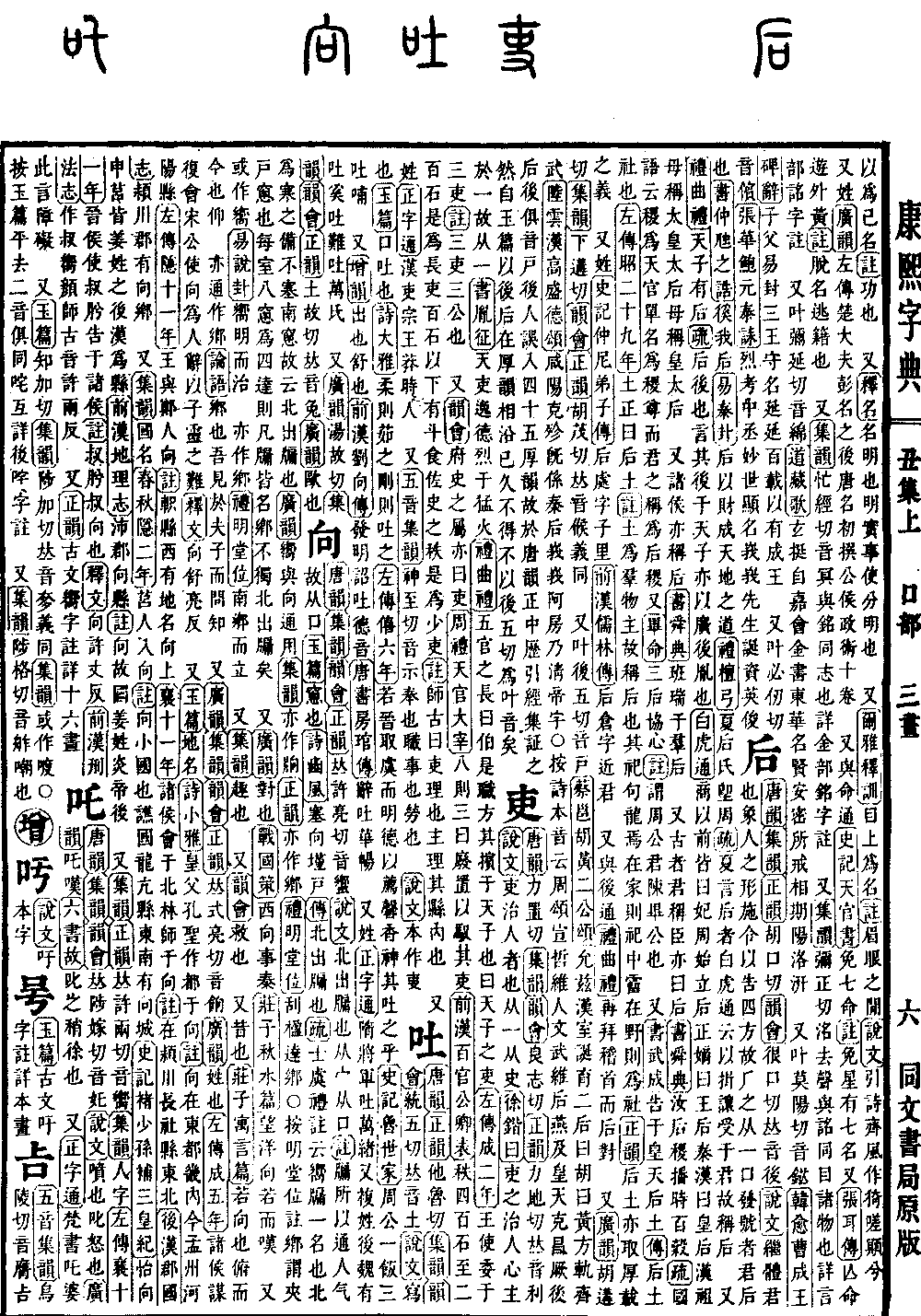
Pronounced li (falling tone). Pronounced li (falling tone). Pronounced li (falling tone). The pronunciation is the same as the word for profit.
According to the Explaining Graphs and Analyzing Characters (Shuowen Jiezi), a li is a person who governs the people. The character is composed of one and history. Xu Kai states that officials govern the people and focus their minds on unification, hence it is derived from one.
Book of Documents (Shangshu), chapter Yin Zheng: If the officials of the Son of Heaven lose their virtue, their cruelty exceeds that of a raging fire.
Book of Rites (Liji), chapter Qu Li: The heads of the five offices are called counts, managing one region; in relation to the Son of Heaven, they are called officials of the Son of Heaven.
Zuo Tradition (Zuo Zhuan), second year of Duke Cheng: The Son of Heaven of Zhou entrusted matters to the three officials. The commentary notes that the three officials refer to the Three Councillors.
Additionally, the Rhyme Collection (Yunhui) states that low-ranking officials who handle documents in government offices are also called li.
Rites of Zhou (Zhouli), Office of Heaven, Grand Administrator: The third of the eight regulations is to manage officials through appointment and dismissal.
History of the Former Han (Qian Hanshu), Table of Officials and Ministers: Those with salaries between four hundred and two hundred shi of grain are classified as senior officials. Those with one hundred shi or less, including salary grades such as doushi and zuoshi, are classified as junior officials. The commentary by Yan Shigu states: Li means to manage; one who is in charge of governing the affairs within a county.
Also used as a surname. The Zhengzitong records a person named Lizong who lived during the era of Wang Mang.
Additionally, the Five Sounds Rhyme Collection (Wuyin Yunhui) provides the pronunciation as shi (falling tone), which is the same as the word for display. It carries the meanings of to carry out, duty, and labor merit.
According to the Explaining Graphs and Analyzing Characters (Shuowen Jiezi), the original form of the character was written as shi.