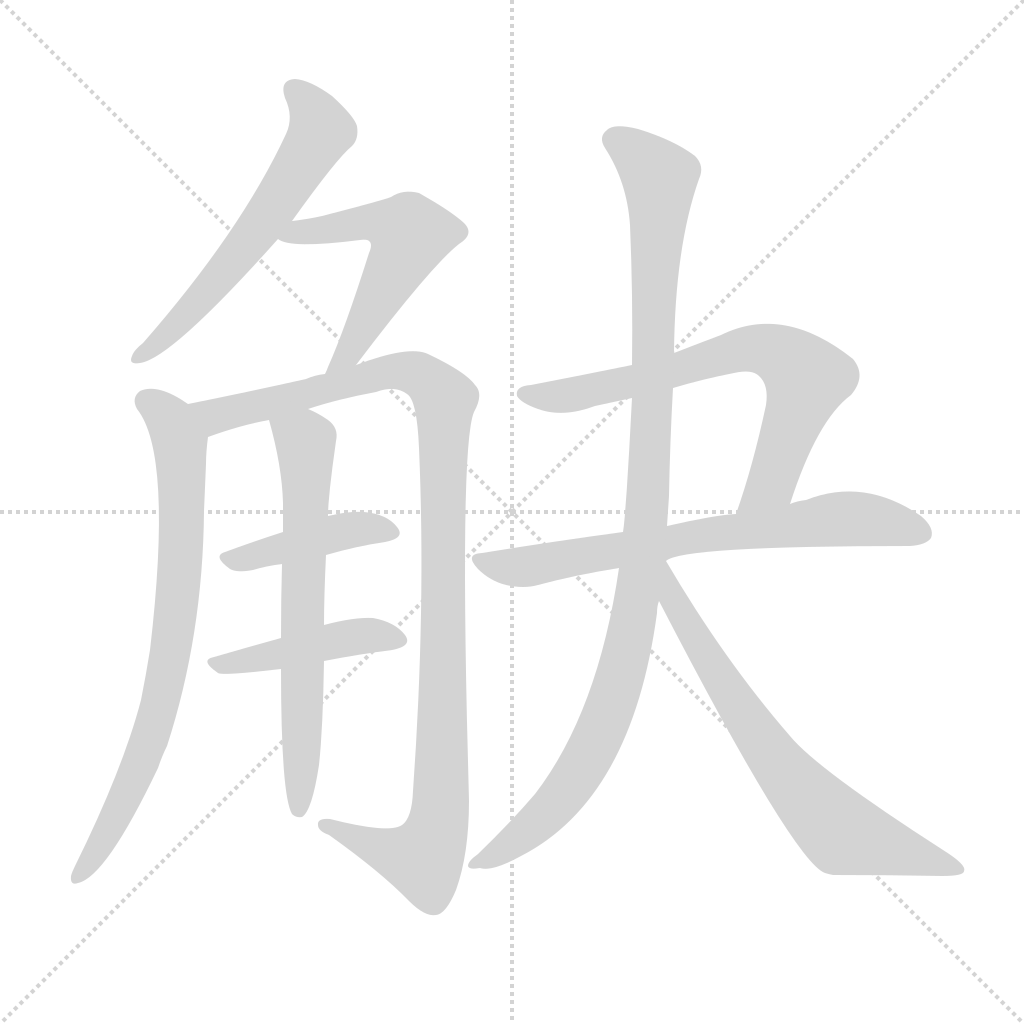
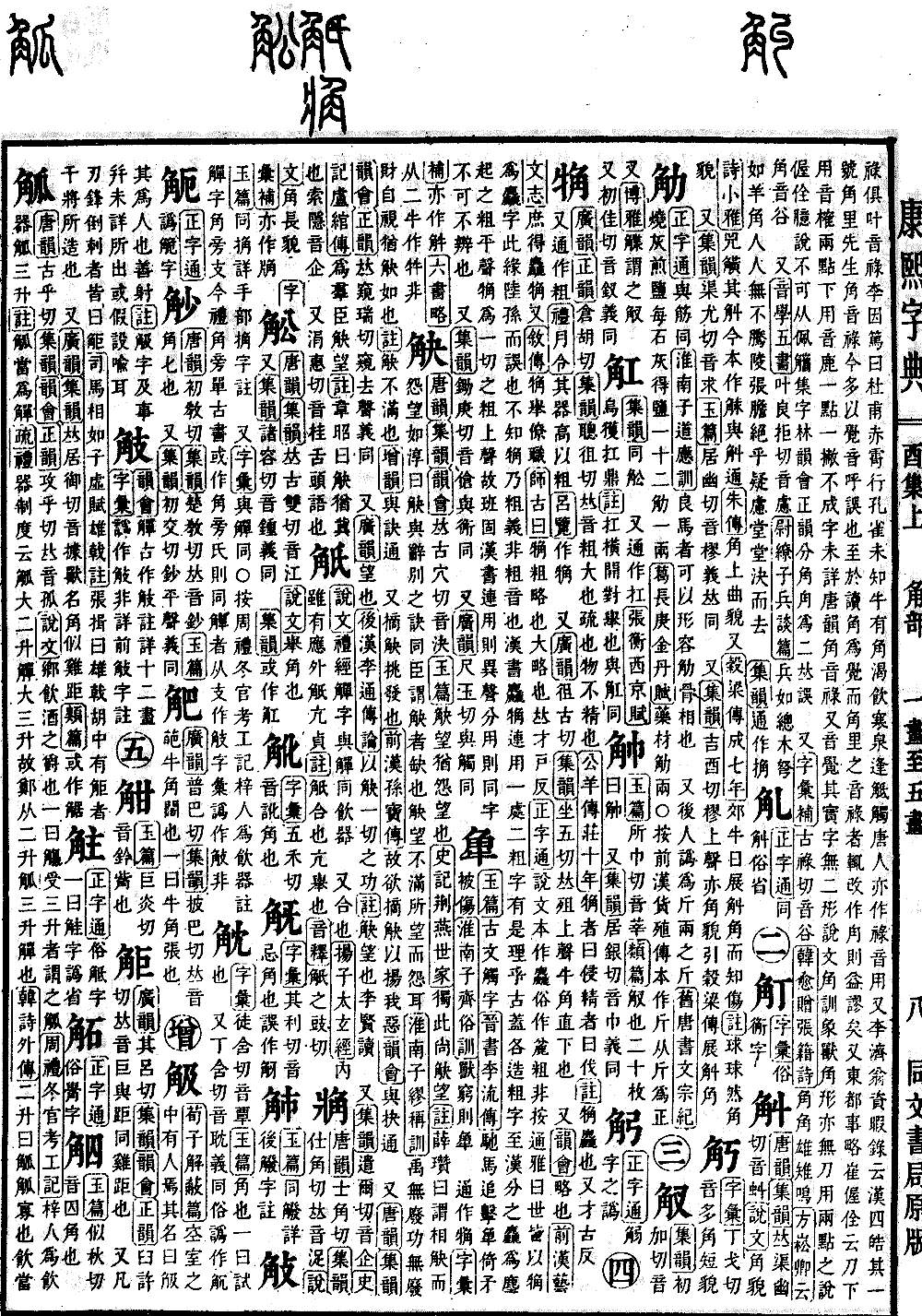
You Collection, Upper Volume
Radical: Horn (jiǎo)
Kangxi Strokes: 11
Page 1140, Entry 12
Pronounced jue.
In the Jade Chapters (Yupian), it refers to resentment and dissatisfaction.
In Records of the Grand Historian (Shiji), Biography of the House of Jing and Yan: Only regarding this matter is there still a feeling of resentment.
Commentary: Xue Zan states: It means to separate from one another and harbor resentment. Ru Chun states: The character for resentment is the same as the character for parting. I believe it means to be lacking. To harbor resentment is simply to be unsatisfied with what one expected.
In Huainanzi (Huainanzi), Theory of Flawed Sayings: Yu had no abandoned labors and no wasted wealth, yet viewing himself, he still felt unsatisfied.
Commentary: It means unsatisfied.
In Supplemented Rhymes (Zengyun), it is interchangeable with the character for parting. Also, to pick and reveal, meaning to provoke or expose.
In History of the Former Han (Qianhanshu), Biography of Sun Bao: The reason for wishing to provoke and expose is to publicize my evil deeds.
In Rhyme Collection (Yunhui), it is interchangeable with the character for picking out.
Also pronounced kui (falling tone). The meaning is the same.
Also, in Broad Rhymes (Guangyun), it means to hope or expect.
In History of the Later Han (Houhanshu), Treatise on the Biography of Li Tong: To expect the achievement of everything.
Commentary: It means to hope. Li Xian reads it in this way.
Also pronounced qi.
In Records of the Grand Historian (Shiji), Biography of Lu Wan: To harbor hope among the gathered officials.
Commentary: Wei Zhao states: It is like hoping. The Records of the Grand Historian Commentary (Suoyin) reads it as qi.
Also pronounced gui. Refers to the tongue speaking.