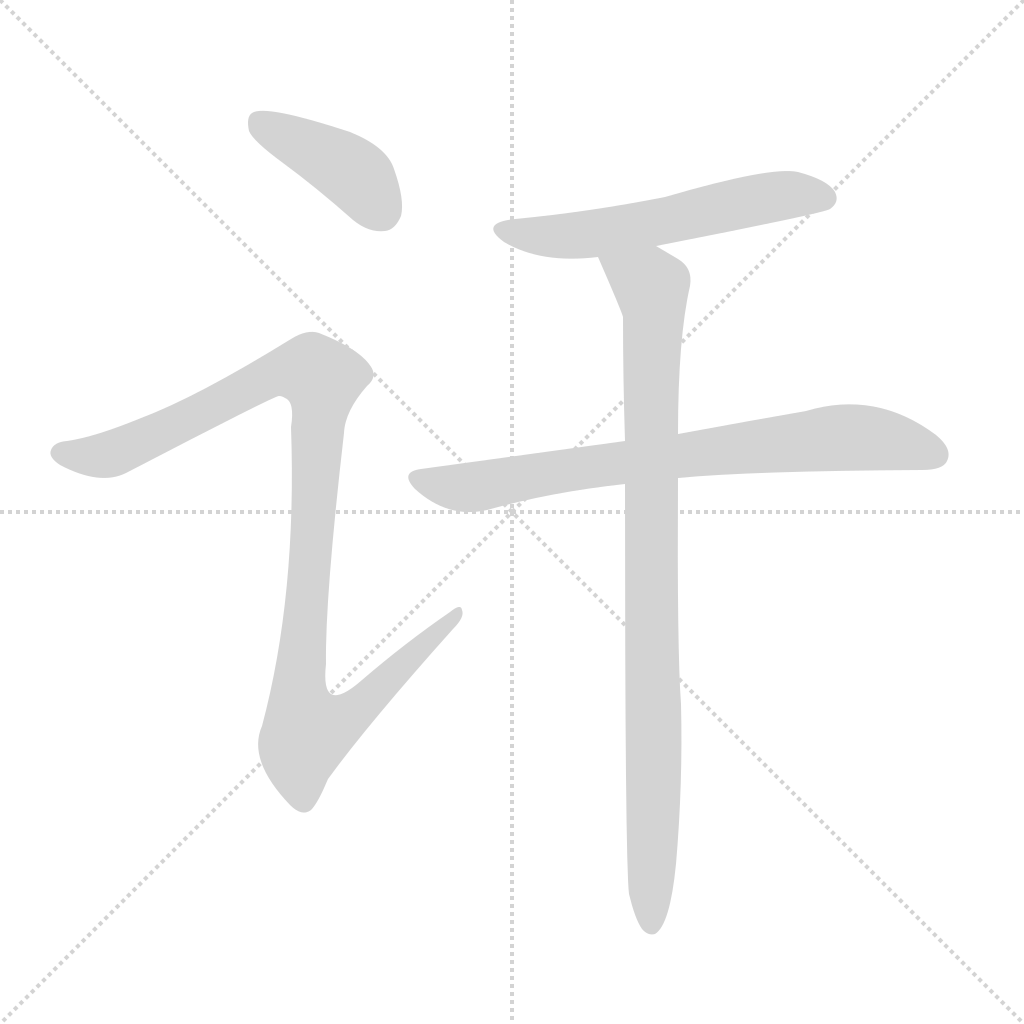
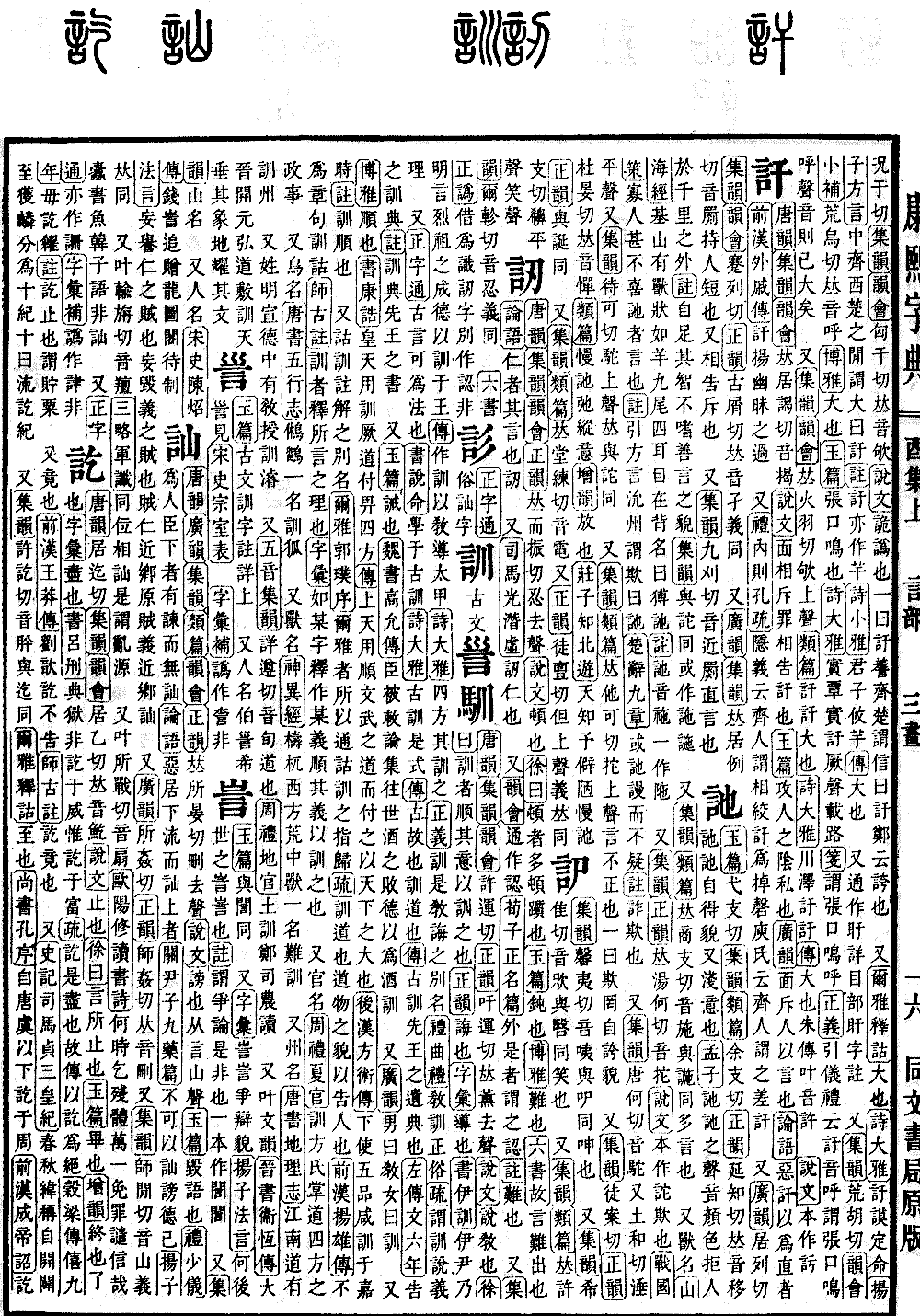
You Collection, Upper Volume
Radical: Speech (yán)
Jie
Kangxi Strokes: 10
Page 1148, Entry 02
Tang Rhymes (Tangyun), Collected Rhymes (Jiyun), and Rhyme Meeting (Yunhui) cite it as pronounced jie. According to the Explaining Graphs and Analyzing Characters (Shuowen), it means to denounce someone's faults to their face, or to mutually accuse and attack one another. The Jade Chapters (Yupian) defines it as attacking the private affairs of others. The Broad Rhymes (Guangyun) defines it as rebuking someone to their face using words. The Analects (Lunyu) states that one should hate those who take exposing the private faults of others as being straightforward. The History of the Former Han (Qianhan), Biography of Imperial Relatives, notes that it is to expose and proclaim hidden and unclear transgressions.
Also, in the Book of Rites (Liji), Inner Chapters, Kong Yingda's sub-commentary states: Hidden meanings are expressed as diaoqing by the people of Qi, meaning to mutually criticize and expose shortcomings. Yu's commentary says that the people of Qi refer to it as chajie.
Additionally, per Broad Rhymes it is pronounced jie; per Collected Rhymes and Rhyme Meeting it is pronounced jie; per Correct Rhymes (Zhengyun) it is pronounced jie. The meaning is the same.
Also, per Broad Rhymes and Collected Rhymes it is pronounced ji. It means to seize upon another's shortcomings. It also means to mutually accuse and denounce.
Also, per Collected Rhymes it is pronounced ji. It means speaking without reservation.