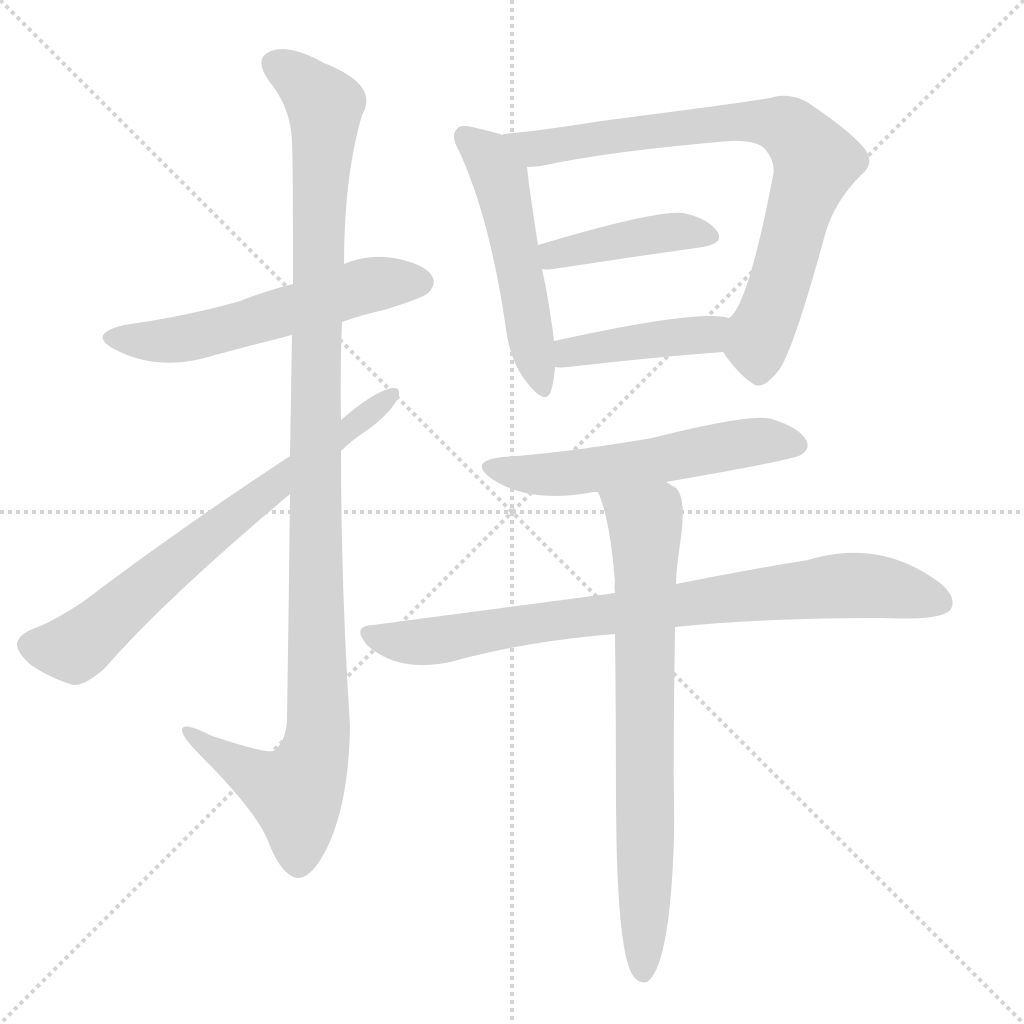
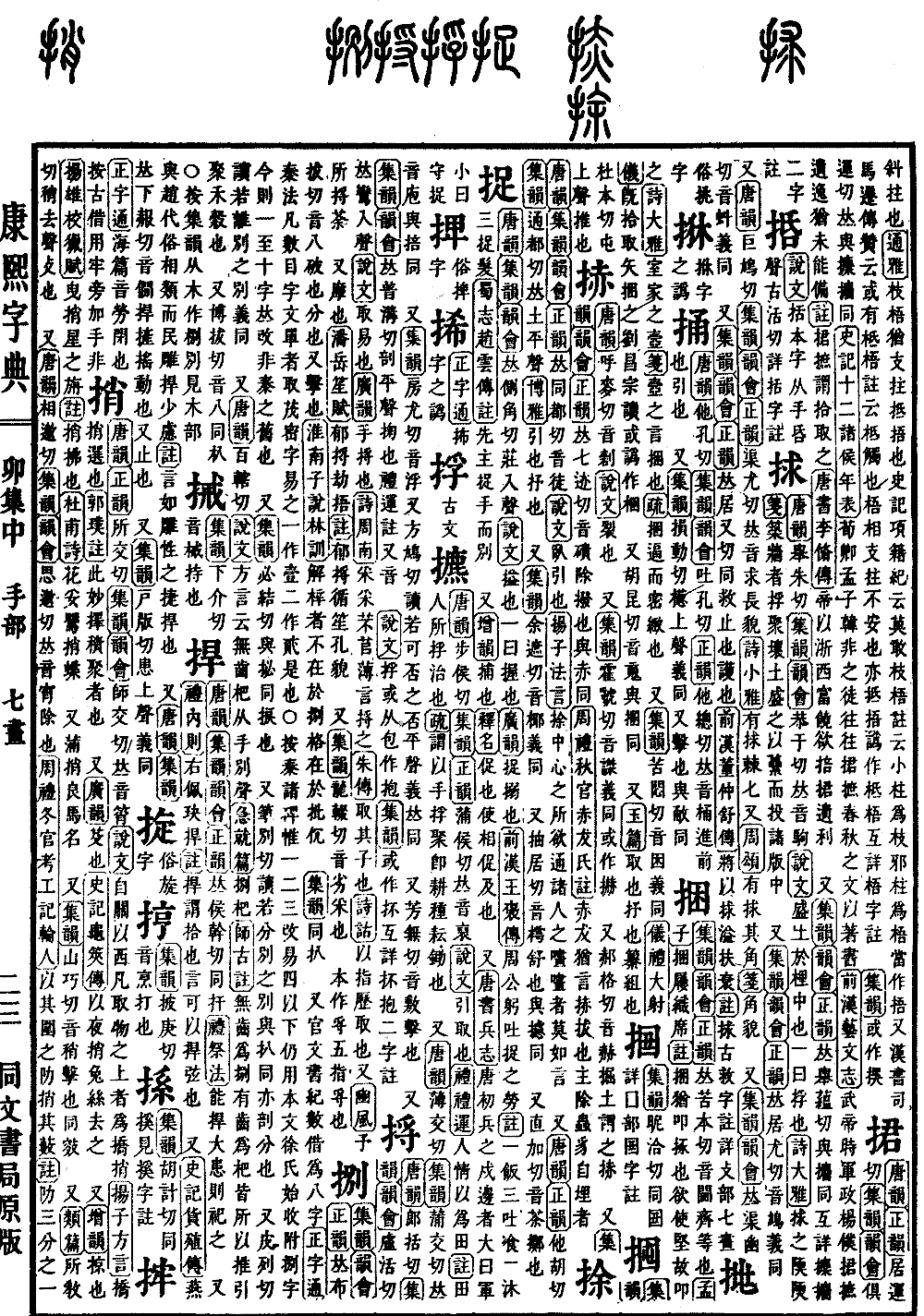
Mao Collection, Middle Volume. Radical: Hand (shǒu). Kangxi strokes: 11. Page 433, Entry 20.
Tang Dynasty Rhyme (Tangyun), Collection of Rhymes (Jiyun), Rhyme Compendium (Yunhui), and Correct Rhymes (Zhengyun) state that the pronunciation is gan. It is the same as the character for defense (han). In the Book of Rites (Liji), specifically the section on Laws of Sacrifice (Jifa), it states that those capable of defending against great calamities should be honored with sacrifices. Also, in the Book of Rites, specifically the section on Inner Precepts (Neize), it notes that one wears a jade ring (jue) and a wrist guard (han) on the right side. The commentary explains that the wrist guard refers to a sleeve guard used to protect the bowstring.
Also, in the Records of the Grand Historian (Shiji), specifically the Biographies of Money-makers (Huozhi Zhuan), it mentions that the customs of the regions of Yan, Zhao, and Dai are similar, and that the common people are as swift and fierce as eagles, though they lack deep deliberation. The commentary explains that this describes a character as swift and fierce as an eagle.
Also, per the Tang Dynasty Rhyme (Tangyun) and the Collection of Rhymes (Jiyun), the pronunciation is xian (falling-rising tone). It refers to the action of shaking or swaying. It also carries the meaning of stopping or restraining.
Also, according to the Collection of Rhymes (Jiyun), the pronunciation is huan (rising tone). The meaning remains the same.