Xu Collection, Lower Volume
Radical: Page (yè)
Kangxi Strokes: 15
Page 1403, Entry 01
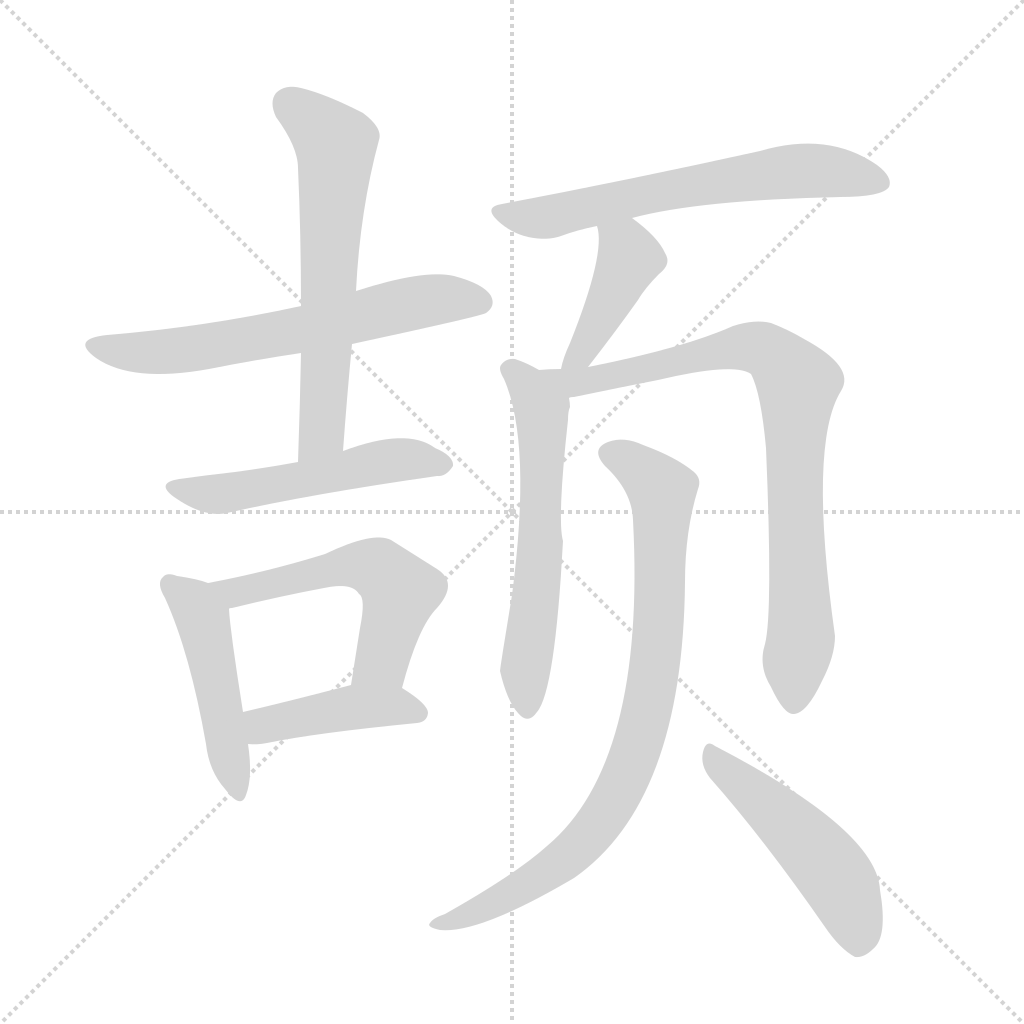
Pronounced xié.
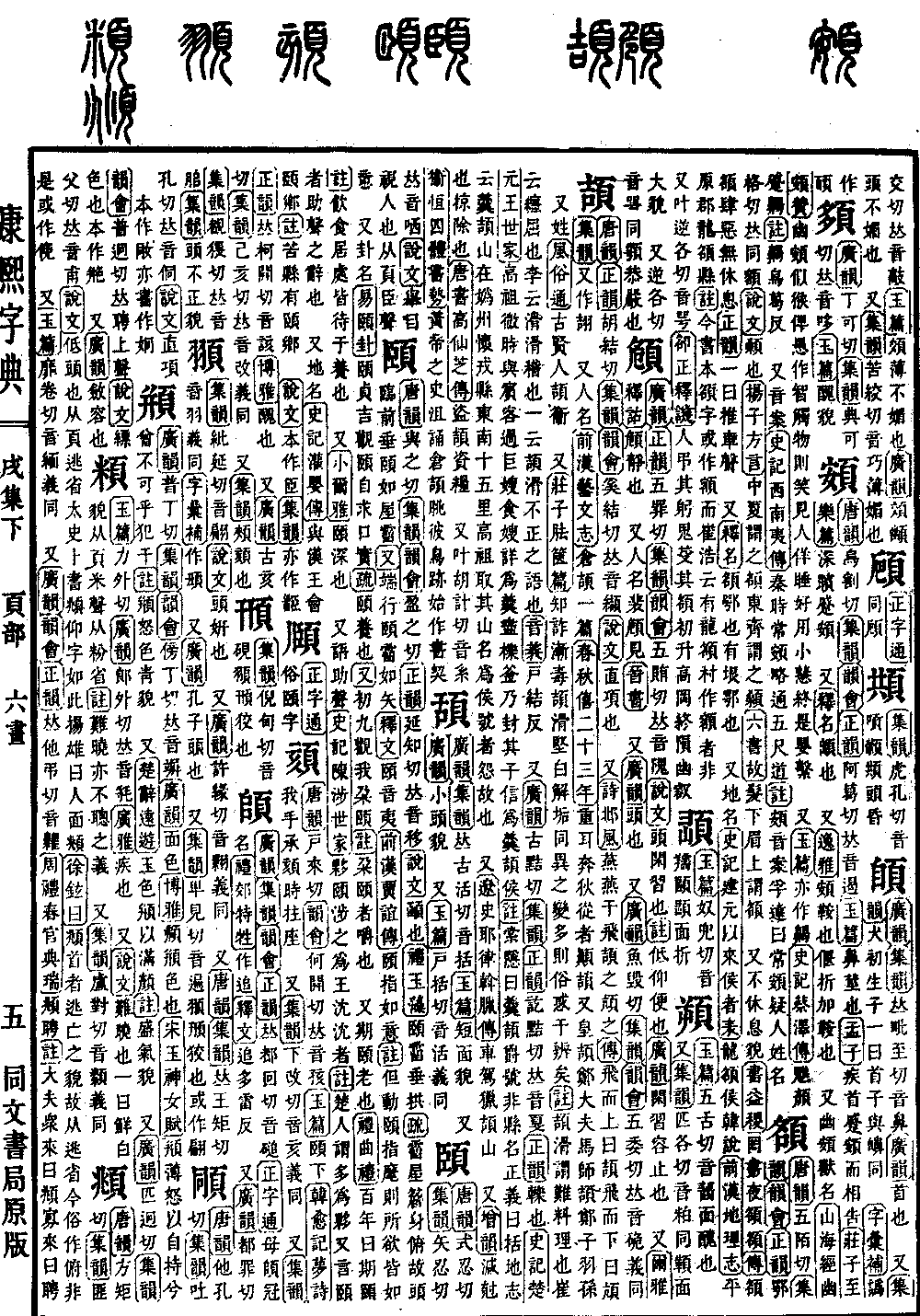
In the Shuowen Jiezi (Shuowen), it means a straight neck.
In the Book of Odes (Shijing), Beifeng section, it is written: The swallows are flying, fluttering up and down. The commentary states: Flying upward is called jie, flying downward is called hang. The Collected Rhymes (Jiyun) notes it is also written as a variant form (lie).
Also used in names. In the History of the Former Han (Qianhan shu), Yiwen Zhi, there is a piece titled Cangjie. In the Spring and Autumn Annals (Chunqiu), during the twenty-third year of Duke Xi, Chong'er fled to the Di state, and his follower was Dianjie. Also, Huangjie was a high official of the Zheng state; Ma Shijie was a grandson of the Zheng official Ziyu.
Also a surname. According to the Fengsu Tong, there was an ancient virtuous man named Jiewei.
In the Zhuangzi, Quqie chapter, it mentions: If one uses deceit, cunning, and malicious poisons, or uses jiehua (to engage in tangled, obstructive arguments) regarding the nature of hardness and whiteness, or explains away inconsistencies, then the common people will be confused by such debates. The commentary states: Jiehua means difficult to handle. Cui states: It means entangled and twisted. Li states: Hua refers to glib, sophistical speech. Another version states that jiehua refers to improper speech. Pronounced hu and jie.
Also pronounced jiá. In the Correct Rhymes (Zhengyun), it means to trample or pass over. In the Records of the Grand Historian (Shiji), Biography of the Prince of Chu, it is recorded: When the High Ancestor was of low status, he and his guests visited his elder brother's wife for a meal. She pretended that the soup was finished and scraped the pot, so later, when the High Ancestor bestowed titles, he named her son the Marquis of Gengjie. The commentary says: Gengjie was a title of nobility, not the name of a district. The sub-commentary states: The Kuodizhi mentions Gengjie Mountain, located fifteen li southeast of Huairong County in Guizhou; the High Ancestor took the name of this mountain for the title, as an expression of his resentment.
Also mentioned in the History of the Liao (Liaoshi), Biography of Yelü Wo, regarding the imperial carriage at Jie Mountain.
In the Zengyun, it means to reduce, deduct, or plunder. In the Book of Tang (Tangshu), Biography of Gao Xianzhi, it is used in the sense of stealing provisions.
Also, rhyming with the sound ji (falling tone). In the Four Bodies of Calligraphy (Siti shushi) by Wei Heng: The scribes of the Yellow Emperor, Ju Song and Cangjie, observed the tracks of birds and first created written characters.