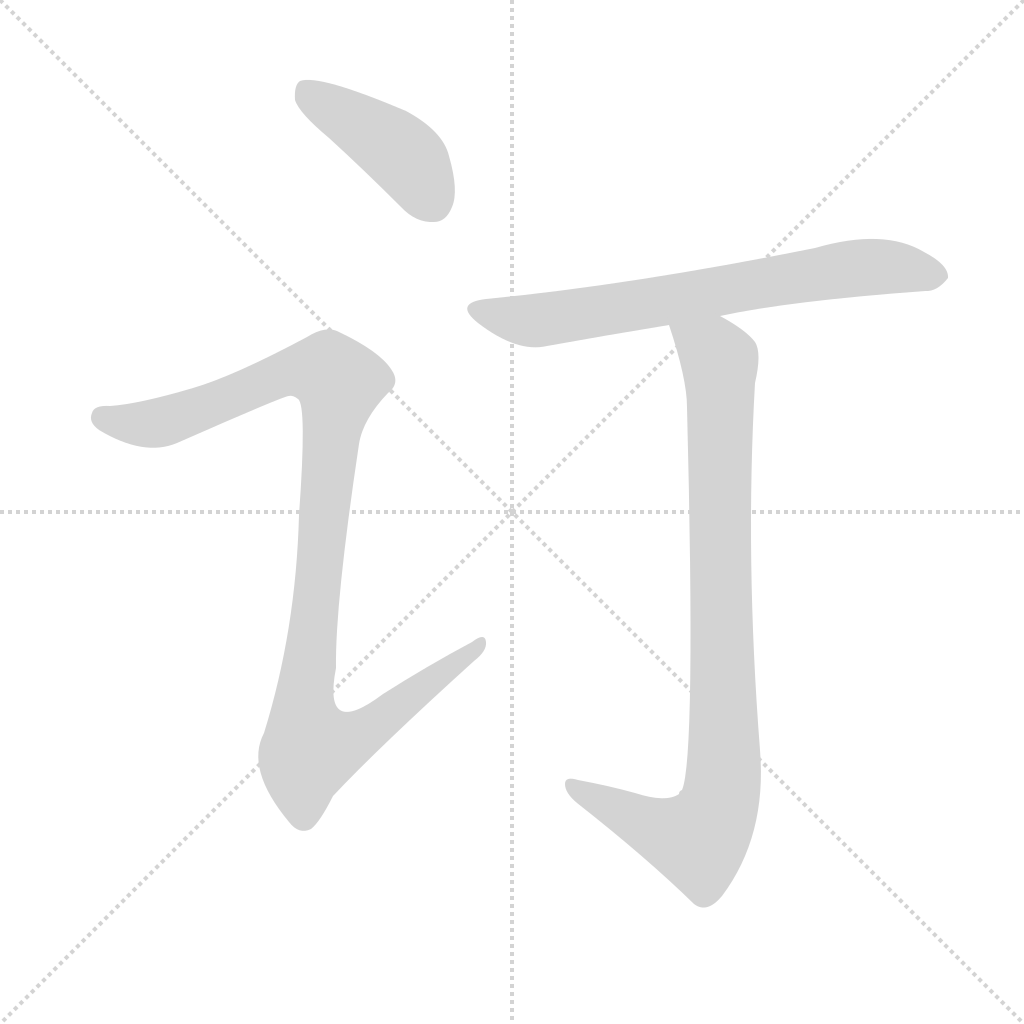
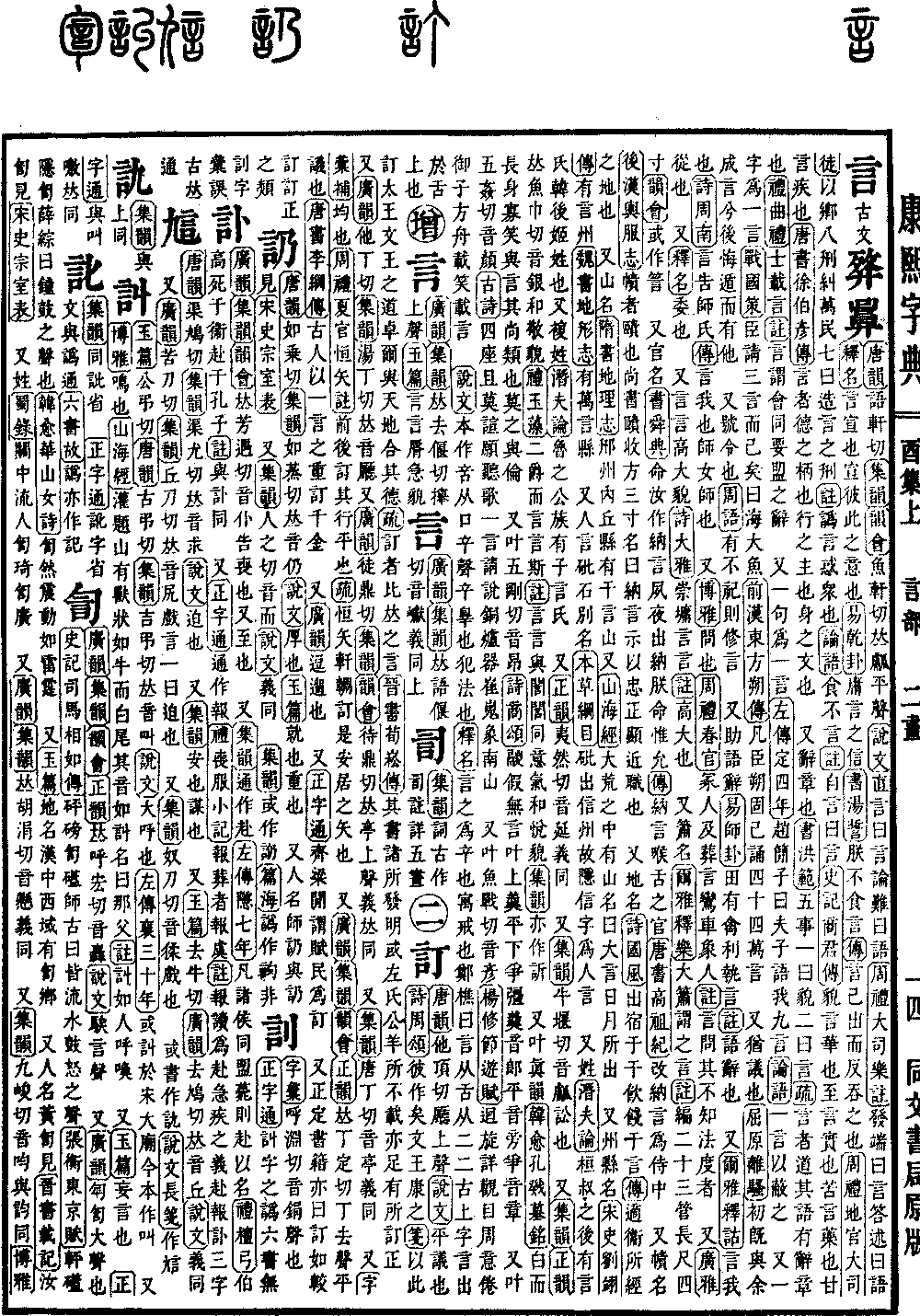
You Collection, Upper Volume
Radical: Speech (yán)
Kangxi Strokes: 9
Page 1146, Entry 01
Pronounced ding (rising tone).
Explaining the Meaning: To discuss and evaluate.
Book of Odes (Shijing), Zhou Hymns (Zhou Song): He has initiated this, and King Wen has brought peace to it.
Commentary: By using this to evaluate the way of King Tai and King Wen, it stands alone and matches the virtue of heaven and earth.
Sub-commentary: The term ding refers to words of comparison.
Book of Jin (Jinshu), Biography of Xun Song: The things discovered in these books, even if not recorded in the Zuo Commentary (Zuozhuan) or the Gongyang Commentary (Gongyangzhuan), are sufficient to be used for rectification and revision.
Also pronounced ding.
Also pronounced ding (rising tone). Meaning is the same.
Also pronounced ting. Meaning is the same.
Also to equalize.
Rites of Zhou (Zhouli), Ministry of Summer, Constant Arrows (Hengshi) Commentary: Front and back are balanced, its movement is level.
Sub-commentary: The constant arrows are stable and balanced, referring to the arrows that remain steady.
Also pronounced ding (falling tone). To discuss and evaluate.
Book of Tang (Tangshu), Biography of Li Gang: The ancients considered the weight of a single word to be worth a thousand pieces of gold.
Also, to linger or delay.
Also, in the Qi and Liang dynasties, taxing the people was referred to as ding.
Also, to verify or correct books is also called ding, such as in the terms comparison and correction or rectification and revision.