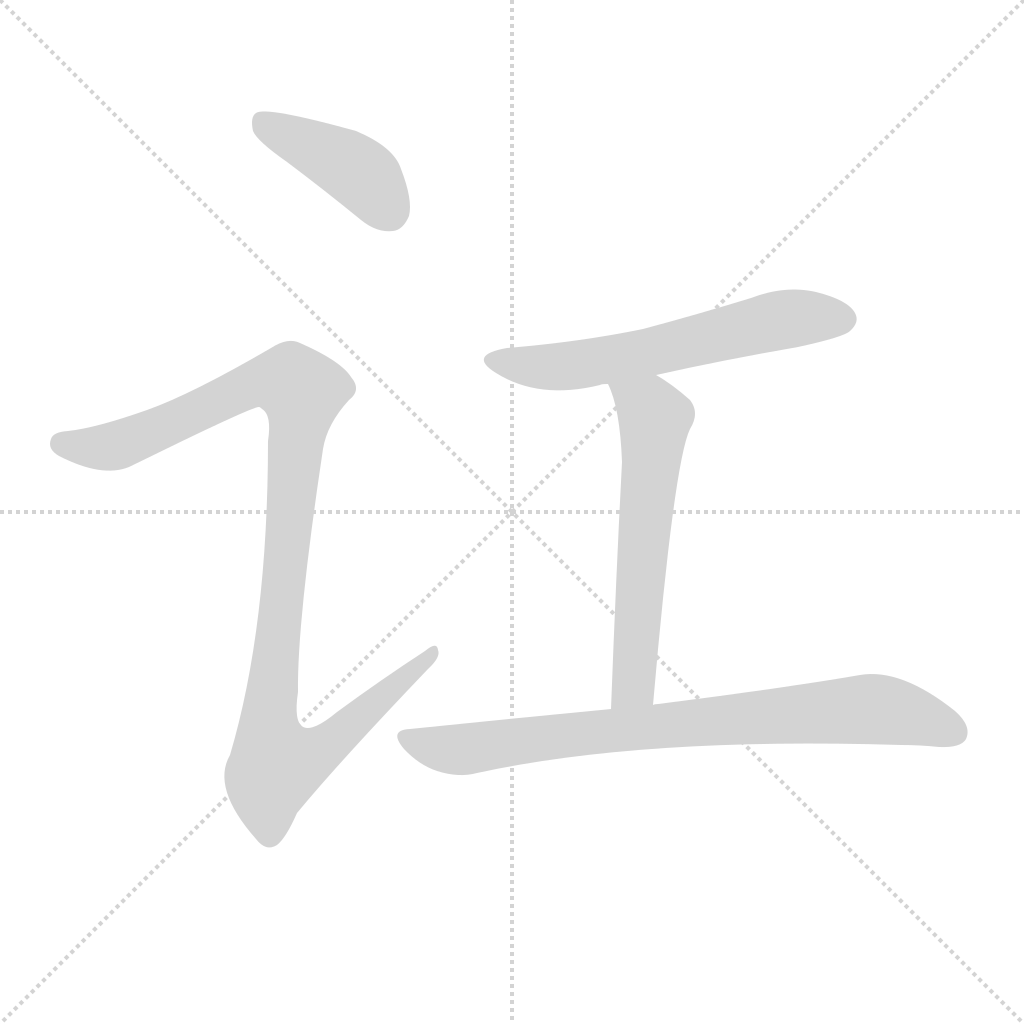
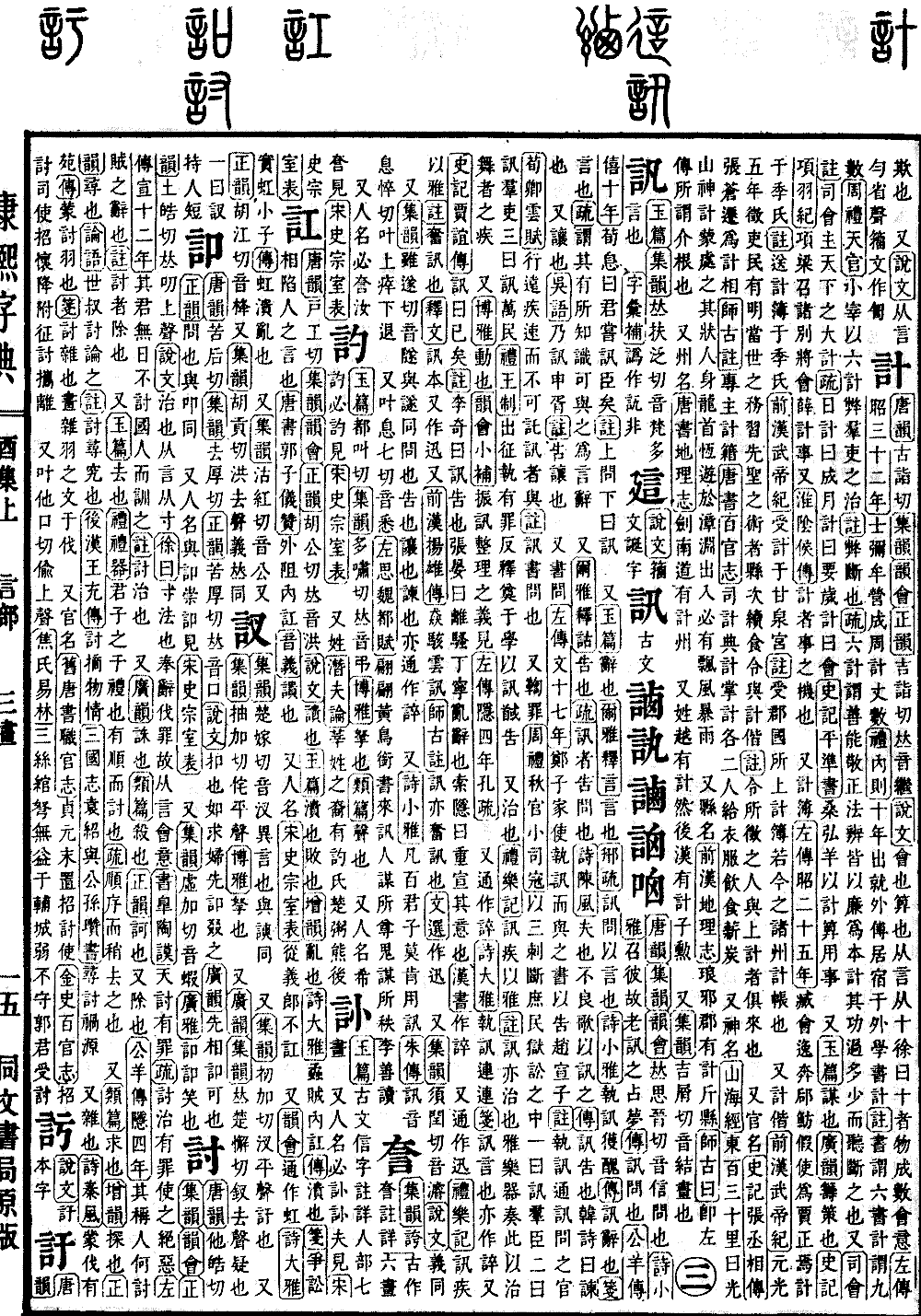
You Collection, Upper Volume
Radical: Speech (yán)
Hong
Kangxi stroke count: 10
Page 1147, Entry 02
Pronounced hong
According to the Explanation of Graphs and Analysis of Characters (Shuowen Jiezi), it means to fall into confusion or disorder.
According to the Jade Chapters (Yupian), it means to collapse, to fail, or to be ruined.
According to the Expanded Rhymes (Zengyun), it means chaotic confusion.
Book of Odes (Shijing), Great Odes (Daya): "The parasitic insects and thieves cause internal strife (hong)."
Commentary: It means to collapse or fail.
Supplementary Commentary: It refers to words spoken during disputes where parties frame one another.
History of Tang (Tangshu), Eulogy for Guo Ziyi: "Externally there are obstructions, internally there is collapse and disorder."
Sound and Meaning: It means to collapse or fail.
Also used for a personal name. In the History of Song (Songshi), Table of the Imperial Clan, there is an official of the Congyilang rank named Buhong.
According to the Rhymes Collected (Yunhui), it is also written interchangeably with the character for rainbow (hong).
Book of Odes (Shijing), Great Odes (Daya): "It truly causes the youngsters to be in disarray (hong)."
Commentary: Hong means to collapse or fall into disorder.
Also, according to the Collected Rhymes (Jiyun), pronounced gong.
Also, according to the Correct Rhymes (Zhengyun), pronounced hong.
Also, according to the Collected Rhymes (Jiyun), pronounced hong (falling tone). The meaning is the same.