Zi Collection, Page Position: Upper
Radical: Lid (tóu)
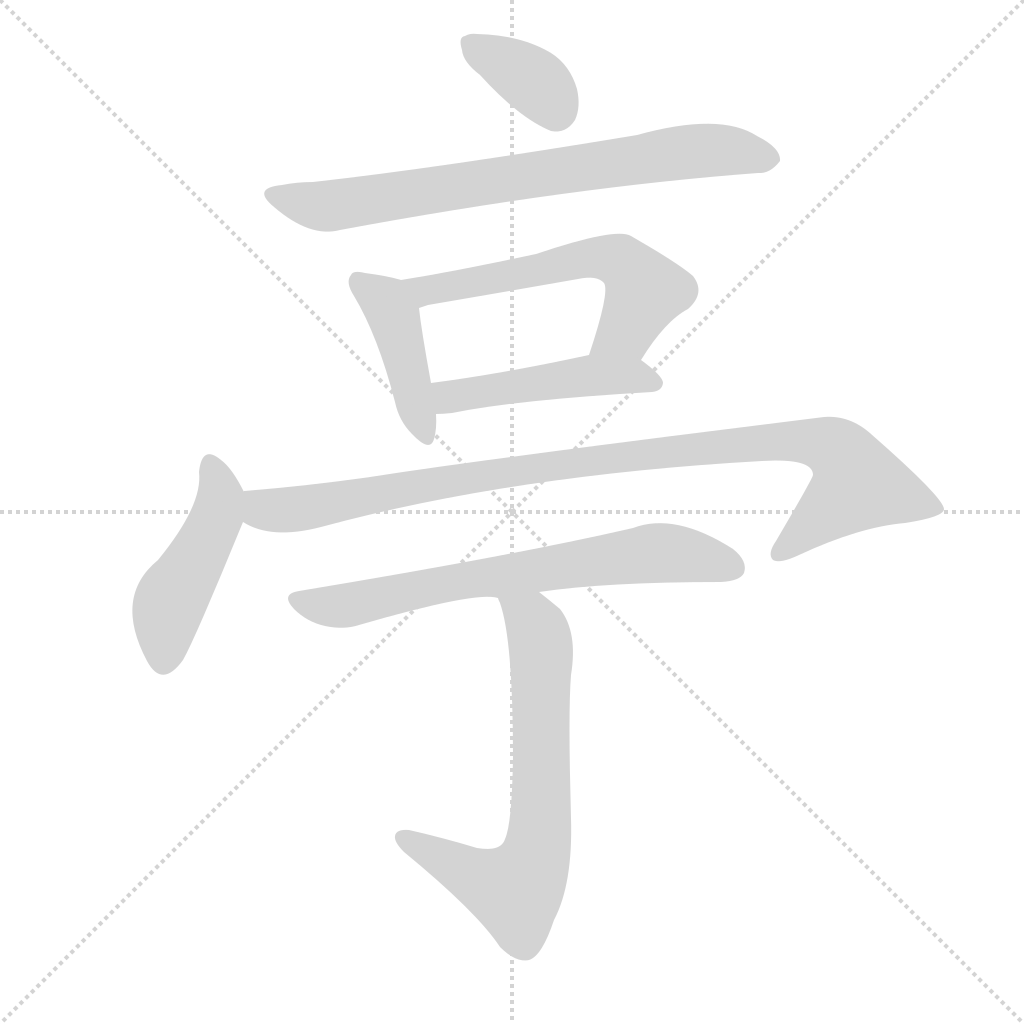
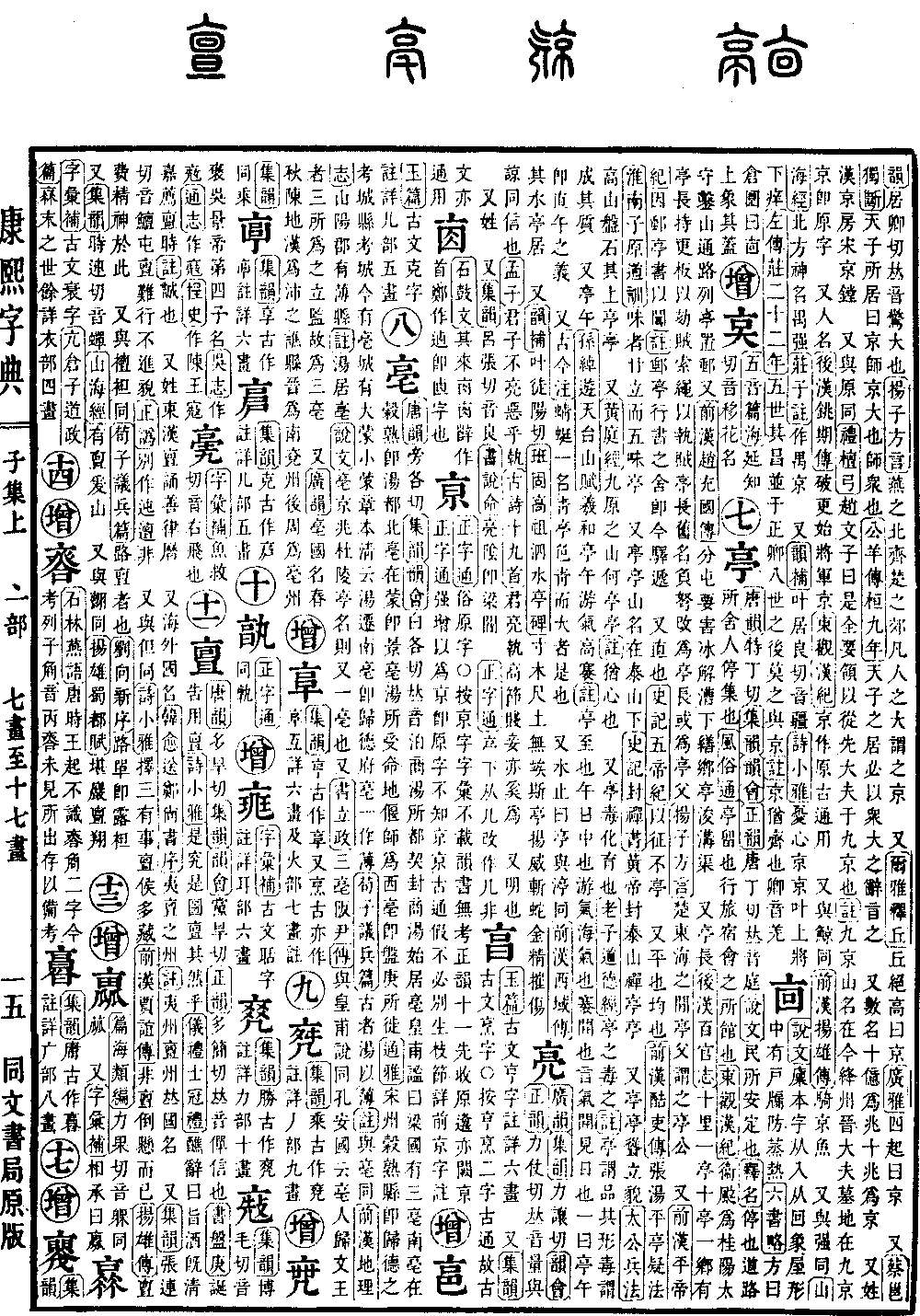
亭
Kangxi Stroke Count: 9
Page 89, Entry 03
Pronounced ting.
Shuowen Jiezi (Explaining Graphs and Analyzing Characters): A place where the people are settled and peaceful.
Shiming (Explication of Names): To stop. A shelter on a road where people stop and gather.
Fengsu Tong (Comprehensive Meaning of Customs): A stop, a place to remain. A station where travelers lodge and meet.
Dongguan Hanjii (Records of the Han Dynasty from the Eastern Pavilion): Wei served as the Administrator of Guiyang, carved through mountains to open roads, established stations, and set up postal relay points.
History of the Former Han (Hanshu), Biography of Zhao Chongguo: Divided troops to guard key positions, navigated down the waterways when the ice melted, repaired village stations, and dredged canals.
Station Chief.
Official Records of the Later Han (Hou Hanshu): There is one station every ten li, and one township every ten stations. There is a station chief who holds a watch board to report bandits and carries ropes to capture them. The station chief was formerly called "bow-bearer," then changed to "station chief." Sometimes referred to as a "station father."
Yangzi Fangyan (Dialect): Between Chu and the East Sea, the station father is called the station lord.
History of the Former Han (Hanshu), Annals of Emperor Ping: Reported through the postal station documents. Commentary: Postal stations are houses for document delivery, similar to modern courier stations.
Straight.
Records of the Grand Historian (Shiji), Annals of the Five Emperors: Used to discipline those who are not straight.
Level, equal.
History of the Former Han (Hanshu), Biographies of Harsh Officials: Zhang Tang leveled and equalized ambiguous laws.
Huainanzi, Original Way Training: Regarding flavors, when sweetness is established, the five flavors are balanced.
Tingting, a mountain name, located below Mount Tai.
Records of the Grand Historian (Shiji), Treatise on the Feng and Shan Sacrifices: The Yellow Emperor offered sacrifices at Mount Tai and Mount Tingting.
Tingting, the appearance of standing tall.
Taigong Bingfa (Taigong's Art of War): High mountains and boulders, standing tall above.
Huangting Jing (Yellow Court Classic): How tall and straight is the mountain of the nine sources? Commentary: It refers to the heart.
Tingdu, to transform and nurture.
Laozi, Daodejing (Classic of the Way and Virtue): Nurturing them and nourishing them. Commentary: Ting means to judge their forms; du means to complete their substances.
Tingwu (high noon).
Sun Chuo, Ode on Traveling to Mount Tiantai: The sun reaches high noon, and the wandering vapors rise high. Commentary: Ting means to reach. Wu is midday. Wandering vapors are sea mists. Qian means to clear. It says the vapors clear to reveal the sun. One source states that tingwu means directly at noon.
Gujin Zhu (Commentary on Past and Present): The dragonfly is also called green ting; it is the green and large variety.
Water that does not flow is called ting. Same as the character meaning to stagnate (ting).
History of the Former Han (Hanshu), Account of the Western Regions: Its waters are still.
Rhyme Supplement: Pronounced yang (level tone).
Ban Gu, Record of the Sishui Station of Gaozu: Not an inch of wood or a foot of soil was needed for this station. He brandished his might to slay the serpent, and the spirit of the metal collapsed in injury.